By: Paul Goldberg – Senior Correspondent | LGBT Politics USA – Election 2026
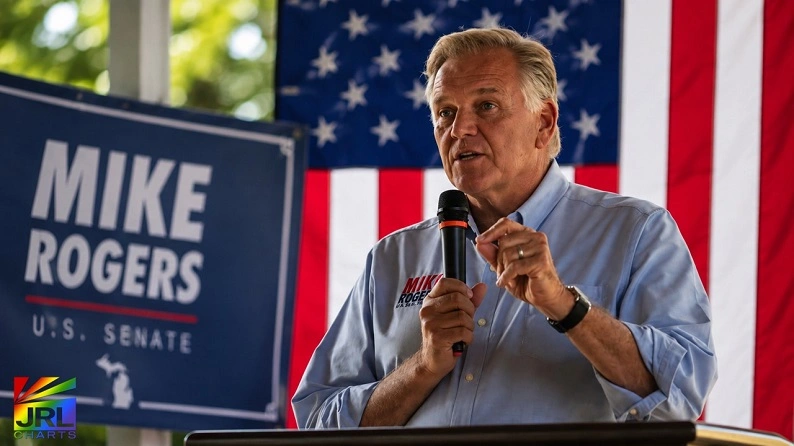
LANSING, MI — (August 22, 2026) — Republican U.S. Senate nominee Mike Rogers reportedly wants one of America’s most powerful pro-Israel political organizations to stay out of his general-election advertising battle against Democrat Abdul El-Sayed — just weeks after AIPAC and affiliated groups spent nearly $30 million trying unsuccessfully to prevent El-Sayed from becoming the Democratic nominee.
According to Axios, Rogers met with American Israel Public Affairs Committee (AIPAC) chair Michael Tuchin in Los Angeles last week and personally communicated that he did not want the organization advertising on his behalf in Michigan’s closely watched Senate contest.
The request reportedly didn’t go over well.
Now Trending on LGBTQ Politics News on JRL CHARTS:
• Log Cabin Republicans Drop the ‘T’ as Group Refocuses on LGB Advocacy
• Transgender Suspect Sentenced to 73 Months in Scott Bessent Assassination Plot
• Democrats Blow Up the 2028 Presidential Map as DNC Rewrites Road to White House
• HRC Launches $15M Campaign to Defend LGBTQ+ Rights in 2026 Midterms
• America’s ‘Golden Age’? U.S. Job Growth Since January 2025 Tells a Different Story
• Millions of Working Americans Are Going Hungry—and Nobody Is Talking About It
• Review More in LGBTQ Politics News Exclusively on JRL CHARTS
Axios reports that AIPAC officials were angered by the move. More significantly, the organization had already produced an advertisement targeting El-Sayed.
After Rogers’ meeting with Tuchin, AIPAC shelved the completed ad.
For a Republican candidate who remains firmly supportive of Israel, the extraordinary request reveals just how dramatically the politics surrounding AIPAC may be changing in one of America’s most competitive battleground states.
Mike Rogers Doesn’t Want AIPAC Advertising for Him
The distinction matters.
Rogers has not suddenly transformed into an opponent of Israel, nor does the reporting indicate that he has abandoned his longstanding pro-Israel positions.
Instead, his campaign and allies reportedly believe visible AIPAC intervention could hurt him politically against El-Sayed in November.
Axios reports that Rogers’ allies had previously communicated concerns about the organization becoming publicly involved in the general election. The issue apparently escalated to Rogers raising it directly with AIPAC’s chairman.
That’s an extraordinary development considering who Rogers is running against.
El-Sayed has been an outspoken critic of the Israeli government’s conduct in Gaza and made AIPAC’s political spending a central issue during his Democratic primary campaign.
Rather than allowing that contrast to invite AIPAC into the general election, Rogers apparently wants the organization to remain on the sidelines.
AIPAC Already Spent Nearly $30 Million Trying to Stop El-Sayed
There is an enormous elephant in the room.
AIPAC has already tried to stop Abdul El-Sayed.
And it spent an extraordinary amount of money doing it.
During Michigan’s Democratic Senate primary, AIPAC and affiliated organizations spent close to $30 million supporting Rep. Haley Stevens, according to the Associated Press.
It represented the organization’s largest investment ever in a single race at the time.
El-Sayed responded by making that outside spending part of his political message.
While Stevens benefited from tens of millions of dollars in outside assistance, El-Sayed’s campaign emphasized grassroots organizing and said it had recruited more than 10,000 volunteers statewide.
The result became a major political setback for AIPAC.
Despite the enormous outside investment, El-Sayed won the Democratic nomination, defeating Stevens by roughly one percentage point.
Now the candidate AIPAC spent millions trying to stop is heading into November against Mike Rogers.
And Rogers reportedly doesn’t want the group’s advertising help.
Is AIPAC Ignoring Rogers and Spending Millions Anyway?
As of August 22, 2026, there is no verified evidence that it is.
That’s important because two different streams of outside spending in Michigan can easily become conflated.
Axios reports that after Rogers communicated his request, AIPAC shelved its already-completed advertisement against El-Sayed. The organization may be unhappy about Rogers’ decision, but current reporting does not establish that AIPAC has ignored him and proceeded with a multimillion-dollar general-election advertising campaign.
There is, however, another political powerhouse preparing to spend enormously on Rogers’ side of the race.
$51 Million Republican Super PAC Campaign Targets Michigan
The Senate Leadership Fund, the major Republican-aligned super PAC focused on Senate races, has committed a staggering $51 million to Michigan.
Earlier this month, the organization added another $6 million television and digital campaign attacking El-Sayed and helping Rogers, according to Axios.
That spending is completely separate from AIPAC.
The distinction matters because Rogers isn’t asking every outside organization to stay away. The reporting specifically identifies concerns surrounding AIPAC’s visible involvement.
And Michigan’s recent political history helps explain why.
El-Sayed Turned AIPAC Spending Into a Campaign Weapon
AIPAC’s massive Democratic-primary investment didn’t simply fail to defeat El-Sayed.
It gave him an issue.
El-Sayed repeatedly highlighted the outside money pouring into the contest and framed his campaign as a battle between grassroots political organizing and powerful outside interests.
In an interview following his victory, El-Sayed noted that more than $60 million in outside money entered the Democratic primary, with AIPAC’s super PAC representing the largest single source.
The strategy worked well enough for El-Sayed to survive being dramatically outspent.
That creates an obvious strategic danger for Rogers.
A highly visible AIPAC advertising campaign attacking El-Sayed could allow the Democrat to resurrect the same political argument that helped carry him through the primary — only this time against the Republican nominee.
Michigan Becomes a Test of AIPAC’s Political Influence
The episode also stretches beyond Rogers and El-Sayed.
Support for Israel and attitudes toward the Israeli government’s conduct in Gaza have become increasingly complicated within American politics, particularly among Democratic voters.
AP reported before Michigan’s primary that criticism of AIPAC had intensified as divisions over Israel deepened.
What makes the Rogers development remarkable is that the concern has now crossed the partisan divide.
A Republican nominee endorsed by President Donald Trump and known for supporting Israel reportedly believes AIPAC’s public assistance could become a political liability in a general election.
That doesn’t necessarily represent a change in Rogers’ foreign-policy beliefs.
It represents a calculation about Michigan voters.
And after AIPAC spent nearly $30 million attempting to stop Abdul El-Sayed only to watch him capture the Democratic nomination, Rogers apparently isn’t interested in testing whether another massive advertising blitz will produce a different result.
For now, AIPAC appears to be listening.
Its completed anti-El-Sayed advertisement has reportedly been shelved.
But with Michigan positioned as one of the defining Senate battlegrounds of the 2026 midterm elections, whether that uneasy ceasefire lasts until November could become a political story of its own.
Stay with JRL CHARTS LGBT Politics USA – Election 2026 for continuing coverage of Mike Rogers, Abdul El-Sayed, the Michigan Senate showdown and the races shaping control of Congress in the 2026 midterm elections.
His reporting focuses on federal court rulings, legislative developments, international human rights issues, and government actions impacting LGBTQ communities worldwide.
With nearly two decades of experience, Goldberg is recognized for his balanced analysis, investigative insight, and commitment to accurate, fact-based journalism that informs readers on the political forces shaping equality and justice.
- Cape Town Pride 2027 Goes BIG With 24 Days of LGBTQ Celebrations! - October 24, 2026
- LGBTQ Rights on the Line in 7 States as 2026 Midterm Elections Near - October 24, 2026
- Gay Dad Cleared After Punching MAGA Influencer Who Targeted His Family - October 24, 2026