By Paul Goldberg – Senior Correspondent | LGBT Business Finance News
LONDON, ENGLAND — (November 10, 2026) — President Donald Trump scored a significant legal victory Tuesday when a federal judge refused to dismiss his multibillion-dollar defamation lawsuit against Britain’s BBC. But the decision also leaves the president facing a potentially uncomfortable legal obligation: answering questions under oath from attorneys representing the very broadcaster he is suing.
U.S. District Judge Jeffrey T. Kuntz ruled that Trump’s defamation allegations against the British Broadcasting Corporation could proceed, finding that the president had presented a legally plausible claim involving the broadcaster’s controversial editing of his January 6, 2021, speech.
Trending LGBT Politics Europe News on JRL CHARTS:
• Orbán’s Anti-LGBTQ Legacy Crumbles as Hungary Votes 139–51 for Change
• German High Court Stops Pornhub and YouPorn Block in Major EU Law Showdown
• OnlyFans and MYM Escape Sweeping French Crackdown After Parliament Showdown
• OnlyGays Launches LGBTQ Creator Search Platform to Take On the Algorithm Problem
• DOJ Throws U.S. Weight Behind Musk as X Battles €120M EU Fine
• Breaking Now on LGBT Politics Europe News on JRL CHARTS
However, the judge dismissed Trump’s separate allegation that the BBC violated Florida’s unfair and deceptive trade practices law.
The decision represents an important procedural victory for Trump, but it is far from a final determination that the BBC defamed him.
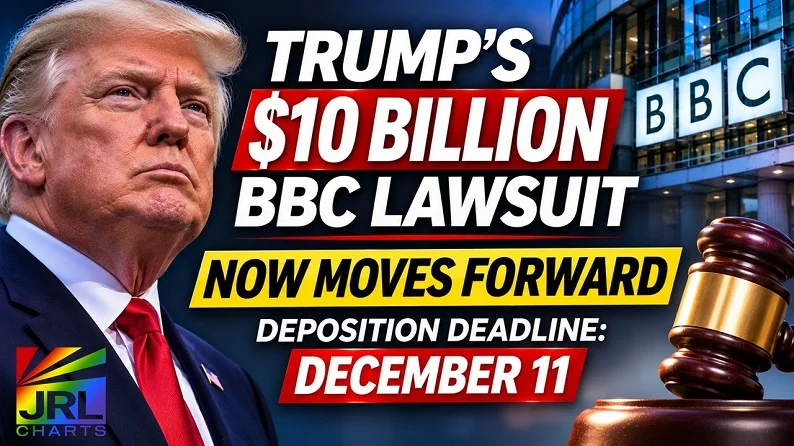
More importantly, Trump is already under a separate court order requiring him to submit to a deposition by December 11, 2026 — a deadline that could carry serious consequences if he fails to comply.
Trump Faces December 11 Deposition Deadline in BBC Lawsuit
The most consequential development in Trump’s legal battle may not be Tuesday’s ruling itself, but what happens next.
On October 22, U.S. Magistrate Judge Enjoliqué Lett ordered Trump to answer questions under oath from BBC attorneys by December 11 or risk court-imposed sanctions, potentially including dismissal of his lawsuit.
The order followed a dispute over Trump’s failure to appear for a previously scheduled October 16 deposition.
His legal representatives cited presidential responsibilities and proposed postponing the questioning until January 2027.
BBC attorneys objected, arguing that the president could not initiate an enormous defamation lawsuit while preventing the opposing party from questioning the individual whose reputation and financial interests were allegedly damaged.
The deposition requirement now creates a significant legal dilemma.
Trump can continue pursuing his defamation allegations, but maintaining the lawsuit also exposes him to discovery obligations that could require detailed questioning about his January 6 speech, his reputation, and the financial damages he claims to have suffered.
The court could modify the schedule, but Tuesday’s decision does not eliminate the existing deposition obligation.
BBC Panorama Documentary at Center of $10 Billion Dispute
The controversy began with a BBC Panorama documentary broadcast shortly before the 2024 U.S. presidential election.
The documentary combined portions of Trump’s January 6, 2021, address that were delivered approximately 55 minutes apart.
The resulting sequence connected Trump’s remarks about marching toward the U.S. Capitol with his later declaration that supporters should “fight like hell.”
The edit omitted another portion of the address in which Trump urged supporters to demonstrate peacefully.
Trump’s lawsuit alleges that the editing falsely portrayed him as directly encouraging the violence that subsequently unfolded at the Capitol.
The BBC has acknowledged that the editing was misleading and apologized to Trump. However, the broadcaster maintains that the mistake does not establish legal liability for defamation.
The controversy triggered a major institutional crisis within the British broadcaster, including the resignations of senior BBC leadership figures.
Judge Finds Trump’s Defamation Allegations Plausible
In Tuesday’s ruling, Judge Kuntz concluded that Trump had sufficiently alleged reputational injury and presented a plausible argument that the BBC acted with actual malice, the demanding legal standard applicable to defamation claims brought by public officials and other public figures.
The judge focused partly on the documentary’s decision to combine statements separated by nearly an hour.
Nevertheless, the ruling addresses whether Trump’s allegations are legally sufficient to proceed, not whether the allegations have been proven.
To prevail, Trump must still establish the required elements of defamation, including the BBC’s actual malice, and demonstrate the damages necessary to support his claim.
The court also rejected his separate unfair trade practices claim, narrowing the litigation.
Trump celebrated the decision on social media, describing it as a “huge victory.”
The BBC expressed surprise at the ruling but maintained confidence in its legal position.
Could the BBC Question Trump About January 6 and His Finances?
A deposition would allow BBC attorneys to question Trump under oath about relevant issues in the lawsuit, subject to applicable procedural protections and court rulings.
Potential areas of examination include his understanding of the January 6 speech, the circumstances surrounding the documentary, and the reputational or economic harm he attributes to its broadcast.
The broadcaster has also sought financial information connected to Trump’s business interests as part of its effort to examine the damages he claims.
That financial component could prove particularly important.
Trump’s claimed damages have been estimated at approximately $10 billion, making the evidentiary basis for that figure a central issue in the litigation.
BBC attorneys may seek to establish whether the documentary caused measurable harm, how any losses were calculated, and whether other factors affected Trump’s reputation or business interests.
The BBC’s acknowledgment of misleading editing does not automatically establish that Trump suffered $10 billion in compensable damages.
Nor does the decision permitting the lawsuit to proceed mean that every question or document request from BBC attorneys will necessarily be allowed.
Why Trump’s Deposition Could Become a Political and Legal Flashpoint
The confrontation presents an unusual intersection of presidential authority, international media accountability, and American civil litigation.
Trump initiated the lawsuit in his personal capacity, placing his allegations of reputational and financial injury before a federal court.
But the discovery process gives the BBC an opportunity to challenge those allegations using sworn testimony and documentary evidence.
Trump’s attorneys have already disputed the timing and format of his deposition. They also sought to prevent the questioning from being videotaped, although the magistrate permitted a recording subject to restrictions on its use.
The president’s earlier cancellation has intensified scrutiny of whether he will comply with the December deadline.
The legal significance is straightforward: a plaintiff seeking extraordinary damages ordinarily must participate in the evidentiary process necessary for the defendant to contest those claims.
Failure to comply with a valid discovery order could expose Trump to sanctions, although any particular penalty would depend on the circumstances and further judicial decisions.
BBC Lawsuit Raises Broader Questions About Press Freedom
Beyond the financial stakes, the dispute has implications for the relationship between political leaders and independent journalism.
The BBC’s acknowledged editing error raises legitimate questions about editorial accuracy and the responsibility of news organizations to present political statements fairly.
At the same time, the lawsuit illustrates the legal risks confronting news organizations when powerful public officials seek enormous financial damages over disputed reporting.
The actual-malice standard exists in American defamation law partly to protect robust coverage of public officials while allowing recovery when the demanding requirements for liability are satisfied.
The BBC’s defense, therefore, involves more than whether its editing was inappropriate. It must also address whether that conduct satisfies the legal elements of defamation and whether Trump’s alleged damages can be substantiated.
For Britain’s publicly funded broadcaster, the litigation could carry financial, institutional, and reputational consequences well beyond the United States.
What Happens Next in Trump’s $10 Billion BBC Lawsuit?
Several important deadlines now shape the litigation.
The BBC has been directed to respond to the ruling by December 1, while Trump’s deposition deadline remains December 11, subject to any subsequent modification by the court.
Discovery is scheduled to conclude December 18, and a trial has been provisionally scheduled for February 2027.
Those dates could change as the parties continue litigating evidentiary disputes and procedural issues.
For now, Trump has won the right to continue pursuing his defamation claim, but he has not established that the BBC is liable or that he is entitled to billions of dollars in damages.
The central question is whether Trump will comply with the court’s order to testify under oath — or whether his effort to hold the BBC accountable will face another legal confrontation over his own participation in the case.
For continued reporting on Donald Trump’s BBC lawsuit, European media accountability, international political developments, and press freedom, follow JRL CHARTS — LGBTQ Digital Media Network.

His reporting focuses on federal court rulings, legislative developments, international human rights issues, and government actions impacting LGBTQ communities worldwide.
With nearly two decades of experience, Goldberg is recognized for his balanced analysis, investigative insight, and commitment to accurate, fact-based journalism that informs readers on the political forces shaping equality and justice.
- Trump’s $10 Billion BBC Lawsuit Backfires? Judge Orders Him to Testify Under Oath - November 10, 2026
- Trump DOJ Suffers First Amendment Setback as Federal Court Protects Journalists’ Sources - November 10, 2026
- Wall Street Sinks as Inflation Shock Sends Treasury Yields Toward 5% - November 10, 2026