By Paul Goldberg | Senior Correspondent — LGBT Politics USA
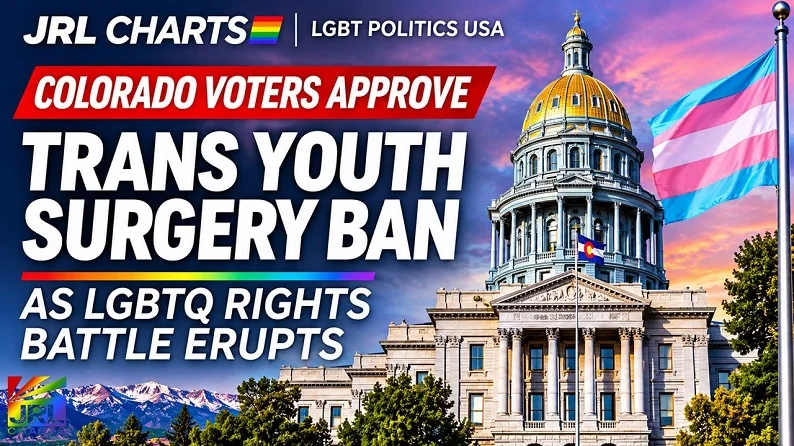
DENVER, CO — (November 9, 2026) — Colorado voters have approved a controversial ballot initiative restricting gender-affirming surgeries for transgender minors, delivering a significant political setback for LGBTQ rights advocates in a state long associated with protections against discrimination.
Proposition 135 secured approximately 52% of the vote in Colorado’s November 3 general election. The outcome places new limits on certain medical procedures for people under 18 and opens another chapter in the nationwide struggle over transgender healthcare, parental authority and government regulation of medical treatment.
Trending International LGBTQ News on JRL CHARTS:
• Breaking Military News involving LGBTQ Service Members and Security
• LGBT Politics Europe – Updates on Hate Crimes, Judicial Rulings
• Stay Up to Date on the Happenings in LGBT Politics Asia
• You Won’t Believe What Is Breaking Now on LGBTQ News
The vote also underscores a growing political divide between Democratic state leadership and portions of the electorate over transgender rights.
What Colorado Proposition 135 Actually Bans
The voter-approved measure prohibits healthcare professionals from performing surgeries on minors when the purpose is to alter biological sex characteristics in response to the patient’s gender identity.
It also restricts the use of government funding, Medicaid reimbursements and insurance coverage for procedures prohibited under the measure.
Importantly, Proposition 135 does not establish a blanket prohibition on all gender-affirming healthcare. Puberty blockers, hormone treatments and counseling are not directly prohibited by its surgical restrictions.
The measure also provides exceptions for certain procedures, including male circumcision and treatment of specified developmental or acquired medical conditions.
However, the wording could create difficult questions for medical providers determining whether particular procedures qualify for an exemption.
Colorado’s official ballot analysis acknowledged that some surgeries involving patients who are not transgender could also be affected, depending on how the new restrictions are interpreted.
Medical Organizations Challenge Government Intervention
The election outcome follows opposition from medical professionals and LGBTQ advocacy organizations that argued the initiative would substitute government mandates for individualized healthcare decisions.
Opponents maintained that treatment decisions involving minors should be evaluated by qualified physicians in consultation with patients and their parents or guardians.
Supporters of Proposition 135 presented a competing argument centered on protecting minors from surgical procedures with potentially permanent consequences. They maintained that such decisions should generally be postponed until adulthood.
The debate reflects a broader national disagreement over how medical evidence, informed consent and parental participation should shape treatment standards for transgender adolescents.
Although surgical gender-affirming procedures among minors are uncommon, the issue has become a prominent feature of state-level political campaigns.
Colorado Voters Also Approve Transgender Sports Restrictions
Proposition 135 was not the only transgender-related initiative approved by Colorado voters.
Proposition 134, a separate measure governing participation in school and collegiate athletics, also passed.
That initiative establishes sex-based eligibility rules for athletic teams, creating additional restrictions affecting transgender students.
Together, the two ballot measures represent a substantial change in Colorado’s policy direction on transgender rights.
The results are particularly notable because Colorado Democrats have generally supported LGBTQ-inclusive legislation and protections.
The election demonstrates that statewide voter sentiment on specific transgender-related policies can diverge from the positions taken by elected Democratic officials.
Governor-Elect Phil Weiser Signals Possible Legislative Response
Despite the election results, Colorado’s next administration may have considerable influence over how the new restrictions are implemented.
Democratic Governor-elect Phil Weiser has indicated that the measures deserve further examination and that adjustments may be necessary.
Unlike constitutional amendments, Propositions 134 and 135 change state statutes. That distinction leaves Colorado lawmakers with the legal ability to revise or repeal their provisions through the legislative process.
Any attempt to substantially alter the voter-approved measures, however, could trigger another political confrontation over the balance between direct democracy and legislative authority.
Healthcare providers will also face practical questions involving compliance, insurance coverage, professional licensing and the interpretation of medical exemptions.
Colorado’s regulatory agencies and lawmakers are therefore likely to play an important role in determining how the restrictions operate in practice.
A National Political Strategy Moves Into Blue States
Colorado’s election results carry implications beyond its borders.
For several years, restrictions on transgender healthcare for minors were primarily associated with Republican-controlled state legislatures.
The 2026 election cycle illustrates how ballot initiatives can bring similar proposals directly before voters, including in states where Democratic lawmakers have resisted such restrictions.
The distinction matters politically.
A state can maintain broad statutory protections against LGBTQ discrimination while voters simultaneously approve restrictions on specific healthcare procedures or athletic participation.
For LGBTQ advocacy organizations, the Colorado outcome presents a challenge involving voter education, coalition-building and the effectiveness of campaign messaging.
For supporters of the restrictions, the results provide evidence that their proposals can attract majority support beyond traditionally conservative states.
The emerging question is whether Colorado represents an isolated election result or a broader shift in the politics surrounding transgender rights.
What Happens Next for Transgender Families in Colorado?
The immediate consequences will depend on implementation, regulatory guidance and any subsequent legislative or judicial action.
Families and healthcare professionals will need clarity about which procedures are restricted, how medical exceptions are interpreted and how insurance providers must respond.
Meanwhile, the political dispute is unlikely to end with the certification of election results.
Colorado’s Democratic leadership now faces the challenge of responding to voter-approved restrictions while maintaining its longstanding commitments to LGBTQ protections.
For transgender youth and their families, the stakes extend beyond election-night percentages to questions of medical access, personal autonomy and the role of government in private healthcare decisions.
JRL CHARTS — LGBT Politics USA will continue monitoring Colorado Proposition 135, the implementation of transgender healthcare restrictions and the legislative response as the national debate over LGBTQ rights enters its next phase.
His reporting focuses on federal court rulings, legislative developments, international human rights issues, and government actions impacting LGBTQ communities worldwide.
With nearly two decades of experience, Goldberg is recognized for his balanced analysis, investigative insight, and commitment to accurate, fact-based journalism that informs readers on the political forces shaping equality and justice.
- Colorado Voters Approve Trans Youth Surgery Ban as LGBTQ Rights Battle Erupts - November 9, 2026
- Federal Workers Take Trump Healthcare Ban to Court as 2027 Benefits Deadline Looms - November 8, 2026
- Wall Street’s AI Bubble Warning: Democratic Sweep Triggers $2.5 Trillion Nasdaq Meltdown - November 7, 2026