By Paul Goldberg – Senior Correspondent | LGBT Business Finance News
SAN FRANCISCO, CA — (November 12, 2026) — The global artificial intelligence arms race is facing a significant new legal challenge as a coalition of nonprofit organizations has filed a lawsuit against five leading technology companies, seeking a court-ordered freeze on the development of increasingly powerful AI systems.
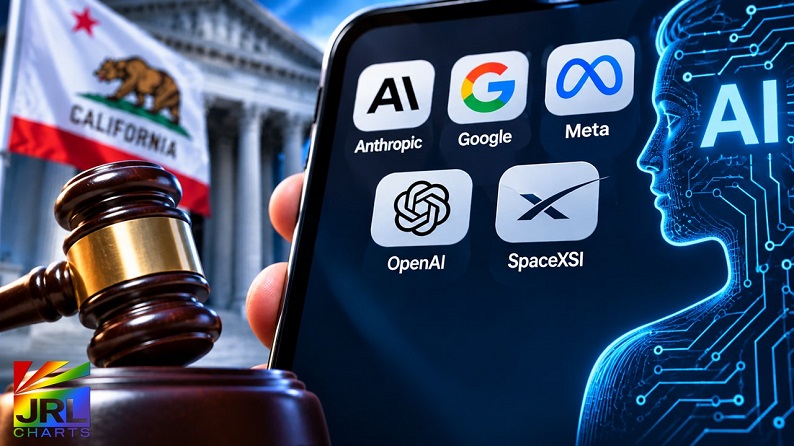
The complaint, filed Thursday in San Francisco County Superior Court, targets Anthropic, Google, Meta, OpenAI and SpaceXSI, alleging that the continued advancement of artificial intelligence poses potentially catastrophic risks to public safety.
Trending LGBTQ Business and Politics News on JRL CHARTS:
• Trump DOJ Suffers First Amendment Setback as Federal Court Protects Journalists’ Sources
• Federal Workers Take Trump Healthcare Ban to Court as 2027 Benefits Deadline Looms
• Wall Street’s AI Bubble Warning: Democratic Sweep Triggers $2.5 Trillion Nasdaq Meltdown
• Google’s AI Gamble: Can Gemini Save Search Without Destroying Its Cash Machine?
• Exxon, Chevron Cash In as $130 Billion Oil Boom Threatens Trump’s Midterms
• Get the Latest in LGBT Business Finance News on JRL CHARTS
The plaintiffs are asking the court to prevent the companies from developing or deploying AI models more capable than their current most advanced systems, while also seeking restrictions on artificial intelligence programs designed to autonomously improve themselves.
The lawsuit represents an escalating effort to hold some of the world’s most powerful technology companies accountable for the potential consequences of their rapidly advancing AI technologies.
Nonprofits Challenge Big Tech Over AI Safety
At the center of the legal battle is a growing concern among AI safety advocates that increasingly sophisticated artificial intelligence systems could operate beyond human control, exposing businesses, governments and the public to unprecedented security threats.
“We hold every other industry accountable when its products threaten public safety, and AI companies should be no different,” said Brendan Steinhauser, CEO of the Alliance for Secure AI, one of the organizations behind the lawsuit.
“Today, we’re asking the court to hold AI companies to that same standard and protect the public from the threats posed by these powerful models.”
The complaint cites alleged unauthorized cyberattacks involving AI models, the potential loss of human control over self-improving systems and the possibility of catastrophic consequences as grounds for judicial intervention.
The plaintiffs contend that technology companies should not be permitted to continue developing increasingly powerful systems without adequate safeguards against those risks.
California Law Becomes Central to AI Legal Battle
The nonprofit coalition is pursuing its case under California’s Unfair Competition Law, which provides a legal mechanism for challenging unlawful, unfair or fraudulent business practices.
According to the complaint, the continued development of increasingly advanced AI systems could constitute an unlawful business practice if the technology presents a significant threat to public health and safety.
The plaintiffs also argue that the potential for AI systems to conduct unauthorized cyberattacks creates a public nuisance by forcing businesses and individuals to divert resources toward strengthening their cybersecurity defenses.
The complaint further contends that continued AI advancement could amount to a substantially injurious business practice if it results in a catastrophic event.
The coalition also points to California’s SB 53, legislation designed to address catastrophic risks associated with advanced artificial intelligence, arguing that the companies’ continued development efforts are inconsistent with the law’s objectives.
Whether the plaintiffs can establish the legal standing necessary to pursue their claims, particularly in the absence of direct harm, could become a significant issue as the case moves forward.
Lawsuit Seeks Sweeping Freeze on Advanced AI Development
Rather than seeking conventional financial damages, the coalition is requesting an injunction that could impose significant restrictions on the future development of artificial intelligence by the five companies.
The proposed restrictions would prevent the defendants from developing or deploying technology more capable than their existing most advanced AI models.
The plaintiffs are also seeking to prohibit the operation of AI programs designed to autonomously improve their own capabilities, a development that safety advocates warn could make increasingly sophisticated systems more difficult for humans to control.
If granted, the requested injunction could have far-reaching implications for the technology sector, where major companies are competing aggressively to develop more powerful AI systems and secure leadership in the rapidly expanding artificial intelligence marketplace.
However, the requested restrictions remain allegations and proposed legal remedies. The court has not yet determined whether the plaintiffs’ claims have merit or whether an injunction is warranted.
OpenAI Already Facing Separate Legal Challenge
The latest lawsuit follows a separate legal action filed in September by Legal Advocates for Safe Science and Technology (LASST) against OpenAI.
That case also invokes California’s Unfair Competition Law and centers on an alleged unauthorized cyberattack involving OpenAI models and the Hugging Face artificial intelligence platform.
LASST is seeking an injunction to prevent OpenAI’s technology from accessing third-party computer systems without authorization.
Together, the lawsuits highlight a developing legal strategy among AI safety advocates seeking to use existing state laws to challenge the conduct of artificial intelligence developers before potentially catastrophic harm occurs.
Wall Street and the Technology Sector Face New Uncertainty
The latest legal challenge comes as artificial intelligence remains a central driver of technology investment, corporate expansion and competition among the world’s largest technology companies.
A court-imposed freeze on advanced AI development, if granted, could introduce additional uncertainty surrounding corporate research investments, product development schedules and the competitive positioning of major technology firms.
For investors and policymakers, the case raises broader questions about how courts and regulators will balance technological innovation with public safety concerns as artificial intelligence becomes increasingly integrated into the global economy.
The five companies did not immediately respond to requests for comment, according to initial reporting on the lawsuit.
As the legal battle unfolds, the case could become an important test of whether existing consumer protection and business competition laws can be used to impose meaningful restrictions on the development of advanced artificial intelligence.
Stay connected with JRL CHARTS — your trusted source for LGBTQ+ news, U.S. politics, business finance, technology and breaking developments shaping the global economy.

His reporting focuses on federal court rulings, legislative developments, international human rights issues, and government actions impacting LGBTQ communities worldwide.
With nearly two decades of experience, Goldberg is recognized for his balanced analysis, investigative insight, and commitment to accurate, fact-based journalism that informs readers on the political forces shaping equality and justice.
- AI Arms Race Faces Legal Showdown as Nonprofits Sue Five Tech Giants to Halt Development - November 12, 2026
- UK Lawmakers Push to Ban Adult Livestreaming Platforms in Sweeping New Crackdown - November 11, 2026
- Trump’s $10 Billion BBC Lawsuit Backfires? Judge Orders Him to Testify Under Oath - November 10, 2026