By: Paul Goldberg – Senior Correspondent | LGBT Politics Philadelphia News
PHILADELPHIA, PA — (August 8, 2026) — Philadelphia’s 2026 Pride celebration was supposed to showcase the strength and visibility of one of America’s most historic LGBTQ+ communities.
Instead, the police response to crowds gathering in the city’s Gayborhood has developed into an escalating fight over policing, accountability and how Philadelphia protects LGBTQ+ residents during one of the community’s biggest annual celebrations.
Now Trending on LGBT Politics News on JRL CHARTS:
• New York Moves to End 41-Year Gay Bathhouse Ban in Historic Policy Shift
• Minneapolis Moves to Repeal 1988 Gay Bathhouse Ban Amid Culture-War Attacks
• Education Department Drops LGBTQ+ Student Data From Civil Rights Survey
• Global HIV Funding Plunges After Trump Aid Cuts, New Reports Warn
• EEOC Moves to End 60 Years of Workplace Diversity Data Collection
Philadelphia City Council authorized hearings after images and eyewitness accounts raised concerns about police tactics used following Pride festivities on June 7. Council’s resolution specifically called for examination of the city’s crowd-control strategy following reports of overly aggressive tactics by the Philadelphia Police Department.
The controversy has put Police Commissioner Kevin J. Bethel and the Philadelphia Police Department under heightened scrutiny while LGBTQ+ advocates and city lawmakers seek answers about how the operation unfolded — and what must change before another major community gathering takes place.
Pride’s Move to the Parkway Changed Philadelphia’s 2026 Celebration
Understanding the controversy requires looking at a major change to Pride itself.
Philadelphia’s official 2026 Pride March began at 13th and Locust Streets in the Gayborhood at 11 a.m. before traveling toward the Benjamin Franklin Parkway. The official festival then operated along the Parkway from noon until 7 p.m.
The city described the festival as including LGBTQ+ community resources, youth and family programming, a sober space and other activities. Philadelphia’s Department of Public Health later estimated approximately 150,000 people participated in the June 7 Pride march and festival.
But moving the main festival away from its traditional Gayborhood setting didn’t mean the neighborhood suddenly stopped being a Pride destination.
People returned to the Gayborhood, home to LGBTQ+ bars, businesses and gathering places, as festivities continued into the evening.
That’s where the situation changed dramatically.
Police Response in the Gayborhood Triggers Backlash
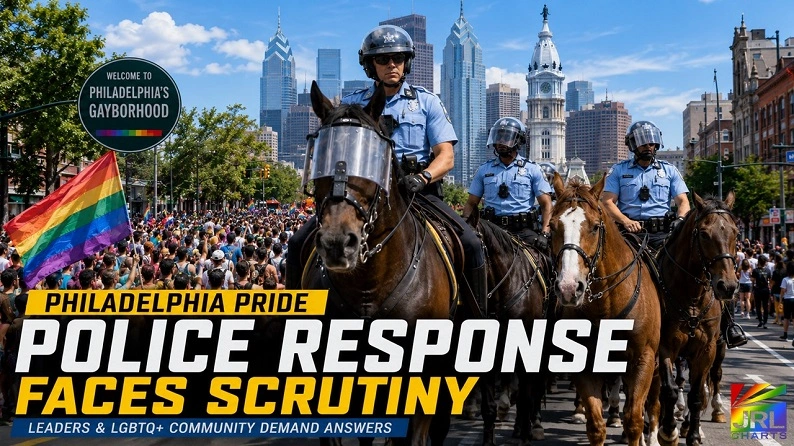
Philadelphia police deployed a substantial law-enforcement presence as crowds gathered in Center City.
Photos and videos circulated showing mounted officers, motorcycle units, barricades and officers interacting with people in the streets. Local reporting documented accusations that police pushed attendees while attempting to disperse crowds, and some officers were seen with their faces covered.
Police said 15 people were arrested during the Gayborhood disturbances.
Commissioner Bethel subsequently defended the department’s overall response, saying officers faced public-safety concerns involving large groups of young people and that police resources had been strained by multiple events.
That explanation, however, hasn’t ended the controversy.
For critics, the central question isn’t simply why officers were present. It’s whether the tactics used were proportionate to the situation officers encountered.
Rue Landau Pushes City Council for Answers
Councilmember Rue Landau has emerged as one of the central figures demanding scrutiny of what happened.
Landau, Philadelphia City Council’s first openly LGBTQ+ member, introduced the measure authorizing hearings into the city’s response.
When Council first moved toward an investigation in June, Landau said the incident appeared to involve failures in communication, planning and decision-making on the ground. Council unanimously approved the resolution authorizing hearings into the crowd-control response.
That distinction matters.
The Council inquiry is larger than determining whether individual officers violated department policy. It raises questions about how the operation was planned, who made tactical decisions and whether Philadelphia’s approach to managing Pride crowds differed from its handling of other major public gatherings.
Masked Officers Become Another Flashpoint
One particularly sensitive issue has been the appearance of officers wearing facial coverings.
Local reporting following Pride said several officers were observed with covered faces and that the department was examining whether officers violated its policies.
For a city already engaged in a broader debate over identifiable law-enforcement officers and civilian accountability, the imagery added another layer to the controversy.
It also transformed what could have remained a dispute about crowd management into a larger discussion about transparency.
If residents are expected to comply with directions from police officers during a chaotic public gathering, LGBTQ+ advocates argue that residents must also be able to identify the officials exercising that authority.
The Gayborhood Wasn’t “Nothing”
The dispute also exposes a deeper cultural question: What does Philadelphia’s Gayborhood represent during Pride?
The official festival may have relocated to the Parkway, but the Gayborhood remained a natural gathering place for LGBTQ+ residents and visitors.
Indeed, the city’s own official Pride route started there.
The march began at 13th and Locust — in the heart of the Gayborhood — before traveling toward the Parkway festival.
That history and symbolism make the neighborhood more than simply another collection of Center City streets. For generations of LGBTQ+ Philadelphians, it has represented community, nightlife, activism and visibility.
The confrontation therefore carried significance well beyond an ordinary crowd-control operation.
LGBTQ+ Youth Become Central to the Debate
Young people have also become central to competing explanations of what happened.
Bethel has pointed to concerns involving large groups of teenagers and public safety as part of the context surrounding the police deployment.
But that explanation raises another question for city leaders: Where are young people — particularly LGBTQ+ youth — expected to gather?
Pride itself was advertised by Philadelphia as an inclusive public celebration featuring dedicated youth and family programming.
The presence of young people at or near Pride therefore isn’t inherently unusual.
The larger policy challenge is whether Philadelphia can provide places for young residents to gather while distinguishing between actual unlawful behavior and the simple presence of large groups of teenagers in public.
Civilian Police Oversight Takes on New Importance
The Pride controversy is also arriving during an important period for civilian police oversight in Philadelphia.
Just three days before Pride, City Council unanimously approved a resolution recognizing Civilian Police Oversight Day, emphasizing the importance of independent oversight and public trust in policing.
Philadelphia’s Citizens Police Oversight Commission, or CPOC, provides civilian oversight and participates in hearings involving alleged officer misconduct. Its public meetings also provide residents opportunities to raise concerns about policing.
The timing makes the Pride controversy particularly significant.
Philadelphia had just publicly reaffirmed the importance of civilian oversight when one of the city’s most visible minority communities began demanding precisely that kind of accountability.
Mayor Cherelle Parker Promises Accountability
Mayor Cherelle L. Parker has also acknowledged the anger surrounding the police response.
Following the June incident, Parker said her administration was examining what happened and meeting with community leaders. She acknowledged that LGBTQ+ residents were frustrated and seeking answers and said accountability would follow where appropriate.
That leaves Philadelphia with several separate but connected processes: internal police review, political oversight from City Council and continuing demands from LGBTQ+ residents for greater transparency.
What those processes ultimately produce will determine whether the controversy results in disciplinary action, policy changes, revised crowd-control procedures — or broader reforms.
Philadelphia Pride Controversy Is Now About Public Trust
The significance of what happened June 7 now extends far beyond a single Pride celebration.
Philadelphia is being asked to reconcile two responsibilities that should not be mutually exclusive: maintaining public safety during large gatherings and ensuring residents can celebrate without facing unnecessary or disproportionate police intervention.
The Police Department maintains that officers were responding to genuine public-safety concerns.
LGBTQ+ residents, advocates and members of City Council are asking whether the tactics deployed actually made the situation safer — and whether the same approach would have been used at another major Philadelphia celebration.
Those questions are now part of the official record.
City Council’s resolution specifically calls for examination of Philadelphia’s strategy and tactics for crowd control during and following public events, meaning the consequences of the Pride controversy could eventually reach beyond LGBTQ+ events alone.
For Philadelphia’s LGBTQ+ community, however, the issue remains deeply personal.
Pride is built around the freedom to gather publicly, claim space and celebrate a community that spent generations fighting simply to be visible.
What happened in the Gayborhood has now forced Philadelphia to confront another question:
How does the city protect that freedom while protecting the people exercising it?
Stay with JRL CHARTS LGBT Politics Philadelphia News as we follow the City Council investigation, Philadelphia Police Department response and continuing calls for accountability from the city’s LGBTQ+ community.
His reporting focuses on federal court rulings, legislative developments, international human rights issues, and government actions impacting LGBTQ communities worldwide.
With nearly two decades of experience, Goldberg is recognized for his balanced analysis, investigative insight, and commitment to accurate, fact-based journalism that informs readers on the political forces shaping equality and justice.
- Meta Paid 29 Anti-LGBTQ Accounts as 2026 Midterm Misinformation Spreads - October 14, 2026
- Orbán’s Anti-LGBTQ Legacy Crumbles as Hungary Votes 139–51 for Change - October 13, 2026
- Japan Faces a $101.5 Billion LGBTQ Equality Problem, Economic Study Warns - October 12, 2026