By: Paul Goldberg – Senior Correspondent | LGBT Politics USA
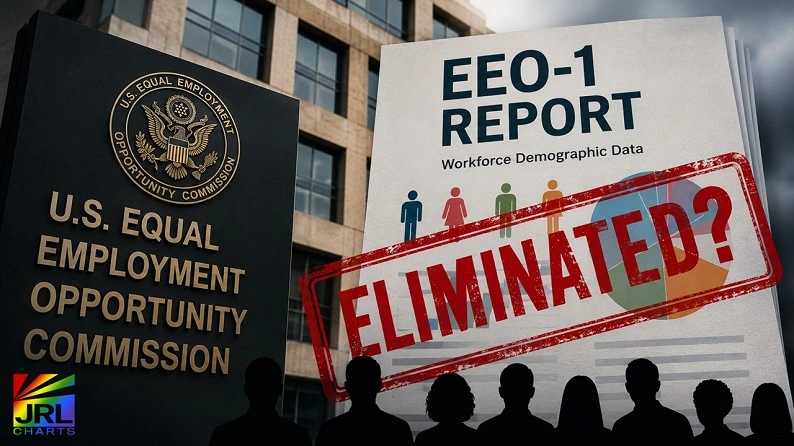
WASHINGTON, D.C. — (July 21, 2026) — The Equal Employment Opportunity Commission (EEOC) has voted to advance a proposal that would eliminate one of the federal government’s longest-running workplace civil rights reporting programs, triggering sharp criticism from employment advocates and civil rights organizations across the country.
In a 2-1 vote, the Republican-controlled commission approved a proposal to end the longstanding EEO-1 workforce reporting requirement, sending the measure into a 30-day public comment period before a final vote. The commission has also scheduled a public hearing for August 11.
Now Trending on EEOC Proposals and Policies on JRL CHARTS:
• Project 2025 Already 50% Complete: Inside Trump’s Plan Reshaping America
• Judge Kacsmaryk Guts LGBTQ Job Protections in Texas Ruling
• VA Restructures LGBTQ+ Veteran Programs Under New Federal Policy Changes
• EEOC Rolls Back LGBTQ+ Protections, Stops Investigations
• From Sandy Hook to Voting Rights: How Conservative Courts Are Rewriting U.S Law
If finalized, the proposal would end a reporting requirement that has existed for nearly six decades and currently applies to approximately 73,000 employers representing more than 50 million American workers.
What the EEO-1 Reports Measure
The annual EEO-1 report requires employers with at least 100 employees, along with many federal contractors employing 50 or more workers, to submit anonymous workforce demographic information based on race, ethnicity and gender.
The reports do not identify individual employees. Instead, they provide aggregate workforce data that has long been used by federal agencies to monitor employment trends and help identify possible patterns of systemic workplace discrimination.
Supporters of the reporting system argue the data plays an important role in enforcing federal civil rights laws and identifying industries or employers where discriminatory hiring or promotion patterns may exist.
The EEOC and civil-rights investigators have historically used the information to:
- Examine patterns in hiring and promotion.
- Identify possible systemic discrimination.
- Compare representation across industries and occupations.
- Help determine whether an individual complaint may reflect a broader workplace pattern.
- Track employment progress for women and racial or ethnic minorities.
EEOC Says Reporting Is No Longer Necessary
EEOC Chair Andrea Lucas argued the reporting requirement places an unnecessary financial burden on employers.
According to the agency, businesses spend an estimated $275 million annually complying with EEO-1 reporting, while the federal government spends roughly $4 million to administer the program.
Lucas also argued the collection of demographic workforce data conflicts with the principle that employment decisions should remain “colorblind” under Title VII of the Civil Rights Act.
In prepared remarks released before the vote, Lucas said the reporting requirements create legal and constitutional concerns because they encourage employers to focus on race and gender despite federal protections against discrimination.
Critics Warn Civil Rights Enforcement Could Be Weakened
Civil rights organizations and former EEOC officials strongly dispute that argument.
A coalition of former EEOC leaders previously stated that the proposal is based on unsupported assumptions that demographic reporting encourages race-based hiring.
Instead, they argue the information has historically been used to identify possible discrimination, monitor national employment trends, and assist enforcement of existing civil rights protections—not to impose hiring quotas.
Opponents also warn that eliminating the reporting system could make it significantly more difficult for regulators to detect broad patterns of workplace discrimination before complaints are filed.
Proposal Extends Beyond Private Businesses
The proposed rescission is broader than the EEO-1 report used by private employers.
According to the rulemaking information, the commission is also seeking to eliminate related demographic reporting requirements involving:
- Labor unions.
- State and local governments.
- Public school systems.
- Apprenticeship programs.
- Other institutions covered by federal employment laws.
The change would therefore reduce standardized workforce reporting across multiple sections of the American economy and public sector.
Project 2025 Connection Draws Renewed Attention
The proposal has also renewed scrutiny of Project 2025, the policy blueprint developed by the Heritage Foundation that recommended eliminating several federal diversity and equity initiatives, including ending mandatory EEO-1 reporting.
Although President Donald Trump publicly distanced himself from Project 2025 during the presidential campaign, several individuals associated with the initiative have since been appointed to senior positions throughout the administration.
The EEOC proposal aligns with recommendations contained in the Project 2025 policy framework, making it the latest administration initiative drawing comparisons to the controversial blueprint.
JRL CHARTS has previously reported extensively on Project 2025 and its potential impact on LGBTQ rights, federal civil rights enforcement, and diversity policies. Readers can explore our continuing coverage for additional background and analysis on how these policy proposals continue to shape federal agency actions.
Public Comment Period Begins
Before the proposal can take effect, the EEOC will open a 30-day public comment period, allowing employers, labor organizations, civil rights groups and members of the public to submit feedback.
A public hearing is scheduled for August 11, after which the commission will determine whether to finalize the rule.
Should the proposal ultimately be adopted, it would mark one of the most significant changes to federal workplace reporting requirements since the EEO-1 program was established nearly 60 years ago.
Stay with JRL CHARTS LGBT Politics USA for continuing coverage of federal civil rights policy, Project 2025 developments, employment law, and the government decisions shaping the future of workplace equality in America.
His reporting focuses on federal court rulings, legislative developments, international human rights issues, and government actions impacting LGBTQ communities worldwide.
With nearly two decades of experience, Goldberg is recognized for his balanced analysis, investigative insight, and commitment to accurate, fact-based journalism that informs readers on the political forces shaping equality and justice.
- Taipei Gay Bar Raid Sparks Outrage as Police Face LGBTQ Backlash - October 11, 2026
- LGBTQ Voters Are Fired Up for the 2026 Midterms — HRC Survey Reveals 87% Plan to Vote - October 11, 2026
- OnlyFans and MYM Escape Sweeping French Crackdown After Parliament Showdown - October 8, 2026