By: Paul Goldberg — Senior Correspondent | LGBT Politics USA
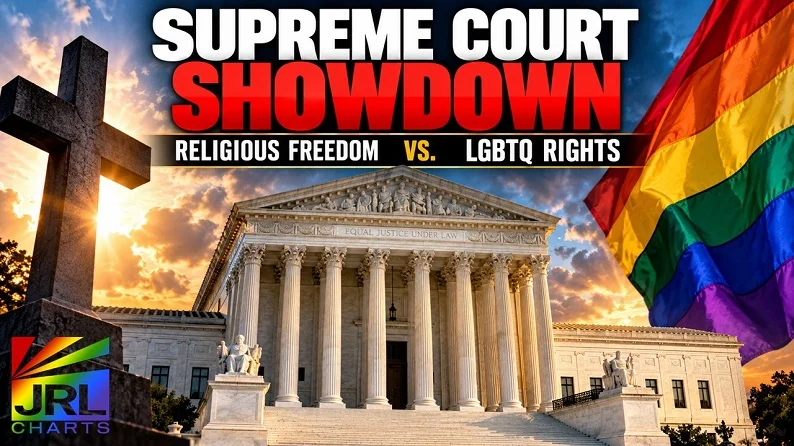
WASHINGTON, D.C. — (October 28, 2026) — The U.S. Supreme Court is preparing to hear a major religious freedom case that could reshape how states enforce LGBTQ nondiscrimination protections at taxpayer-funded religious schools.
At the center of the controversy is St. Mary Catholic Parish v. Roy, a Colorado lawsuit challenging whether religious preschools can receive public education funding while maintaining admissions policies that exclude LGBTQ children or children with same-sex parents.
Trending LGBTQ Business and Politics News on JRL CHARTS:
• Lindsey Graham Accused of Paying 3 Male Escorts — One Claims He Was 17
• Supreme Court Blocks Trump’s Transgender Prison Care Ban in Major Legal Setback
• UNC Settles 18 Trump Administration Probes as Race and DEI Rules Face New Scrutiny
• Catholic Relief Services Loses Major LGBTQ Benefits Battle in Federal Appeals Court
• LGBTQ Voters Are Fired Up for the 2026 Midterms — HRC Survey Reveals 87% Plan to Vote
• Review More in LGBTQ Business and Politics News on JRL CHARTS
The justices are scheduled to hear oral arguments on November 3, setting up another constitutional confrontation involving religious liberty, LGBTQ civil rights and government funding.
Colorado Preschool Funding Sparks Supreme Court Battle
Colorado’s universal preschool program provides publicly funded education opportunities for eligible four-year-old children, allowing families to select participating public, private and religious institutions.
However, schools accepting state funding must comply with nondiscrimination requirements, including protections based on sexual orientation and gender identity.
Two Catholic preschools — St. Mary Catholic Virtue School in Littleton and Wellspring Catholic Academy (Closed in 2024) in Lakewood — challenged those requirements, arguing that certain admissions restrictions reflect their religious beliefs.
The institutions sought exemptions from Colorado’s LGBTQ protections while remaining eligible for the state’s preschool funding program.
Colorado officials rejected the requested exemptions, leading to litigation that eventually reached the nation’s highest court.
Religious Freedom Versus LGBTQ Nondiscrimination
The Catholic institutions argue that Colorado’s funding conditions interfere with their First Amendment right to freely exercise their religion.
Their legal position centers on whether the state may require religious schools to modify faith-based admissions policies as a condition of participating in a generally available education program.
Colorado maintains that participating institutions must follow the same nondiscrimination standards regardless of religious affiliation.
Supporters of the state’s position argue that public education funding should remain accessible to children and families without exclusions based on LGBTQ identity.
The dispute raises a broader constitutional question: Does religious freedom require states to provide public funding to institutions that decline to comply with otherwise applicable nondiscrimination requirements?
Previous Supreme Court Rulings Shape the Debate
The upcoming hearing follows several major Supreme Court decisions addressing religious liberty and LGBTQ protections.
In Carson v. Makin (2022), the Court ruled that Maine could not exclude otherwise eligible religious schools from a private-school tuition assistance program simply because they provided religious instruction.
Meanwhile, Fulton v. City of Philadelphia (2021) involved a Catholic foster-care agency challenging a municipal nondiscrimination requirement concerning same-sex couples.
Those decisions provide important legal context, although neither conclusively resolves the specific Colorado preschool dispute.
The justices must now examine whether requiring participating religious schools to comply with LGBTQ-inclusive admissions rules constitutes an unconstitutional burden on religious exercise.
LGBTQ Advocates Warn of Broader Consequences
Civil rights organizations, education advocates and several labor unions have expressed concern about the potential implications of a ruling that requires states to provide funding despite noncompliance with LGBTQ nondiscrimination conditions.
The National Education Association, American Federation of Teachers and Service Employees International Union are among the organizations supporting Colorado’s position.
Opponents of the requested religious exemptions argue that such a ruling could weaken the ability of states to attach equal-access protections to publicly funded education and other government programs.
Supporters of the religious schools counter that government benefits should not require faith-based institutions to abandon sincerely held religious convictions.
The case therefore reaches beyond a dispute involving two Colorado preschools, raising questions about the relationship between constitutional religious protections and state-administered public benefits.
Supreme Court Hearing Set for November 3
The Supreme Court has agreed to review two questions presented by the petitioners but has not agreed to reconsider the longstanding precedent established in Employment Division v. Smith (1990).
That decision generally limits religious exemptions from neutral laws of general applicability.
With oral arguments approaching, the case is drawing national attention from religious organizations, LGBTQ civil rights advocates, education groups and constitutional law experts.
The Bottom Line: The Supreme Court’s decision could clarify whether states can enforce LGBTQ nondiscrimination conditions on religious schools participating in publicly funded education programs.
A ruling could carry consequences for religious liberty claims, state education policies and protections for LGBTQ families beyond Colorado.
Stay with JRL CHARTS LGBT Politics USA for continuing coverage of the U.S. Supreme Court, LGBTQ civil rights, religious freedom and the legal decisions shaping equality across America.
His reporting focuses on federal court rulings, legislative developments, international human rights issues, and government actions impacting LGBTQ communities worldwide.
With nearly two decades of experience, Goldberg is recognized for his balanced analysis, investigative insight, and commitment to accurate, fact-based journalism that informs readers on the political forces shaping equality and justice.
- Can Religious Schools Reject LGBTQ Families and Still Get Taxpayer Money? Supreme Court to Decide - October 28, 2026
- Fed Holds Rates at 4% as Wall Street Bets on December Hike - October 28, 2026
- Stocks Up 12%, Bonds Under Pressure — Morningstar Reveals Wall Street’s Growing Divide - October 26, 2026