By: Paul Goldberg – Senior Correspondent | LGBT Politics USA
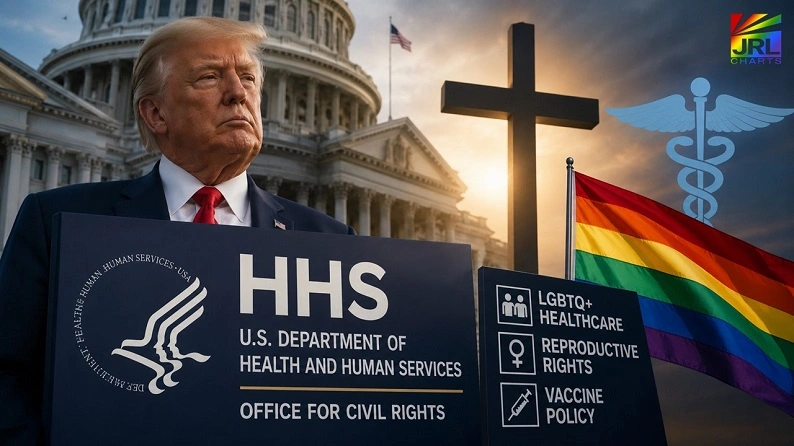
LAS VEGAS, NV — (July 1, 2026) — The Trump administration has placed religious freedom and conscience protections at the center of federal health policy, introducing structural changes that legal experts say could significantly influence future decisions involving LGBTQ+ healthcare, reproductive medicine, vaccine policies and federal civil rights enforcement.
The changes follow a reorganization within the U.S. Department of Health and Human Services (HHS), which now places greater emphasis on protecting religious liberty and conscience rights across federally funded healthcare programs.
Now Trending on LGBT Business Finance News on JRL CHARTS:
• ACA Subsidy Loss Triggers Healthcare Shock for LGBTQ Americans
• Trump-Appointed 9th Circuit Judges Revive Lawsuit Against Alaska Airlines Over LGBTQ Policy
• Tennessee Christian School Settles With Student Suspended After Coming Out as Gay
• LGBTQ Consumers Shift Spending Away from Target, Walmart and Amazon
• Millions of Working Americans Are Going Hungry—and Nobody Is Talking About It
HHS Reorganization Prioritizes Religious Liberty
According to HHS, the newly structured Office for Civil Rights will oversee enforcement of federal protections involving religious freedom, conscience rights and anti-discrimination laws within programs administered or funded by the department.
Federal officials said the changes are designed to strengthen protections for healthcare professionals, organizations and institutions that raise religious or moral objections while also addressing race-based discrimination, antisemitism and anti-Christian bias.
The department stated that the revised framework will guide interactions with federal agencies, state governments, healthcare providers, insurers and other organizations receiving HHS funding.
Legal Experts Warn of Broader Impact
Several constitutional and healthcare law scholars believe the restructuring signals a significant policy shift.
Dorit Reiss, a professor at UC Law San Francisco told The Guardian that emphasizing religious freedom within federal healthcare policy could allow broader exemptions based on religious beliefs, particularly regarding LGBTQ+ patients.
Reiss also suggested the administration could use federal funding requirements to encourage states and healthcare providers to adopt policies reflecting those priorities.
Meanwhile, Liz Sepper, professor of law at the University of Texas School of Law also told The Guardian that the changes appear closely tied to long-standing debates surrounding reproductive healthcare and conscience protections for medical providers.
She noted that many of the federal statutes referenced by HHS historically involve providers who object to participating in abortion-related services.
DOJ Report Expands Religious Liberty Discussion
The policy shift coincides with a newly released Department of Justice report examining religious liberty protections.
The report discusses several healthcare issues, including abortion, vaccine mandates and gender-affirming medical care. Legal observers say the document could provide insight into how the administration may approach future regulatory actions involving religious conscience protections.
Some experts believe additional federal guidance or rulemaking could further define how these protections apply across healthcare systems.
Potential Implications for LGBTQ+ Healthcare
Civil rights advocates have expressed concern that expanded conscience protections could affect patient access to certain healthcare services, particularly for LGBTQ+ Americans seeking gender-affirming care or other medically necessary treatment.
Healthcare law experts also point to possible legal questions involving the federal Emergency Medical Treatment and Labor Act (EMTALA), which requires hospitals to provide emergency medical care regardless of a patient’s circumstances.
Future interpretations of existing conscience statutes may determine how providers balance religious objections with federal obligations to deliver emergency and non-discriminatory healthcare.
Ongoing Policy Debate
The administration’s restructuring reflects a broader effort to redefine how religious liberty protections are applied throughout the federal healthcare system.
Supporters argue the changes strengthen constitutional protections for religious beliefs and conscience rights among healthcare providers.
Critics contend that expanded exemptions could create new barriers to healthcare access for LGBTQ+ individuals, reproductive health patients and other vulnerable populations.
As additional regulations and legal challenges emerge, the scope of these policy changes will likely remain under close scrutiny by healthcare providers, advocacy organizations and the federal courts.
His reporting focuses on federal court rulings, legislative developments, international human rights issues, and government actions impacting LGBTQ communities worldwide.
With nearly two decades of experience, Goldberg is recognized for his balanced analysis, investigative insight, and commitment to accurate, fact-based journalism that informs readers on the political forces shaping equality and justice.
- Meta Paid 29 Anti-LGBTQ Accounts as 2026 Midterm Misinformation Spreads - October 14, 2026
- Orbán’s Anti-LGBTQ Legacy Crumbles as Hungary Votes 139–51 for Change - October 13, 2026
- Japan Faces a $101.5 Billion LGBTQ Equality Problem, Economic Study Warns - October 12, 2026