By Paul Goldberg — Senior Correspondent | JRL CHARTS LGBT Business Finance News
NEW YORK, NY — (November 20, 2026) — Wall Street’s November selloff intensified Friday as the technology-heavy Nasdaq Composite erased its gains for 2026 during trading, while investors seeking protection in healthcare stocks faced another unexpected wave of selling across major insurance companies and hospital operators.
The market turmoil has exposed a troubling development for investors: the defensive healthcare trade, widely viewed as a potential refuge from declining artificial intelligence and technology stocks, is now facing substantial pressure from its own regulatory and political uncertainties.
Trending LGBTQ Business Finance News on JRL CHARTS:
• Anthropic’s $1.5 Trillion IPO Shakes Wall Street — What LGBTQ Businesses Need to Know
• Bessent Forces AI Chip Crackdown as Trump Cabinet Feud Explodes Over China
• Wall Street Sinks as Inflation Shock Sends Treasury Yields Toward 5%
• Cedars-Sinai Takes Aim at LGBTQ Smoking Crisis With The Quit Alliance
• Google’s AI Gamble: Can Gemini Save Search Without Destroying Its Cash Machine?
• LGBTQ Funding Crisis Deepens as 36% of Surveyed Groups Warn They Could Close Within a Year
• Get the Latest in LGBT Business Finance News on JRL CHARTS
MarketWatch reported Friday that the Nasdaq had wiped out its year-to-date gains as major U.S. indexes headed toward one of their most difficult trading weeks in more than a year.
Meanwhile, UnitedHealth Group, Humana, CVS Health, and major hospital operators have suffered significant losses, underscoring the difficulty of finding protection during a broad market retreat.
Wall Street Selloff Deepens After Anthropic’s Historic IPO
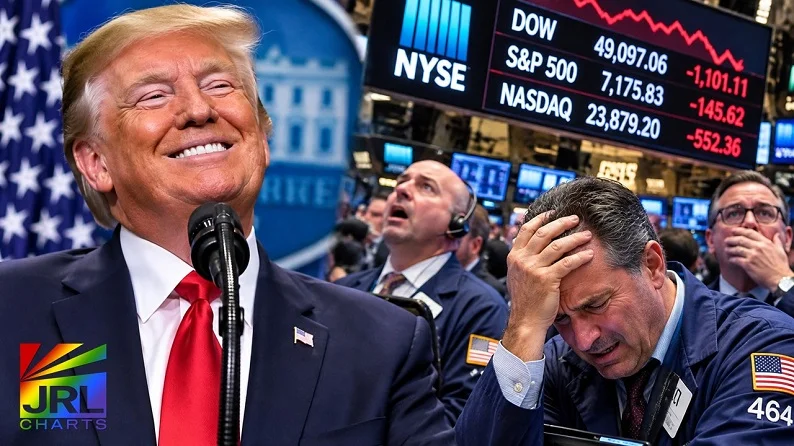
The latest market decline follows a turbulent Thursday session in which all three major U.S. stock indexes fell more than 2%.
The Dow Jones Industrial Average plunged 1,101.11 points, closing at 49,097.06, while the S&P 500 declined 2% to 7,175.83.
The Nasdaq Composite lost approximately 2.3%, finishing at 23,879.20.
Thursday’s retreat marked the S&P 500’s sixth consecutive losing session, its longest such streak since 2024.
The selloff came despite an enthusiastic initial reception for Anthropic’s historic initial public offering.
The artificial intelligence company priced its shares at $83, opened trading at $111.50, and briefly climbed to approximately $115 before surrendering much of its intraday advance.
Although Anthropic finished its first session above its IPO price, its debut failed to reverse broader concerns about technology valuations, AI infrastructure spending, and the sustainability of the sector’s extraordinary market gains.
Investors increasingly appear to be reassessing the prices they are willing to pay for companies associated with the artificial intelligence boom.
Healthcare Stocks Lose Their Safe-Haven Appeal
One of the most significant developments has been the reversal in healthcare shares.
As investors reduced exposure to technology and artificial intelligence companies, healthcare initially appeared attractive because demand for medical services, pharmaceuticals, and insurance coverage can remain relatively resilient during economic uncertainty.
However, healthcare companies face risks that extend beyond the economic cycle, particularly changes to federal reimbursement policies, Medicare regulations, and government oversight.
MarketWatch reported that several major healthcare stocks have experienced steep five-day declines.
UnitedHealth Group fell approximately 16.6%, while Humana declined 14.2% and CVS Health lost 9.1%.
Hospital operators were also affected.
Community Health Systems plunged approximately 26.5%, while Tenet Healthcare declined 9.3%.
Telehealth company Hims & Hers Health dropped approximately 19%.
The broader healthcare sector exchange-traded fund declined approximately 5.8% over the period, compared with a 5.4% decline for the S&P 500.
These figures illustrate how an investment sector traditionally associated with defensive characteristics can still experience substantial losses when investors reassess industry-specific risks.
Medicare Advantage Scrutiny Adds Pressure to Health Insurers
A major source of investor anxiety involves proposed changes to oversight of Medicare Advantage, the privately administered alternative to traditional Medicare.
The Centers for Medicare and Medicaid Services has proposed tighter measures targeting potentially improper payments and questionable diagnosis coding practices.
One area of concern is known as upcoding, in which diagnosis information can make patients appear more medically complex, potentially increasing payments to insurers under Medicare Advantage’s risk-adjustment system.
Federal officials have sought stronger oversight of these practices, while insurers face uncertainty about how expanded auditing and enforcement could affect future revenue.
For companies such as UnitedHealth, Humana, and CVS Health’s Aetna division, changes to reimbursement rules and compliance requirements could influence profitability.
The market reaction reflects concern about the potential financial implications of regulatory changes, not a final determination that the proposed measures will be implemented in their current form.
Bernie Sanders’ Medicare Proposal Creates Additional Uncertainty
Healthcare shares are also responding to renewed debate over federal healthcare policy.
Sen. Bernie Sanders has advanced a Medicare expansion proposal that includes lowering the eligibility age from 65 to 55 and broadening coverage for services such as dental, hearing, and vision care.
Such changes could affect the competitive landscape for private health insurers and alter expectations for future government reimbursement.
However, financial analysts have emphasized that major legislative changes would face substantial political and procedural obstacles.
The proposal has not become law, and the precise effects on insurers and hospital operators would depend on the final legislation, reimbursement structures, and implementation requirements.
For investors, the immediate concern is uncertainty surrounding the sector’s regulatory outlook rather than a confirmed change in federal healthcare benefits.
Why Hospital Stocks Are Falling Alongside Insurance Companies
Hospital operators face a different set of financial pressures from health insurers, but the two industries are closely connected.
Hospitals depend on payments from private insurance companies, Medicare, Medicaid, and patients.
Changes to government coverage programs, payment rates, or insurance participation can affect hospital revenue and operating margins.
Investors are therefore reassessing how potential healthcare policy changes could influence reimbursement levels and patient coverage.
Community Health Systems’ steep five-day decline demonstrates the market’s sensitivity to these uncertainties.
However, not every healthcare company has the same business model or exposure to federal insurance programs. The sector’s recent losses should not be interpreted as evidence that all healthcare businesses face identical financial risks.
What the Market Decline Means for LGBTQ Businesses and Investors
For LGBTQ-owned businesses, entrepreneurs, and investors, the broader market retreat highlights the importance of understanding how financial-market volatility can affect business operations.
Small and independently owned companies may encounter tighter lending conditions, changing consumer confidence, and increased uncertainty when planning expansion or capital expenditures.
Businesses connected to healthcare, employee benefits, and insurance services may also need to monitor proposed changes to federal reimbursement and coverage policies.
For LGBTQ individuals and families, developments involving Medicare and private health insurance may carry additional implications for healthcare access and financial planning.
However, declining insurance-company share prices do not automatically mean that patient coverage or existing healthcare benefits have changed.
Business owners should distinguish between market reactions to proposed policies and actual regulatory or legislative changes.
Wall Street Faces a Critical Test as November Selloff Continues
The latest market turbulence illustrates the interconnected pressures affecting U.S. equities.
Technology investors are reassessing artificial intelligence valuations, while healthcare investors are confronting uncertainty surrounding federal oversight and reimbursement policy.
Even sectors traditionally viewed as defensive have struggled to provide consistent protection during the recent selloff.
Friday’s developing session will help determine whether the Nasdaq’s move into negative year-to-date territory persists through the closing bell and whether broader indexes can stabilize after several consecutive declines.
For now, Wall Street’s November downturn serves as a reminder that defensive investment strategies can reduce certain risks without eliminating exposure to market volatility.
JRL CHARTS LGBT Business Finance News will continue monitoring Wall Street developments, stock market volatility, healthcare sector performance, federal economic policy, and financial trends affecting LGBTQ businesses and investors.
His reporting focuses on federal court rulings, legislative developments, international human rights issues, and government actions impacting LGBTQ communities worldwide.
With nearly two decades of experience, Goldberg is recognized for his balanced analysis, investigative insight, and commitment to accurate, fact-based journalism that informs readers on the political forces shaping equality and justice.
- Wall Street Bloodbath: Nasdaq Erases 2026 Gains as Healthcare Stocks Plunge - November 20, 2026
- Federal Judge Sanctions DOJ Attorney in Explosive LGBTQ Iranian Asylum Case - November 20, 2026
- Anthropic’s $1.5 Trillion IPO Shakes Wall Street — What LGBTQ Businesses Need to Know - November 18, 2026