By Paul Goldberg – Senior Correspondent | LGBT Business Finance News
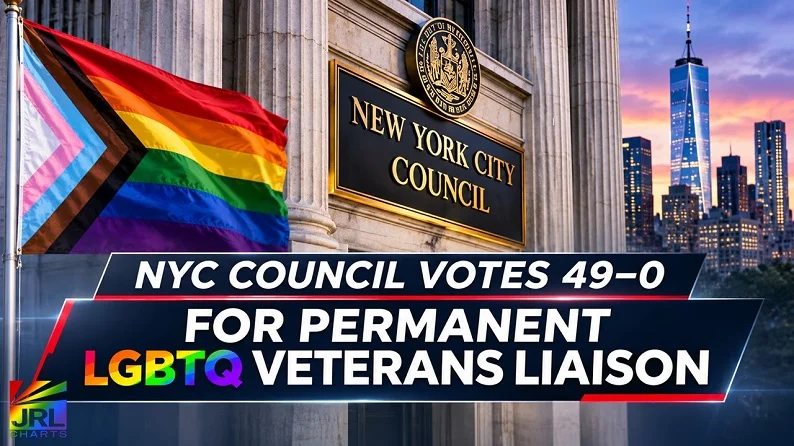
NEW YORK, NY — (November 17, 2026) — The New York City Council has unanimously approved legislation establishing a permanent LGBTQ veterans liaison within the city’s Department of Veterans’ Services, advancing a measure designed to help former military personnel challenge discriminatory discharge records and obtain assistance they may have been denied for years.
The November 12 vote of 49–0 approved Introduction 928-A, sponsored by Republican Councilmember David Carr of Staten Island, as part of a broader Veterans Day legislative package addressing military service, housing assistance, and veterans’ benefits.
Trending Breaking Military News Coverage on JRL CHARTS:
• Trump Explodes Over 60 Minutes Iran War Bombshell as U.S. Soldiers Expose Deadly Security Failures
• Iran Launches Surprise Attack on Bahrain as U.S. Military Airbase Targeted
• Hegseth’s Military Purge Strikes Again as Navy Quietly Removes Another Female Commander
• Pentagon Doubles Hostile Fire Pay to $450—What It Means for Gay and Lesbian Troops in Combat
• Hegseth Wants a ‘Fortress America,’ Robot Warfare and Fewer Generals
• Breaking Military News involving LGBTQ Service Members and Security
The measure would formally establish a dedicated LGBTQ liaison position within the Department of Veterans’ Services, making the role a continuing responsibility rather than relying solely on existing administrative arrangements.
For LGBTQ veterans whose military careers were affected by discriminatory policies, the legislation could provide a more consistent pathway to city assistance and federal discharge review procedures.
NYC LGBTQ Veterans Liaison Will Help Former Service Members Challenge Discharges
Under Introduction 928-A, the designated liaison would be responsible for conducting outreach to LGBTQ veterans, coordinating assistance with military discharge characterization upgrades, and connecting eligible individuals with government programs and support services.
The legislation specifically addresses veterans who received unfavorable discharge classifications because of their sexual orientation or gender identity.
These classifications can complicate access to certain veterans’ benefits, although eligibility depends on individual circumstances and applicable federal rules.
The measure also requires the Department of Veterans’ Services to prepare an annual report documenting its assistance to LGBTQ veterans.
That reporting requirement would provide city lawmakers with information about outreach, referrals, discharge-related assistance, complaints, and barriers encountered by LGBTQ former service members.
Republican Councilmember David Carr Champions LGBTQ Veterans Legislation
Carr, an openly gay Republican and the City Council’s minority leader, sponsored the legislation with support from lawmakers across the political spectrum.
In a November 12 statement released by the City Council, Carr emphasized that veterans affected by past military discrimination continue to face consequences long after the policies responsible for their discharges were repealed.
He argued that the city must ensure those former service members receive meaningful assistance when seeking corrections to their military records and access to available benefits.
Carr described the proposed liaison as a dedicated resource to help veterans obtain discharge reviews and connect with appropriate assistance.
The legislation attracted 19 Council member sponsors, reflecting support extending beyond its original sponsors.
Don’t Ask, Don’t Tell Still Affects LGBTQ Military Veterans
The legislation comes more than 15 years after the repeal of Don’t Ask, Don’t Tell, the federal military policy that prevented gay, lesbian, and bisexual service members from serving openly.
Although the policy ended in September 2011, its consequences did not disappear automatically.
Some former service members left the military with discharge classifications or records reflecting policies that are no longer in effect.
The U.S. Department of Veterans Affairs recognizes discharges related to sexual orientation, including those connected to Don’t Ask, Don’t Tell, as grounds that may support an application for a discharge upgrade.
However, reversing an unfavorable military discharge is not automatic.
Veterans generally must pursue corrections or upgrades through the appropriate military review process, and outcomes depend on the circumstances of each case.
Importantly, a separate Department of Veterans Affairs character-of-discharge determination may allow certain former service members to qualify for VA benefits without changing their original military discharge classification.
New York City’s proposed permanent liaison would help veterans navigate these complicated administrative systems rather than independently grant federal discharge upgrades.
Transgender Military Service Remains a National Policy Dispute
The Council’s action also arrives amid continuing national debate over transgender military service.
President Donald Trump’s administration has pursued restrictions on transgender service members, reviving questions about military eligibility, personnel policy, and the legal rights of those already serving.
The administration has defended its restrictions on military readiness and related policy grounds, while opponents have challenged the measures as discriminatory.
The disputes have generated federal litigation over the government’s authority to impose restrictions and the protections available to affected personnel.
Although the New York City legislation does not change federal military eligibility standards, it establishes a local support mechanism for LGBTQ veterans seeking assistance with military records and government services.
New York City Council Approves Broader Veterans Benefits Package
Introduction 928-A was one of three major veterans-related bills approved during the November 12 Council session.
Introduction 1051-A, sponsored by Councilmember Frank Morano, would provide a full property tax exemption for the primary residences of qualifying permanently and totally disabled veterans, subject to applicable New York State requirements.
The Council approved that measure by a vote of 48–1.
Introduction 488-A, sponsored by Councilmember Inna Vernikov, would require the Department of Housing Preservation and Development to submit annual reports concerning veteran preferences in city-run Mitchell-Lama housing developments.
Those reports would examine veteran and surviving-spouse applications, housing selections, and the administration of veteran preferences.
The Council approved Introduction 488-A unanimously.
Together, the measures address several different challenges facing New York City’s veteran population, from housing affordability to administrative access and military discharge assistance.
What Happens Next for New York City’s LGBTQ Veterans?
Following the November 12 vote, Introduction 928-A advanced through the city’s legislative process.
The Council’s legislation tracker lists the measure with an enacted status while also identifying it as being on the mayor’s desk for signature. The public record reviewed for this report does not identify a signed law number or enactment date.
Once legally effective, the legislation would require the Department of Veterans’ Services to maintain the designated liaison and carry out the prescribed outreach, assistance, and reporting responsibilities.
The broader significance extends beyond the creation of a single city government position.
For LGBTQ veterans whose military records continue to reflect past discriminatory policies, a permanent liaison could provide an identifiable point of contact for navigating discharge reviews and obtaining information about available services.
It also places responsibility on city government to document how effectively those services reach the veterans they are intended to assist.
JRL CHARTS LGBT Breaking Military News Division will continue monitoring developments involving LGBTQ veterans’ rights, military discharge policies, transgender service members, and veterans’ benefits legislation in New York City and across the United States.
His reporting focuses on federal court rulings, legislative developments, international human rights issues, and government actions impacting LGBTQ communities worldwide.
With nearly two decades of experience, Goldberg is recognized for his balanced analysis, investigative insight, and commitment to accurate, fact-based journalism that informs readers on the political forces shaping equality and justice.
- NYC Council Votes 49–0 to Establish Permanent LGBTQ Veterans Liaison - November 17, 2026
- Bessent Forces AI Chip Crackdown as Trump Cabinet Feud Explodes Over China - November 17, 2026
- UK Adult Websites Face Sweeping New Ofcom Rules as 2027 Deadline Looms - November 16, 2026