By Paul Goldberg – Senior Correspondent | LGBT Business Finance News
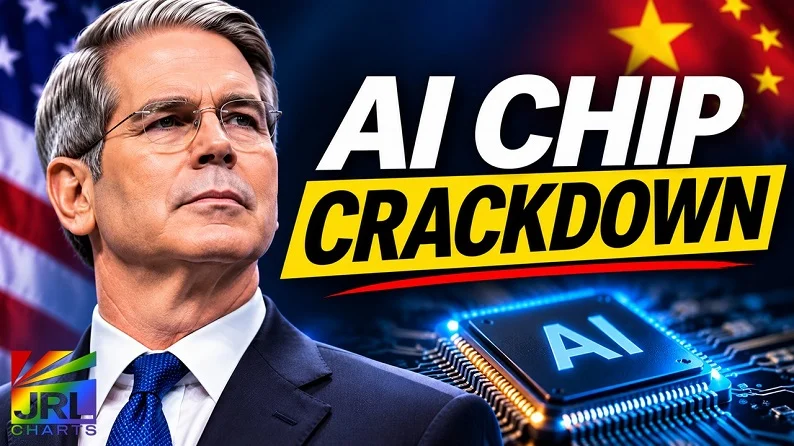
WASHINGTON, D.C. — (November 17, 2026) — A widening power struggle inside President Donald Trump’s administration has erupted into the open after Treasury Secretary Scott Bessent pushed through sweeping new restrictions on China’s access to advanced American artificial intelligence chips, intensifying scrutiny of Commerce Secretary Howard Lutnick and the government’s handling of the Nvidia controversy.
The extraordinary development places the Treasury Department at the center of a technology export-control decision traditionally overseen by Commerce, exposing disagreements over how aggressively Washington should confront China’s rapidly expanding AI capabilities.
Trending LGBTQ Business Finance News on JRL CHARTS:
• Wall Street Sinks as Inflation Shock Sends Treasury Yields Toward 5%
• Cedars-Sinai Takes Aim at LGBTQ Smoking Crisis With The Quit Alliance
• Google’s AI Gamble: Can Gemini Save Search Without Destroying Its Cash Machine?
• LGBTQ Funding Crisis Deepens as 36% of Surveyed Groups Warn They Could Close Within a Year
• Get the Latest in LGBT Business Finance News on JRL CHARTS
At stake is more than a Cabinet rivalry. The restrictions could reshape international semiconductor sales, overseas cloud computing operations and the global competition for advanced artificial intelligence infrastructure.
Treasury Takes the Lead in China’s AI Chip Crackdown
On November 16, the Commerce Department’s Bureau of Industry and Security (BIS) announced an interim final rule targeting remote access to advanced American AI chips and servers.
In an unusually explicit acknowledgment, BIS stated that the regulation was developed at the direction of the Treasury Department and National Security Council.
The rule addresses a major vulnerability in existing U.S. export controls: Chinese companies potentially obtaining computing power from restricted American chips without physically importing those chips into China.
Instead, businesses can access powerful processors remotely through overseas data centers, including facilities operating in Southeast Asia.
The new restrictions seek to close that pathway by imposing additional oversight on remote computing arrangements and strengthening requirements governing advanced semiconductor exports.
The regulations include additional licensing requirements involving Malaysia, Singapore, Indonesia, Thailand and Brazil.
Bessent and Lutnick Clash Over Nvidia Export Controls
The policy announcement follows mounting criticism of Commerce Secretary Howard Lutnick over his department’s response to Singapore-based technology company Megaspeed International.
The company has faced allegations involving the possible diversion of advanced Nvidia technology to China, raising questions about whether existing American export controls were adequately enforced.
During a November 13 CNBC interview, Bessent publicly acknowledged that several federal agencies had supported tougher restrictions against Megaspeed for months.
“Commerce has the pen,” Bessent said, directing questions about the department’s decision-making process toward its leadership.
His remarks intensified speculation about disagreements between Treasury and Commerce over national security enforcement.
The Commerce Department has disputed certain reports describing private confrontations between the two Cabinet officials.
Meanwhile, a November 16 joint statement from the Commerce and Justice departments confirmed that federal investigators began examining Megaspeed in 2024 over potential export-control violations.
The investigation remains a separate matter from any determination of criminal wrongdoing.
Nvidia Leadership Crisis Adds Pressure to Washington
The controversy has also shaken Nvidia, one of the world’s most influential semiconductor companies and a central supplier of advanced processors used to develop artificial intelligence systems.
Nvidia co-founder Jensen Huang resigned as chief executive in November amid scrutiny surrounding his relationship with a former Megaspeed executive and questions about the company’s international business dealings.
Nvidia appointed Chief Financial Officer Colette Kress as interim CEO while its board searches for permanent leadership.
The developments have intensified attention on the intersection of corporate governance, semiconductor exports and national security.
For investors, uncertainty surrounding Nvidia’s leadership and Washington’s evolving export policies introduces additional risks for a company deeply connected to the global AI investment boom.
Congress Demands Stronger Semiconductor Enforcement
Pressure on the Commerce Department is growing beyond the White House.
Senator Maria Cantwell, the ranking Democrat on the Senate Commerce Committee, has criticized Lutnick’s handling of advanced semiconductor export controls.
In a November 16 statement, Cantwell argued that America’s technological leadership depends on effective enforcement of restrictions designed to prevent sensitive computing capabilities from reaching strategic competitors.
Her intervention reflects broader congressional concern over whether existing regulations can keep pace with the international expansion of AI data centers.
The challenge is particularly significant because cloud infrastructure increasingly allows customers to purchase computing services across national borders without taking possession of the underlying hardware.
What the New AI Chip Restrictions Mean for Global Business
The new policy could have far-reaching implications for American semiconductor manufacturers, international cloud providers and businesses investing in artificial intelligence infrastructure.
Companies operating data centers in affected markets may face additional compliance obligations, licensing reviews and customer-verification requirements.
For Nvidia and other American technology suppliers, tighter restrictions could complicate international sales while potentially reducing opportunities for prohibited technology transfers.
The broader economic question is whether Washington can preserve American technological leadership without unnecessarily restricting legitimate commercial activity.
China has criticized the new American restrictions, while U.S. officials maintain that stronger oversight is necessary to protect sensitive technology.
The latest developments also come as Trump travels to Asia, placing the administration’s internal differences over China policy under heightened international scrutiny.
Washington’s AI Power Struggle Is Far From Over
The immediate significance of Bessent’s intervention extends beyond the new export restrictions.
It raises fundamental questions about who controls American technology policy, how federal agencies coordinate national security enforcement and whether Washington can maintain a consistent strategy toward China.
With Congress demanding answers, Nvidia undergoing a leadership transition and the Commerce Department facing intensified scrutiny, the battle over advanced AI chips is becoming one of the administration’s most consequential economic and national security challenges.
Stay with JRL CHARTS – LGBT Business Finance News for continuing coverage of Nvidia, U.S.-China technology tensions, artificial intelligence regulation and the financial policies shaping global markets.
His reporting focuses on federal court rulings, legislative developments, international human rights issues, and government actions impacting LGBTQ communities worldwide.
With nearly two decades of experience, Goldberg is recognized for his balanced analysis, investigative insight, and commitment to accurate, fact-based journalism that informs readers on the political forces shaping equality and justice.
- Bessent Forces AI Chip Crackdown as Trump Cabinet Feud Explodes Over China - November 17, 2026
- UK Adult Websites Face Sweeping New Ofcom Rules as 2027 Deadline Looms - November 16, 2026
- Trump Explodes Over 60 Minutes Iran War Bombshell as U.S. Soldiers Expose Deadly Security Failures - November 16, 2026