By: Paul Goldberg — Senior Correspondent | LGBT Politics Europe
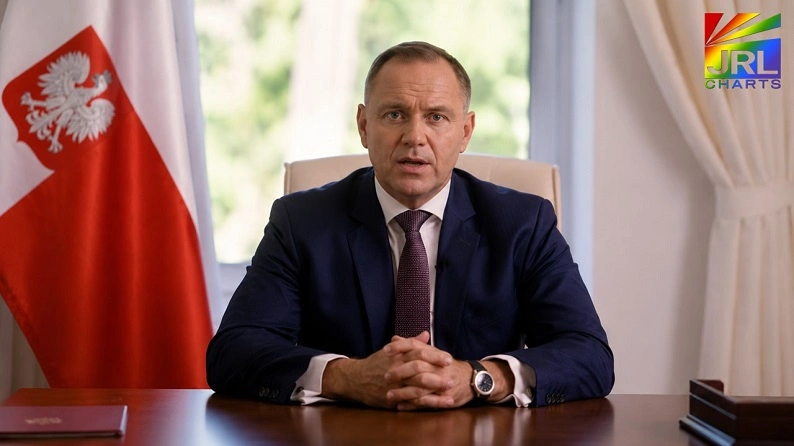
WARSAW, PL — (July 17, 2026) — Poland’s effort to extend legal recognition to unmarried couples suffered a major setback Friday after President Karol Nawrocki vetoed legislation that would have created civil partnerships for both opposite-sex and same-sex couples. The decision marks another obstacle for Prime Minister Donald Tusk’s reform agenda and leaves Poland among the last European Union nations without nationwide legal recognition for same-sex unions.
The legislation, originally introduced by Tusk’s coalition government late last year, proposed establishing a legal partnership framework that would grant unmarried couples several protections currently reserved for married spouses under Polish law.
Now Trending on LGBT Business, Finance and Politics News on JRL CHARTS
• Scott Bessent’s Economic Statecraft Speech Sparks Global Debate Over U.S. Financial Power
• LGBTQ Consumers Shift Spending Away from Target, Walmart and Amazon
• South Carolina Resolution Challenges Same-Sex Marriage Law Nationwide
• ACA Subsidy Loss Triggers Healthcare Shock for LGBTQ Americans
• Millions of Working Americans Are Going Hungry—and Nobody Is Talking About It
• Sweden Pressures Ukraine: Legalize Gay Marriage or Risk EU Membership!
• Get the Latest In LGBT Politics News on JRL CHARTS
Among the proposed benefits were shared property rights, access to a partner’s medical information, inheritance-related protections, and the legal authority to make certain end-of-life and burial decisions.
Nawrocki Defends Traditional Definition of Marriage
In announcing his decision, President Nawrocki reiterated his longstanding opposition to any legal arrangement he believes closely resembles marriage.
“I have always emphasised that nothing that is a quasi-marriage can count on my support,” Nawrocki said in a statement posted on X and on YouTube.
The president added that, in his role as guardian of Poland’s Constitution, he could not support legislation that he believes weakens the country’s constitutional definition of marriage as a union between a woman and a man.
The veto fulfills a campaign promise Nawrocki repeatedly made during last year’s presidential election, where he pledged to oppose expanding legal recognition for same-sex couples.
Tusk Criticizes Presidential Veto
Prime Minister Donald Tusk responded quickly, criticizing the president’s decision and arguing that the veto denies thousands of Polish citizens access to basic legal protections available to married couples.
The civil partnerships proposal was one of several social policy reforms championed by Tusk’s pro-European Civic Coalition after returning to power. However, negotiations within the governing coalition and opposition from conservative political forces delayed the bill’s progress before it ultimately reached the president’s desk.
Parliament Faces Difficult Override
Although Poland’s Constitution allows Parliament to override a presidential veto, doing so requires a three-fifths majority in the Sejm, the country’s lower house.
Given the current political balance, securing enough votes to overturn Nawrocki’s decision is widely viewed as unlikely, making the veto a significant setback for supporters of civil partnerships.
Public Opinion Continues to Shift
Despite continued political resistance, public attitudes toward legal recognition of same-sex couples have steadily evolved.
According to research released by Poland’s CBOS public opinion agency in 2025, 62% of Poles supported legalizing same-sex civil partnerships—the highest level of public support ever recorded in the country.
Even with growing public acceptance, Poland remains one of only a handful of European Union member states that has yet to legalize either same-sex marriage or nationwide civil unions.
LGBTQ Rights Debate Remains Unresolved
Friday’s veto underscores the ongoing ideological divide between President Nawrocki’s conservative administration and Prime Minister Tusk’s more progressive government.
While LGBTQ advocacy organizations have welcomed growing public support for legal recognition, the president’s constitutional authority to reject legislation continues to pose a significant challenge for lawmakers seeking broader equality protections.
With an override vote considered politically improbable, supporters of civil partnerships may now have to wait for a future legislative effort before the issue returns to Parliament.
For continuing coverage of LGBTQ rights, European politics, and equality legislation, follow JRL CHARTS LGBT Politics Europe for trusted reporting on the stories shaping the future of LGBTQ communities across Europe.

His reporting focuses on federal court rulings, legislative developments, international human rights issues, and government actions impacting LGBTQ communities worldwide.
With nearly two decades of experience, Goldberg is recognized for his balanced analysis, investigative insight, and commitment to accurate, fact-based journalism that informs readers on the political forces shaping equality and justice.