By: Paul Goldberg – Senior Correspondent | LGBT Politics USA
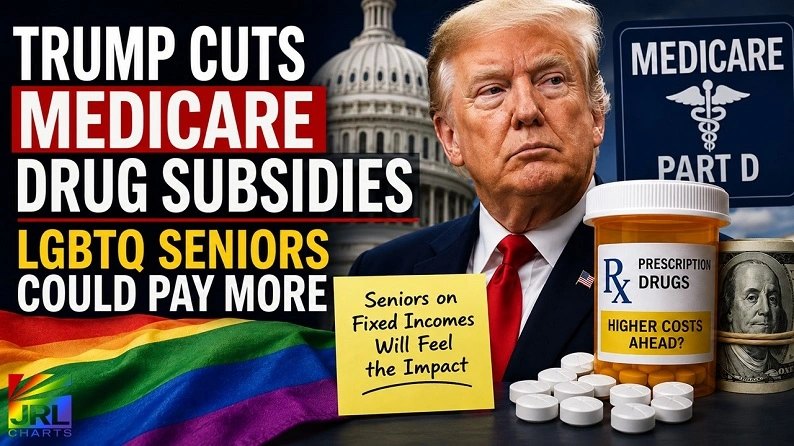
WASHINGTON, D.C. — (August 2, 2026) — The Trump administration’s decision to end a temporary Medicare Part D premium stabilization program is drawing criticism from healthcare advocates who warn it could increase prescription drug costs for millions of older Americans—including many LGBTQ seniors who already face higher healthcare and financial challenges.
The Centers for Medicare & Medicaid Services (CMS) confirmed that the Biden-era subsidy program will expire at the end of 2026 and will not continue into 2027. The demonstration program was originally introduced to help stabilize Medicare Part D premiums after major prescription drug reforms under the Inflation Reduction Act.
Now Trending on LGBT Politics News on JRL CHARTS:
• Education Department Drops LGBTQ+ Student Data From Civil Rights Survey
• Global HIV Funding Plunges After Trump Aid Cuts, New Reports Warn
• EEOC Moves to End 60 Years of Workplace Diversity Data Collection
• Project 2025 Already 50% Complete: Inside Trump’s Plan Reshaping America
• Judge Kacsmaryk Guts LGBTQ Job Protections in Texas Ruling
• From Sandy Hook to Voting Rights: How Conservative Courts Are Rewriting U.S Laws
Why This Matters to LGBTQ Older Adults
For many LGBTQ seniors, healthcare affordability remains a persistent concern. Research from advocacy organizations has consistently shown that LGBTQ older adults are more likely to live alone, experience economic insecurity, and rely heavily on Medicare for prescription medications.
Even relatively modest increases in monthly prescription drug premiums can create additional financial pressure for retirees living on fixed incomes. While the policy affects all Medicare beneficiaries enrolled in stand-alone Part D plans, advocates say LGBTQ seniors may be disproportionately vulnerable because of long-standing disparities in retirement savings, access to family caregiving, and healthcare costs.
Administration Says Market Has Stabilized
CMS Administrator Mehmet Oz defended the decision, arguing that the premium stabilization program had served its temporary purpose.
Oz criticized the program as an unnecessary subsidy to insurance companies, stating that the administration’s data indicates the Medicare Part D marketplace has stabilized. According to CMS, more than 85 percent of affected beneficiaries will have access to a prescription drug plan with either lower premiums or increases of less than $10 per month in 2027.
The agency says it remains focused on lowering prescription drug costs through broader policy initiatives rather than continuing billions of dollars in premium support payments to insurers.
Healthcare Experts Warn of Higher Costs
Healthcare policy experts argue the end of the program could still have meaningful consequences.
Juliette Cubanski, Vice President and Director of the Program on Medicare Policy at KFF, noted that while the administration continues promoting lower drug prices through other initiatives, eliminating premium assistance moves affordability in the opposite direction.
According to KFF, the stabilization program reduced average stand-alone Part D premiums by approximately $16 per month in 2026. Without those subsidies, many beneficiaries would have paid nearly 50 percent more for prescription drug coverage this year.
Questions Ahead of the 2026 Midterm Elections
The timing of the announcement is also drawing political attention.
Healthcare affordability remains one of the top concerns for older Americans heading into the 2026 midterm elections. Critics argue that ending the subsidy program undercuts President Trump’s broader message of lowering healthcare costs, while supporters contend that temporary government assistance should end once markets stabilize.
The Government Accountability Office estimated the premium stabilization initiative cost approximately $9.8 billion during 2025 and 2026, while nearly 25 million Americans are currently enrolled in stand-alone Medicare Part D prescription drug plans.
Final Premiums Coming This Fall
CMS has not yet released final 2027 Medicare Part D premiums. Those figures are expected in mid-to-late September, when beneficiaries will be able to compare plan options before the annual Medicare Open Enrollment period.
Until then, healthcare advocates are urging seniors—including LGBTQ older adults—to review their prescription drug coverage carefully once new pricing becomes available and compare available plans to minimize potential increases in monthly healthcare expenses.
JRL CHARTS will continue following Medicare policy, healthcare affordability, and federal legislation impacting LGBTQ Americans, delivering trusted political coverage that matters to our community.

His reporting focuses on federal court rulings, legislative developments, international human rights issues, and government actions impacting LGBTQ communities worldwide.
With nearly two decades of experience, Goldberg is recognized for his balanced analysis, investigative insight, and commitment to accurate, fact-based journalism that informs readers on the political forces shaping equality and justice.
- Lindsey Graham Accused of Paying 3 Male Escorts — One Claims He Was 17 - October 22, 2026
- LGBTQ Nonprofit Makes $3 Million Move to Transform Downtown Buffalo - October 21, 2026
- Supreme Court Blocks Trump’s Transgender Prison Care Ban in Major Legal Setback - October 21, 2026