By: Paul Goldberg – Senior Correspondent | LGBT Politics USA
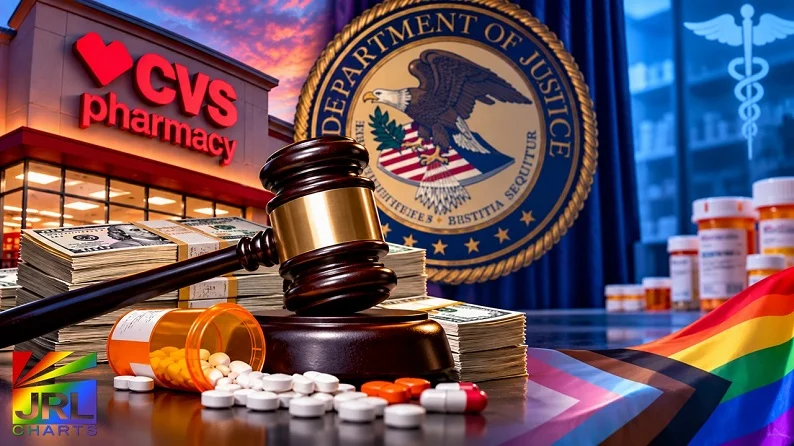
WASHINGTON, D.C. — (October 17, 2026) — CVS Pharmacy has agreed to pay $315 million to settle federal allegations involving unlawful opioid prescriptions, bringing renewed attention to prescription drug safety and an important healthcare question: What could stronger pharmacy oversight mean for LGBTQ+ patients, people living with HIV/AIDS, and individuals undergoing cancer treatment?
The settlement, announced on October 13 by the U.S. Department of Justice, resolves allegations that CVS unlawfully filled prescriptions for opioids and other controlled substances between October 2013 and December 2025.
CVS denies wrongdoing, and the settlement does not constitute a judicial determination of liability.
Trending LGBTQ Business and Politics News on JRL CHARTS:
• GameStop Hit With Federal Lawsuit After Gay Employee Reports Threats — Then Gets Fired
• Meta Paid 29 Anti-LGBTQ Accounts as 2026 Midterm Misinformation Spreads
• Alito Says Gay Marriage Is Safe — But Didn’t They Say That About Roe v. Wade?
• LGBTQ Voters Are Fired Up for the 2026 Midterms — HRC Survey Reveals 87% Plan to Vote
• TikTok Coughs Up $400M to Settle DOJ Children’s Privacy Lawsuit
• Review More in LGBTQ Business and Politics News on JRL CHARTS
DOJ Accuses CVS of Filling Dangerous Opioid Prescriptions
Federal investigators alleged that CVS pharmacies dispensed controlled substances despite warning signs that prescriptions lacked legitimate medical purposes.
The government’s allegations included excessive opioid quantities, premature refills, prescriptions from suspected pill mills, and dangerous combinations of opioids with other sedating medications.
Federal officials also accused CVS of seeking reimbursement from Medicare and other government healthcare programs for certain invalid prescriptions.
According to the Justice Department, corporate staffing policies and performance expectations contributed to the alleged failures.
CVS disputed the government’s allegations while agreeing to the settlement and additional controlled-substance dispensing safeguards.
Were LGBTQ+ or HIV/AIDS Patients Victims of the CVS Opioid Case?
There is currently no verified evidence identifying LGBTQ+ patients, people living with HIV/AIDS, or cancer patients as specific victims in the federal CVS settlement.
The publicly announced settlement does not provide a demographic breakdown of affected patients by sexual orientation, gender identity, HIV status, or cancer diagnosis.
Nevertheless, the case raises important questions about prescription safety and continued access to medically necessary pain treatment.
For patients managing serious illnesses, the distinction between inappropriate opioid dispensing and legitimate medical treatment is especially important.
What the Settlement Could Mean for HIV/AIDS Patients
People living with HIV can experience chronic pain associated with neuropathy and other medical conditions.
Clinical guidance from the HIV Medicine Association and Infectious Diseases Society of America emphasizes individualized pain management, including nonopioid treatments as first-line options for many conditions.
Opioid medications may be considered for selected patients with moderate to severe pain when other treatments have been insufficient and the anticipated benefits outweigh the risks.
Additional pharmacy safeguards could help identify unsafe prescriptions, harmful medication combinations, and inappropriate dispensing practices.
However, overly restrictive implementation could also create barriers for patients who have legitimate prescriptions.
There is no evidence that the CVS settlement itself has resulted in widespread prescription denials for HIV/AIDS patients.
Cancer Patients and the Importance of Pain Management
Cancer treatment presents another important consideration.
Patients experiencing severe cancer-related pain may require opioid medications as part of medically supervised treatment.
The Centers for Disease Control and Prevention specifically excludes cancer-related pain, palliative care, and end-of-life care from its general 2022 opioid-prescribing guideline.
That distinction recognizes the specialized medical needs of patients undergoing cancer treatment or receiving care for advanced illnesses.
For these individuals, unnecessary restrictions or prescription delays could interfere with appropriate symptom management.
At the same time, responsible prescribing and pharmacist oversight remain essential to preventing medication errors and dangerous drug interactions.
CVS Settlement Introduces Additional Pharmacy Safeguards
Beyond the financial settlement, CVS has entered into an agreement with the Drug Enforcement Administration addressing its future controlled-substance dispensing responsibilities.
The agreement is intended to strengthen oversight and improve the identification of potentially unlawful prescriptions.
For LGBTQ+ patients and others managing chronic or serious medical conditions, the central issue is whether stronger safeguards can improve prescription safety without creating unnecessary obstacles to legitimate care.
Patients who encounter prescription difficulties should work with their prescribing clinician and pharmacist to resolve concerns and maintain continuity of treatment. Prescribed opioid therapy should not be stopped abruptly without medical guidance.
Patient Safety and Access Must Remain Priorities
The $315 million CVS settlement represents another major federal enforcement action involving the nation’s opioid crisis.
But its broader significance extends beyond corporate accountability.
For LGBTQ+ communities, people living with HIV/AIDS, cancer patients, and others managing serious pain, effective healthcare requires both protection from unsafe medications and access to appropriate treatment.
JRL CHARTS LGBT Business Finance News remains committed to reporting on patient safety, LGBTQ+ healthcare access, HIV/AIDS treatment, and the policies shaping America’s medical system.
His reporting focuses on federal court rulings, legislative developments, international human rights issues, and government actions impacting LGBTQ communities worldwide.
With nearly two decades of experience, Goldberg is recognized for his balanced analysis, investigative insight, and commitment to accurate, fact-based journalism that informs readers on the political forces shaping equality and justice.
- CVS Hit with $315 Million Opioid Settlement — What LGBTQ+ and Cancer Patients Need to Know - October 17, 2026
- LGBTQ+ Support Vanishes from Alabama University Website as Scholarship Questions Mount - October 17, 2026
- GameStop Hit With Federal Lawsuit After Gay Employee Reports Threats — Then Gets Fired - October 16, 2026