By: Paul Goldberg – Senior Correspondent | LGBT Politics USA
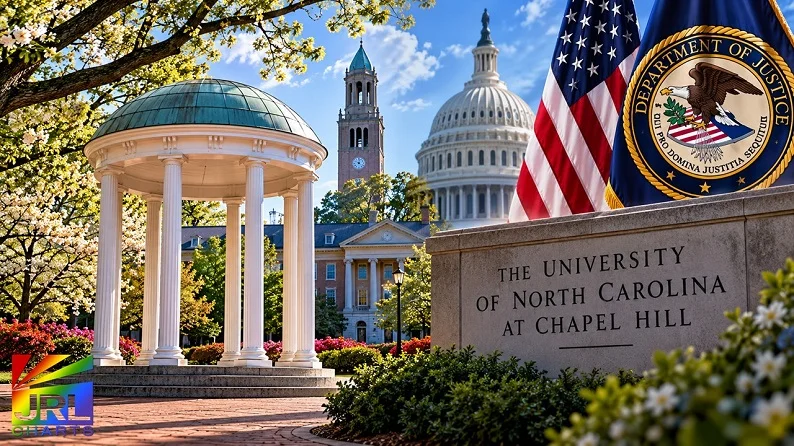
CHAPEL HILL, NC — (October 19, 2026) — The University of North Carolina at Chapel Hill has reached a sweeping agreement with the Trump administration to resolve 18 federal civil rights investigations, ending scrutiny involving race-based admissions, campus antisemitism, and alleged discrimination without a monetary settlement or admission of wrongdoing.
Announced Monday by the U.S. Department of Justice, the voluntary agreement with the Justice and Education departments also preserves UNC’s eligibility for federal research grants, contracts, and other government funding.
Trending LGBTQ Business and Politics News on JRL CHARTS:
• Catholic Relief Services Loses Major LGBTQ Benefits Battle in Federal Appeals Court
• Wall Street Gets Hammered as AI Stocks Tumble and Oil Prices Surge
• Bank of America Faces Historic $1.2B Reckoning as Q3 Profits Plunge 17%
• CVS Hit with $315 Million Opioid Settlement — What LGBTQ+ and Cancer Patients Need to Know
• LGBTQ Voters Are Fired Up for the 2026 Midterms — HRC Survey Reveals 87% Plan to Vote
• Review More in LGBTQ Business and Politics News on JRL CHARTS
The settlement closes 18 active Education Department investigations and a separate Justice Department compliance review that began in April 2025.
UNC Settles Trump Administration Civil Rights Investigations
The investigations examined allegations involving race discrimination, admissions policies, and the university’s handling of antisemitism and other civil rights complaints.
UNC officials emphasized that the agreement does not constitute an admission of liability or establish that the university violated federal law.
The settlement follows increased federal scrutiny of American universities over diversity initiatives, admissions practices, campus protests, and compliance with federal antidiscrimination requirements.
Unlike some other universities that reached financial settlements with the administration, UNC will not make a monetary payment under its agreement.
Race-Based Admissions and DEI Policies Face New Restrictions
Under the agreement, UNC must maintain race-neutral admissions practices consistent with the U.S. Supreme Court’s 2023 ruling in Students for Fair Admissions v. Harvard, which also addressed UNC’s admissions policies.
The university must avoid using race or racial proxies to influence admissions decisions or manipulate the racial composition of its student body.
The agreement also requires race-neutral policies for scholarships, financial aid, student benefits, and university programming.
These provisions place UNC’s settlement within the continuing national debate over diversity, equity, and inclusion policies in higher education.
Supporters of race-neutral admissions argue that such restrictions enforce equal treatment under federal law. Critics of the administration’s broader university enforcement campaign have raised concerns about academic independence, access, and the effects of federal pressure on campus policies.
New Campus Antisemitism Training and Federal Oversight
UNC has also agreed to strengthen procedures addressing antisemitism and unlawful discrimination.
The university must maintain a Title VI coordinator, establish civil rights compliance oversight, and provide antisemitism training for students, faculty, and staff.
Additional requirements include reporting discrimination complaints to federal officials and implementing measures addressing certain forms of prohibited campus conduct.
The agreement remains effective through December 31, 2028, with ongoing compliance and reporting obligations.
What Does the UNC Settlement Mean for LGBTQ Civil Rights?
Although the settlement does not announce changes to LGBTQ-specific protections, its broader implications extend into the national debate over how federal civil rights laws are interpreted and enforced.
Title VI of the Civil Rights Act of 1964 prohibits discrimination based on race, color, or national origin in federally funded programs. Separate federal protections, including Title IX, address sex discrimination in education.
For LGBTQ students and civil rights advocates, the continuing debate over federal enforcement priorities, diversity programs, and campus nondiscrimination policies remains relevant to the wider discussion of equality in higher education.
However, the UNC agreement should not be interpreted as directly eliminating LGBTQ student protections or resolving disputes involving sexual orientation or gender identity.
UNC Protects Federal Funding as University Oversight Continues
UNC Chancellor Lee H. Roberts said the resolution allows the university to continue its teaching, research, and public service mission while reaffirming its commitment to civil rights.
The agreement expressly recognizes academic freedom and states that the federal government will not dictate university curriculum or academic speech.
For UNC, the settlement removes significant federal investigative uncertainty while establishing compliance obligations extending into 2028.
The broader question for American higher education is how universities will balance federal civil rights enforcement, equal access, academic independence, and changing interpretations of diversity policy.
JRL CHARTS LGBT Politics News delivers authoritative coverage of U.S. civil rights, LGBTQ equality, federal policy, education, and the political developments shaping America’s future.
His reporting focuses on federal court rulings, legislative developments, international human rights issues, and government actions impacting LGBTQ communities worldwide.
With nearly two decades of experience, Goldberg is recognized for his balanced analysis, investigative insight, and commitment to accurate, fact-based journalism that informs readers on the political forces shaping equality and justice.