By: Paul Goldberg – Senior Correspondent | LGBT Politics Europe
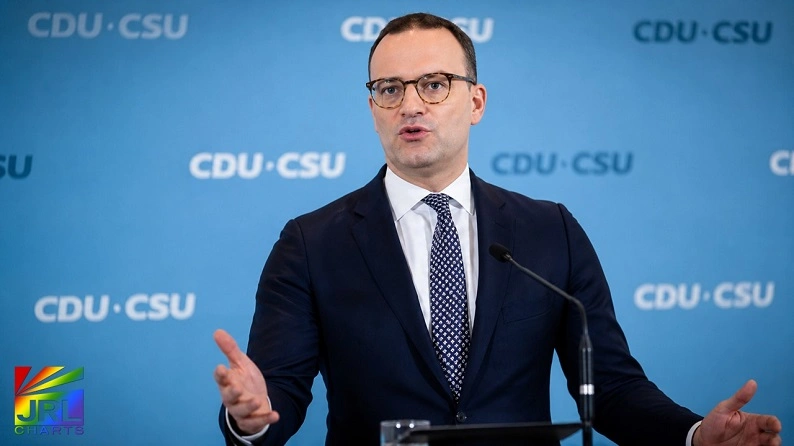
BERLIN, GR — (July 19, 2026) — One of Germany’s most prominent openly gay politicians, Jens Spahn, has resigned as parliamentary leader of the governing Christian Democratic Union/Christian Social Union (CDU/CSU) bloc after mounting political pressure over his decision to become a father through surrogacy in the United States—a practice he had publicly opposed for years and which remains prohibited under German law.
Spahn and his husband, journalist Daniel Funke, announced this week the birth of their son, Georg, through a surrogate mother in the United States.
“Georg is our greatest joy. This feeling is almost impossible to put into words,” Spahn told the German newspaper Bild after welcoming their first child.
Now Trending on LGBT Politics Europe News on JRL CHARTS
• Polish President Karol Nawrocki Vetoes Civil Partnerships Bill in Blow to LGBTQ Rights
• Scott Bessent’s Economic Statecraft Speech Sparks Global Debate Over U.S. Financial Power
• DUP Councillor Suspended Over Remarks Linking LGBTQ Community to Hamas
• Russia Declares Two LGBTQ Groups ‘Extremist’ in Escalating Crackdown
• UK Military Veterans Launch Legal Fight Over LGBT Compensation Scheme
Long-Standing Opposition Returned to Haunt Spahn
The announcement immediately reignited criticism over Spahn’s previous public opposition to surrogacy.
In a 2015 interview with GQ Germany, Spahn described commercial surrogacy as something he struggled to accept “as a gay man and a Christian,” saying he found the concept of “rented wombs” deeply troubling.
Those comments resurfaced almost instantly after news of his son’s birth became public, prompting accusations that the conservative lawmaker had privately benefited from a practice he had publicly condemned for years.
Germany Continues to Ban Surrogacy
Germany maintains one of Europe’s strictest prohibitions on surrogacy under the Embryo Protection Act. Medical professionals and intermediaries involved in arranging surrogate pregnancies can face criminal penalties, while many German couples instead pursue surrogacy abroad in countries where the practice is legal.
Although commissioning a surrogate overseas is not itself a criminal offense for intended parents, the arrangement remains politically controversial, particularly among Germany’s conservative parties. Earlier this year, the CDU reaffirmed its opposition to legalizing surrogacy, citing ethical concerns, the potential exploitation of women, and legal uncertainties surrounding parenthood.
Political Pressure Mounted Across Party Lines
The controversy quickly evolved beyond questions of family policy into one of political credibility.
Several senior CDU officials publicly argued that Spahn could no longer lead the parliamentary group after taking advantage of a practice his party continued to oppose. Critics from across Germany’s political spectrum—including members of the Alternative for Germany (AfD)—also accused Spahn of applying different standards to himself than those expected of the public.
The resignation also revived scrutiny of Spahn’s previous tenure as Germany’s health minister during the COVID-19 pandemic, although earlier investigations into procurement decisions concluded without criminal findings.
Chancellor Friedrich Merz Calls Resignation “Unavoidable”
Facing growing pressure inside the governing coalition, Spahn announced Saturday that he would step down as parliamentary leader while remaining a member of Germany’s Bundestag.
“In recent days, I have come to realize that my personal happiness in starting a family with my husband and becoming a father is incompatible with my political office,” Spahn wrote in his resignation statement.
German Chancellor Friedrich Merz accepted the resignation, describing the decision as both “correct” and “unavoidable,” emphasizing that public confidence and political credibility remain essential for government leadership.
Debate Extends Beyond LGBTQ Issues
While much international coverage has focused on Spahn’s status as one of Europe’s highest-profile openly gay conservative politicians, political analysts note that the central issue driving his resignation was not his sexual orientation but the perceived contradiction between his public policy positions and his personal decisions.
The controversy has also reignited Germany’s broader national debate over surrogacy, reproductive rights, family law, and whether existing legislation should be revisited as more German couples seek surrogacy arrangements abroad.
Stay with JRL CHARTS LGBT Politics Europe for continuing coverage of European LGBTQ politics, human rights legislation, and the political developments shaping equality and public policy across Europe.

His reporting focuses on federal court rulings, legislative developments, international human rights issues, and government actions impacting LGBTQ communities worldwide.
With nearly two decades of experience, Goldberg is recognized for his balanced analysis, investigative insight, and commitment to accurate, fact-based journalism that informs readers on the political forces shaping equality and justice.
- Taipei Gay Bar Raid Sparks Outrage as Police Face LGBTQ Backlash - October 11, 2026
- LGBTQ Voters Are Fired Up for the 2026 Midterms — HRC Survey Reveals 87% Plan to Vote - October 11, 2026
- OnlyFans and MYM Escape Sweeping French Crackdown After Parliament Showdown - October 8, 2026