By: Paul Goldberg – Senior Correspondent | LGBT International News
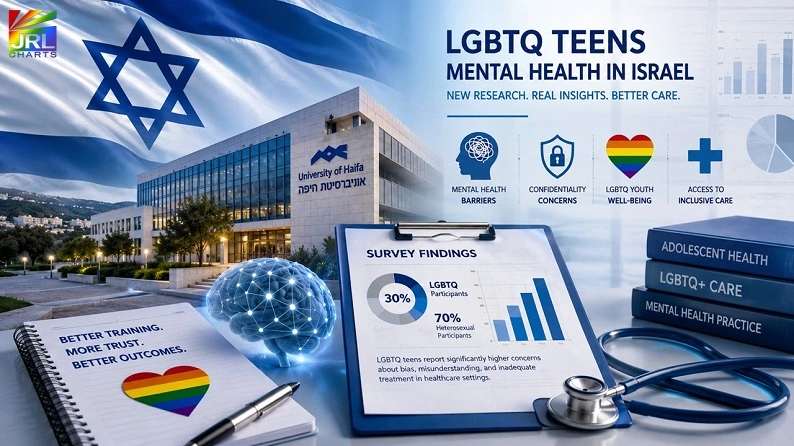
HAIFA, Israel — (July 6, 2026) — A new series of studies from the University of Haifa has found that many Israeli LGBTQ teenagers continue to delay or avoid seeking mental and medical care because they fear discrimination, misunderstanding, or inadequate treatment from healthcare professionals.
The research highlights ongoing barriers facing sexual and gender minority youth despite Israel’s relatively advanced healthcare system. Investigators concluded that expanding LGBTQ-inclusive education and professional training for healthcare providers could significantly improve trust and access to care.
Trending LGBT News and Politics Asia Coverage on JRL CHARTS:
• Turkey Blocks American LGBTQ Cruise, Citing ‘Moral Values’ in Growing Crackdown
• Turkey Puts LGBT Activists on Trial Over “Obscenity” Charges in Escalating Crackdown
• Israel’s LGBTQ Safety Narrative Challenged as Violence, Ambush Attacks Surge in 2025 Report
• US $15,000 Visa Bond Rule Sparks Fears for LGBTQ Travelers Seeking Safety in America
• Get the Latest in LGBT Politics USA Exclusively on JRL CHARTS
Fear of Judgment Keeps Many Teens Away
The research team, led by Professor Ateret Gewirtz-Meydan and Dr. Ruth Berkowitz and coordinated by social worker Shir Maoz, examined how LGBTQ adolescents perceive Israel’s healthcare system, with particular attention to mental health services.
Researchers found that many young people worry healthcare professionals may dismiss their concerns, misunderstand LGBTQ identities, or unintentionally expose sensitive personal information. Those concerns often discourage teens from seeking help until emotional or medical problems become significantly worse.
Traditional barriers—including fear of being “outed,” social stigma surrounding mental health, and the belief that emotional distress will improve without treatment—remain major obstacles for many adolescents.
New Survey Tool Identifies Key Healthcare Barriers
As part of the project, researchers developed a specialized questionnaire designed to measure the factors preventing LGBTQ youth from seeking professional mental health care.
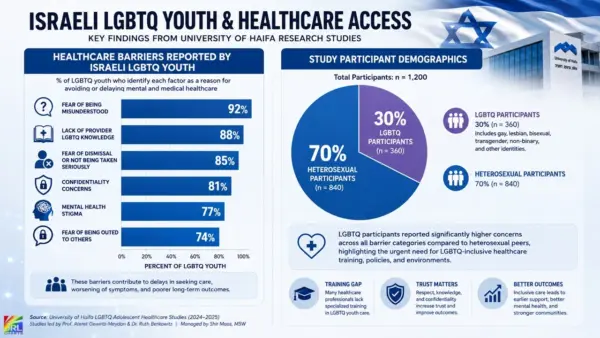
This infographic summarizes key findings from University of Haifa research examining healthcare access barriers and mental health concerns reported by Israeli LGBTQ adolescents.
The findings indicate that concerns about provider knowledge, confidentiality, and respectful communication consistently ranked among the strongest reasons for delaying treatment. Researchers believe the new assessment tool can help healthcare organizations better identify where improvements are most urgently needed.
Training Gap Remains a Major Challenge
Alongside surveying adolescents, the research also evaluated the preparedness of healthcare and mental health professionals who regularly work with LGBTQ youth.
Investigators concluded that many providers receive limited formal education regarding the unique medical, psychological, and social challenges experienced by LGBTQ adolescents. That lack of specialized training may unintentionally reduce patient confidence and discourage future care.
The researchers recommend broader professional education focused on culturally competent, evidence-based LGBTQ healthcare practices, along with continuing education programs for physicians, nurses, psychologists, counselors, and social workers.
Survey Results Highlight Continuing Need for Inclusive Care
The study included both heterosexual and LGBTQ participants, with approximately 30% of respondents identifying as LGBTQ and roughly 70% identifying as heterosexual. Researchers reported that LGBTQ participants consistently identified significantly greater concerns about seeking care because of anticipated misunderstanding, bias, or insufficient provider knowledge.
The authors say these findings reinforce the importance of creating healthcare environments where LGBTQ youth feel respected, understood, and safe discussing both physical and mental health concerns.
They also note that strengthening provider education could improve early intervention, increase treatment participation, and ultimately reduce long-term mental health disparities among Israeli LGBTQ adolescents.
As healthcare systems worldwide continue working to improve equity, the University of Haifa researchers believe culturally informed care and expanded professional training remain essential steps toward ensuring LGBTQ youth receive the support they need without fear or hesitation.
For continuing coverage of LGBTQ health, international equality initiatives, and global public policy, stay with JRL CHARTS LGBT International News, where trusted journalism delivers the stories shaping communities worldwide.
His reporting focuses on federal court rulings, legislative developments, international human rights issues, and government actions impacting LGBTQ communities worldwide.
With nearly two decades of experience, Goldberg is recognized for his balanced analysis, investigative insight, and commitment to accurate, fact-based journalism that informs readers on the political forces shaping equality and justice.
- Wall Street Gets Hammered as AI Stocks Tumble and Oil Prices Surge — LGBTQ Businesses Brace for Fallout - October 18, 2026
- Bank of America Faces Historic $1.2B Reckoning as Q3 Profits Plunge 17% - October 17, 2026
- CVS Hit with $315 Million Opioid Settlement — What LGBTQ+ and Cancer Patients Need to Know - October 17, 2026