By: Michael Jacobs – Senior Correspondent | Movie Entertainment News
LAS VEGAS, NV — (November 16, 2026) — Hollywood’s television industry is facing renewed scrutiny after a new report from GLAAD revealed that LGBTQ representation declined nearly 25% during the 2025–2026 television season, marking one of the most significant year-over-year reductions documented by the organization.
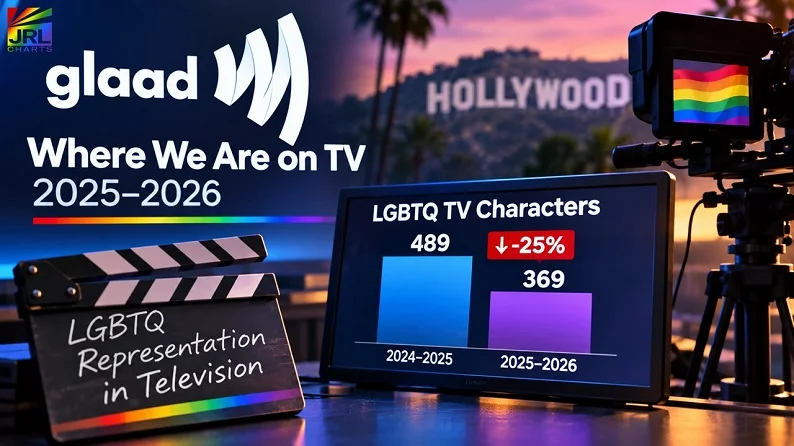
According to GLAAD’s 21st annual Where We Are on TV report, the number of LGBTQ characters appearing across scripted broadcast, cable, and select streaming television productions fell from 489 to 369, a loss of 120 characters in just one season.
Trending Drama, Sci-Fi , Adventures & Thriller Movies & TV Streaming News:
• Children of Blood and Bone Trailer Explodes Past 10 Million Views in Just One Day
• Blade Runner 2099 Final Trailer Blasts Past 1 Million Views in Just 11 Hours
• ABOVE THE BELOW Trailer: Idris Elba Faces a Deadly Race Against Oxygen
• ANOMALY (2026) Blurs Science Fiction and Reality in Haunting New Trailer
• See More Trending Movies & TV Streaming Coverage on JRL CHARTS
The findings raise questions about Hollywood’s programming priorities, particularly as several LGBTQ-inclusive television productions continue attracting audiences and generating substantial attention across streaming platforms.
GLAAD Report Reveals Sharp Decline in LGBTQ Television Representation
The organization’s latest research examined scripted television programming airing new seasons between June 1, 2025, and May 31, 2026.
GLAAD found that LGBTQ representation declined at a considerably faster rate than overall television production, suggesting that reduced programming output alone does not fully explain the disappearance of LGBTQ characters.
The report also documented a decline in racial diversity, with LGBTQ characters of color accounting for approximately 44% of representation, compared with 50% during the previous season.
That figure represents the lowest percentage recorded since 2018.
Meanwhile, approximately 38% of the LGBTQ characters counted during the reporting period are not expected to return for the following television season, reflecting cancellations, completed series, and other character departures.
Transgender Television Characters Experience Steepest Decline
Among the report’s most significant findings was a sharp reduction in transgender television characters.
GLAAD identified only seven transgender characters during the 2025–2026 season, compared with 33 the previous year, representing a decline of approximately 79%.
According to the organization, all seven appeared in productions that have either concluded or been canceled, leaving no returning transgender regular or recurring characters from the study’s sample currently scheduled for the 2026–2027 season.
However, that finding does not rule out the introduction of new transgender characters in upcoming television productions.
The report highlights the challenges facing television writers, performers, and producers seeking opportunities to develop diverse characters across multiple seasons.
Heated Rivalry and The Hunting Wives Highlight Audience Demand
The decline arrives despite the commercial visibility of several successful LGBTQ-inclusive television productions.
GLAAD highlighted Heated Rivalry, The Hunting Wives, and Apple TV’s Pluribus as examples of programs demonstrating sustained audience interest in LGBTQ-centered storytelling.
The organization also pointed to the popularity of Stranger Things and Hazbin Hotel, both of which feature significant LGBTQ characters.
In her introduction to the report, GLAAD President and CEO Sarah Kate Ellis emphasized the contrast between the popularity of these productions and the industry’s declining representation figures.
The report cites research indicating that 58% of Generation Z respondents consider LGBTQ visibility in entertainment important, suggesting that inclusive storytelling remains relevant to younger television audiences.
For entertainment companies competing for subscribers, the findings introduce another consideration into decisions about original programming, series renewals, and long-term audience development.
Streaming Platforms Face Growing Questions Over LGBTQ Programming
The decline in LGBTQ television characters comes as streaming platforms and traditional networks continue reassessing programming budgets, renewing established series, and competing for subscribers.
GLAAD’s findings raise questions about whether LGBTQ-inclusive productions are receiving sufficient long-term investment, particularly as entertainment companies make decisions about cancellations, new series orders, and original content development.
For Hollywood executives, the challenge extends beyond introducing diverse characters in individual productions. Sustaining representation across multiple television seasons requires consistent programming commitments, recurring character development, and opportunities for writers and performers to build lasting connections with audiences.
Hollywood’s Television Production Slowdown Tells Only Part of the Story
The broader television industry has experienced a contraction in original programming as networks and streaming services adjust production spending.
However, GLAAD’s report notes that the number of U.S.-produced television premieres declined approximately 11% in 2025 compared with 2024, while LGBTQ character representation fell nearly 25% between the television seasons examined.
That difference is central to the organization’s findings.
Although fewer television productions naturally create fewer opportunities for characters of all backgrounds, the report suggests that LGBTQ representation has experienced a disproportionately large reduction.
The figures provide a measurable industry benchmark rather than establishing a single cause for Hollywood’s changing programming decisions.
GLAAD Report Creates New Benchmark for Hollywood’s 2026–2027 Television Season
GLAAD’s latest Where We Are on TV findings establish an important benchmark for evaluating the entertainment industry’s next programming cycle.
With LGBTQ television representation falling to 369 characters, future reports will help determine whether the decline represents a temporary contraction or a longer-term shift in Hollywood’s approach to inclusive storytelling.
As networks announce renewals, cancellations, and upcoming streaming premieres, industry observers will be watching whether LGBTQ characters return in greater numbers.
For entertainment publishers, the findings also provide a measurable reference point for tracking television diversity, programming investments, and changing audience expectations throughout 2027.
The next television season could offer a clearer picture of whether Hollywood’s production strategies are moving toward broader representation or continuing the downward trend identified in GLAAD’s latest research.
Source: GLAAD — 2025–2026 Where We Are on TV Report
JRL CHARTS LGBTQ Entertainment News continues to monitor Hollywood’s evolving television landscape, GLAAD’s annual representation findings, streaming industry developments, and the business of LGBTQ entertainment.
His reporting spans new movie and television trailers, streaming releases, K-Pop and international music, celebrity entertainment, and the latest trends in men’s underwear, swimwear and apparel.
Jacobs brings an entertainment-focused perspective to JRL CHARTS, tracking emerging artists, major releases, fashion brands and the stories shaping pop culture and entertainment worldwide.
- GLAAD Sounds Alarm as LGBTQ TV Characters Plunge to 369 in Stunning Hollywood Retreat - November 16, 2026
- Omar Rudberg Drops the Hammer with Sultry New ‘Mirage’ Music Video - November 14, 2026
- Children of Blood and Bone Trailer Explodes Past 10 Million Views in Just One Day - November 13, 2026