By: Paul Goldberg – Senior Correspondent | LGBT Politics USA News
CONCORD, N.H. — (October 5, 2026) — Pete Buttigieg is emerging as one of the Democratic Party’s most visible closers heading into the 2026 midterm elections, campaigning for candidates across the country while sharpening a message built around affordability, political reform and what Democrats should do if voters hand them power in November.
And wherever the former U.S. transportation secretary goes, another question isn’t far behind: What about 2028?
Trending LGBTQ Business and Politics News on JRL CHARTS:
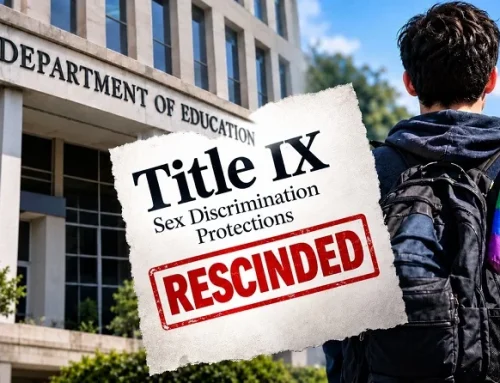
• LGBTQ Students Lose a Major Federal Title IX Protection as Trump Administration Acts
• America Granted Them Protection — Then Deported LGBTQ Migrants Somewhere Else
• UNT Deletes LGBTQ History Page After Texas Lawmaker Attack — But the Archive Isn’t Gone
• SC Holds Back Grants From Only Two Arts Groups — Both Are LGBTQ+
• Michigan Church Targets LGBTQ Acceptance in California With Massive 248-Page Complaint
• Review More in LGBTQ Business and Politics News on JRL CHARTS
Buttigieg is set to campaign in at least six states during the final stretch before the midterms — North Carolina, Virginia, New Jersey, Georgia, Nevada and his adopted home state of Michigan — according to an itinerary from his Win the Era political organization reported by POLITICO.
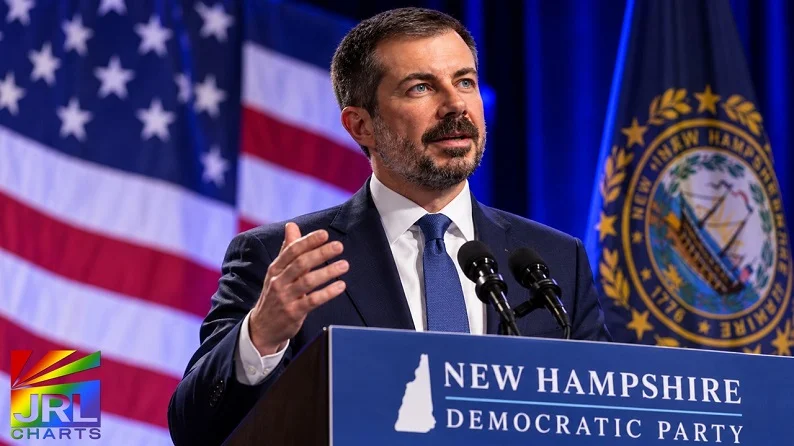
The nationwide push follows a high-profile swing through New Hampshire, where Buttigieg campaigned with Democratic candidates before delivering the keynote address at the New Hampshire Democratic Party’s Eleanor Roosevelt Dinner in Concord.
His return to the Granite State was particularly notable. New Hampshire was one of the places where Buttigieg’s once-long-shot 2020 presidential campaign transformed him into a serious national contender.
Six years later, he’s back with a much larger national profile.
Buttigieg Is Testing a Bigger Democratic Message
Buttigieg isn’t simply showing up to endorse candidates.
As he travels the country, the former Cabinet secretary has been refining an argument that connects Americans’ immediate concerns about the cost of living with something much larger: whether the country’s political system is capable of delivering the changes voters are demanding.
“I have a lot of conviction that, actually, your economic message only has credibility if you have a reform message, too,” Buttigieg told POLITICO following a campaign rally in Rochester, New Hampshire.
His argument is that Democrats can promise lower costs, better wages and economic relief, but those promises mean less if voters don’t believe Washington is capable of delivering them.
That has led Buttigieg to increasingly connect kitchen-table economics with political reform.
“If we want the kitchen table to be better off, we got to deal with the political system that is kicking the legs out from under the kitchen table,” he said during the Rochester appearance.
It’s a message designed for the midterms — but one that could easily survive them.
More Than 100 Endorsements Put Buttigieg on the Road
Buttigieg entered 2026 without a governor’s mansion, Senate seat or congressional office from which to influence the midterms.
Instead, he’s put his national profile to work.
Through Win the Era, Buttigieg has made more than 100 endorsements during the election cycle, while personally campaigning for roughly half of those candidates, according to POLITICO. His travels since leaving the Transportation Department have taken him to dozens of states.
And he hasn’t restricted those appearances to Democratic strongholds.
Buttigieg has campaigned for Democrats trying to win competitive races and candidates attempting to break through in areas where Republicans have traditionally held an advantage.
“If I can help give voice to what people are after in diverse geographies, including very conservative areas,” Buttigieg told POLITICO, “turns out that’s my best use of time.”
That strategy allows Buttigieg to help Democratic candidates while simultaneously hearing directly from voters far beyond Washington.
He says those conversations are teaching him something.
“I’m learning a lot about our country and our party as I go,” Buttigieg said. “And what I’m seeing is that people have a real hunger for change.”
But What Happens If Democrats Win?
Buttigieg is also pressing Democrats to answer a question that opposition parties sometimes leave until after Election Day:
Then what?
He argues that winning control of Congress won’t be enough if Democrats aren’t prepared to show voters immediately what they intend to do with that power.
“Part of what I’m really trying to push my party on is the need to have answers for ‘then what,’” Buttigieg told POLITICO.
Among the issues he has identified for a potential Democratic Congress are tariffs, the minimum wage, tax fairness, health care, the Child Tax Credit and political reforms including gerrymandering.
For Buttigieg, the argument is increasingly about demonstrating that Democrats can do more than oppose President Donald Trump.
They have to convince voters they can govern afterward.
Then There’s 2028
For all the talk about November, Buttigieg’s political future remains impossible to separate from the conversation.
His New Hampshire trip made that especially clear.
Buttigieg nearly won the state’s 2020 Democratic presidential primary, finishing a close second to Sen. Bernie Sanders after emerging from the presidential race’s enormous field as one of its surprise contenders.
Now he’s returning as a former Cabinet secretary, national Democratic surrogate and one of the party’s most recognizable political communicators.
At the New Hampshire Democratic Party’s Eleanor Roosevelt Dinner, Buttigieg received a standing ovation from the sold-out crowd, according to POLITICO, with supporters eventually breaking into chants of “Pete, Pete, Pete.”
Signs of his previous presidential campaign were everywhere, from supporters wearing Pete-themed buttons and shirts to familiar music from his 2020 campaign days.
But Buttigieg still isn’t saying he’s running.
Asked repeatedly about 2028, he has continued to keep his attention publicly fixed on the 2026 elections.
For now, the answer remains essentially: we’ll see.
That’s important.
Buttigieg is not a declared 2028 presidential candidate. But campaigning nationally, helping candidates, strengthening relationships with state Democratic organizations and testing a political message in front of voters are all activities that could become valuable should he eventually decide to run.
An LGBTQ Political First Remains on the National Stage
Buttigieg’s continuing prominence also carries particular significance for LGBTQ politics.
In 2021, Buttigieg became the first openly gay person confirmed by the U.S. Senate to serve in a presidential Cabinet, following his nomination as transportation secretary.
Five years later, his sexual orientation is rarely the central story when he’s dispatched to campaign for Democrats.
That itself marks a significant evolution in American politics.
Buttigieg is traveling into battlegrounds and conservative territory not simply as a prominent LGBTQ political figure, but as a national surrogate expected to make the Democratic Party’s case on economics, governing and political reform.
And that could matter well beyond 2026.
Every campaign stop gives Buttigieg another opportunity to build relationships with candidates, party officials, activists and voters. Every speech allows him to test which arguments resonate. Every state he visits expands a political network that would be difficult to assemble overnight if another presidential campaign eventually comes.
For the moment, Buttigieg insists the midterms come first.
But as Democrats increasingly put him on the road in the closing weeks of the 2026 campaign, Pete Buttigieg may be helping shape his party’s future while quietly figuring out his own.
JRL CHARTS LGBT Politics USA continues tracking Pete Buttigieg and the LGBTQ political leaders shaping the 2026 midterms and America’s next political cycle.

His reporting focuses on federal court rulings, legislative developments, international human rights issues, and government actions impacting LGBTQ communities worldwide.
With nearly two decades of experience, Goldberg is recognized for his balanced analysis, investigative insight, and commitment to accurate, fact-based journalism that informs readers on the political forces shaping equality and justice.