By: Paul Goldberg – Senior Correspondent | LGBT Politics USA
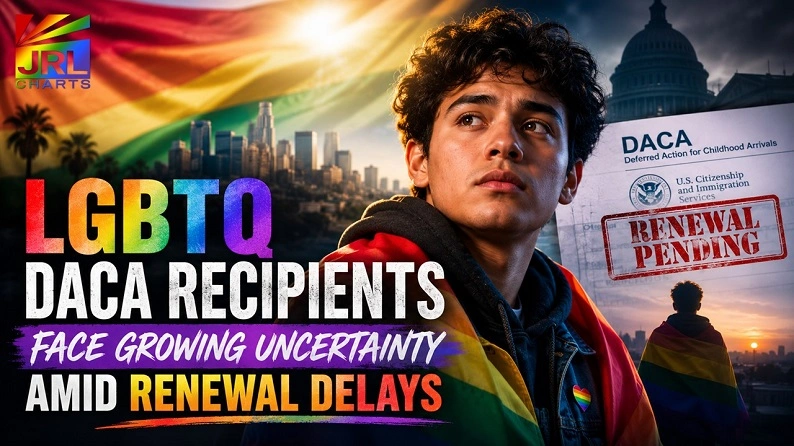
WASHINGTON, D.C. — (June 21, 2026) — The legal limbo facing Deferred Action for Childhood Arrivals recipients is growing more dangerous as first-time DACA applications remain blocked and renewal delays stretch for months, leaving many Dreamers at risk of losing work authorization, driver’s licenses, health coverage access and temporary protection from deportation.
The current crisis is not an official termination of DACA. It is something more bureaucratic, less visible and potentially just as devastating: a system where new applicants remain frozen out while existing recipients wait longer for renewals that once moved through the process far more quickly.
Now Trending on LGBT Immigration, Finance and Politics on JRL CHARTS:
• Stephen Miller ICED OUT? Trump Immigration Architect Sidelined
• Family of Gay Gamer Detained by ICE Warns Deportation to Cameroon Could Be Deadly
• Federal Appeals Court Expands ICE Detention Power in High-Stakes Immigration Ruling
• Minneapolis Moves to Legalize Bathhouses Decades After AIDS Crisis Shutdown
• LGBTQ Consumers Shift Spending Away from Target, Walmart and Amazon
• US Supreme Court Rejects Trump plan to end DACA program
• Millions of Working Americans Are Going Hungry—and Nobody Is Talking About It
USCIS continues to accept and process renewal requests for current DACA recipients, but first-time applications remain blocked under ongoing federal litigation. Immigration advocates report that renewals that previously took weeks are now taking months, with USCIS itself reporting that most DACA renewal requests are taking about 3.5 months.
For DACA recipients, a delayed renewal is not a paperwork inconvenience. It can mean losing legal work authorization, being forced off the job, losing a driver’s license and facing renewed fear of detention or deportation. Recent reporting found median renewal wait times increased from roughly 15 days in fiscal year 2025 to about 70 days between October 2025 and February 2026, with some cases stretching far longer.
Supreme Court Protection Did Not End the Fight
In 2020, the U.S. Supreme Court blocked the first Trump administration’s attempt to end DACA, ruling that the government’s rescission was “arbitrary and capricious.” That decision protected the program from being dismantled in the way the administration attempted, but it did not create a permanent path to citizenship or end later legal attacks.
That distinction matters now. DACA recipients were told the program remained a shield, but that shield is being weakened by court fights, administrative delay and intensified immigration enforcement. Current recipients may still renew, but first-time applicants remain locked out, and a missed or delayed renewal can quickly place a recipient in a vulnerable position.
The Fifth Circuit’s January 2025 decision held that the Biden administration’s 2022 DACA regulation was unlawful, while staying the ruling for current beneficiaries and allowing renewals to continue for now. That means existing recipients remain eligible to renew, while the government remains blocked from approving new DACA applications.
LGBTQ DACA Recipients Face Added Risk
For LGBTQ DACA recipients, the uncertainty carries an additional layer of danger.
LGBTQ Dreamers are not only navigating immigration instability. Many also face family rejection, workplace discrimination, lack of access to affirming health care and the possibility of being deported to countries where LGBTQ people may face violence, criminalization or severe social hostility.
The Williams Institute has estimated that tens of thousands of DACA-eligible young people identify as LGBTQ, while broader research shows that LGBT noncitizens and undocumented LGBT immigrants are especially vulnerable under aggressive immigration enforcement policies.
That is why DACA delays hit LGBTQ recipients so hard. Losing a work permit can mean losing income, housing stability and access to health care. Losing protection from deportation can mean being forced into a country where living openly as LGBTQ may be dangerous.
For transgender and nonbinary DACA recipients, the stakes may be even higher. Detention can expose them to misgendering, unsafe placement, denial of medical care and heightened risk of abuse. Queer undocumented immigrants have long reported avoiding police, courts and public systems out of fear that seeking help could expose them to immigration enforcement.
A Backlog That Functions Like Policy
Immigration advocates increasingly argue that the slowdown is functioning like an anti-DACA policy even without a formal announcement ending the program.
That concern has intensified as reports show Dreamers with clean records being detained or deported under the Trump administration’s second term. Data obtained by Rep. Joaquin Castro found that between January 2025 and May 2026, ICE detained 658 DACA recipients and applicants, while 85 DACA recipients with no criminal records were deported.
For recipients who have spent most of their lives in the United States, those numbers undercut the central promise of DACA: that young people brought to the country as children could step forward, pass background checks, work legally and live without immediate fear of removal.
First-Time Applicants Remain Frozen Out
The damage is even broader for young immigrants who qualify for DACA but never had the chance to receive it.
USCIS may accept some initial requests, but federal court orders continue to prevent the government from processing and approving most first-time applications. That means a generation of eligible young immigrants remains stuck outside the program entirely, unable to access the temporary protection and work authorization that older recipients have relied on for more than a decade.
For LGBTQ young immigrants, that frozen doorway can be life-changing. Without DACA, they may be more vulnerable to workplace exploitation, family dependence, poverty, homelessness and deportation threats.
Congress Remains the Only Permanent Fix
DACA was always temporary. It provides renewable protection from deportation and work authorization, but it does not offer permanent legal status or a path to citizenship.
That is why immigration rights advocates continue to push Congress to pass permanent protections for Dreamers. Lawmakers have renewed calls for legislation such as the American Dream and Promise Act, arguing that the current system leaves hundreds of thousands of people at the mercy of courts, agency delays and changing presidential administrations.
For LGBTQ DACA recipients, the demand is especially urgent. The question is not only whether they can work legally or renew a document on time. It is whether the country will keep its promise to people who came forward, followed the rules and built their lives in the only home many have ever known.
As DACA recipients confront renewed political attacks, growing backlogs and intensified immigration enforcement, JRL CHARTS will continue tracking the impact on LGBTQ Dreamers, immigrant families and the broader fight for civil rights across America.
His reporting focuses on federal court rulings, legislative developments, international human rights issues, and government actions impacting LGBTQ communities worldwide.
With nearly two decades of experience, Goldberg is recognized for his balanced analysis, investigative insight, and commitment to accurate, fact-based journalism that informs readers on the political forces shaping equality and justice.
- LGBTQ Nonprofit Makes $3 Million Move to Transform Downtown Buffalo - October 21, 2026
- Supreme Court Blocks Trump’s Transgender Prison Care Ban in Major Legal Setback - October 21, 2026
- UNC Settles 18 Trump Administration Probes as Race and DEI Rules Face New Scrutiny - October 19, 2026