By: Paul Goldberg | Senior Political Correspondent | LGBT Politics USA
WASHINGTON, D.C. — (June 15, 2026) — New federal data released in April 2026 is intensifying concerns among global health experts after revealing significant declines in HIV testing, prevention services, and PrEP enrollment following sweeping changes to U.S. foreign aid programs under the Trump administration.
While administration officials have highlighted stable HIV treatment numbers as evidence that their strategy is working, newly available data paints a more complicated picture—one that experts warn could jeopardize decades of progress in the global fight against HIV/AIDS.
Now Trending on LGBT Rights and Judicial News on JRL CHARTS:
• Christian Foster Care Giant to Bar LGBTQ Couples from New Adoptions Beginning in 2027
• Federal Indictment Against LGBTQ Rights Attorney Suddenly Dismissed
• Nevada Ranked Safest State for LGBTQ Residents in 2026 National Study
• Heritage Foundation’s New Report Aims to Undermine LGBTQ Families
• Project 2025 Already 50% Complete: Inside Trump’s Plan Reshaping America
HIV Treatment Remained Stable — But Prevention Took a Hit
According to data released by the U.S. State Department, approximately 20.6 million people continued receiving antiretroviral treatment through programs supported by the President’s Emergency Plan for AIDS Relief (PEPFAR) during the final quarter of fiscal year 2025. That figure remained largely unchanged from the previous year.
Administration officials have pointed to those numbers as proof that core HIV treatment services survived despite major restructuring efforts and foreign aid reductions.
However, HIV advocates and public health researchers argue that treatment numbers alone fail to capture the broader health impacts unfolding beneath the surface.
HIV Testing and New Diagnoses Fall Sharply
The most concerning indicators involve prevention and early detection.
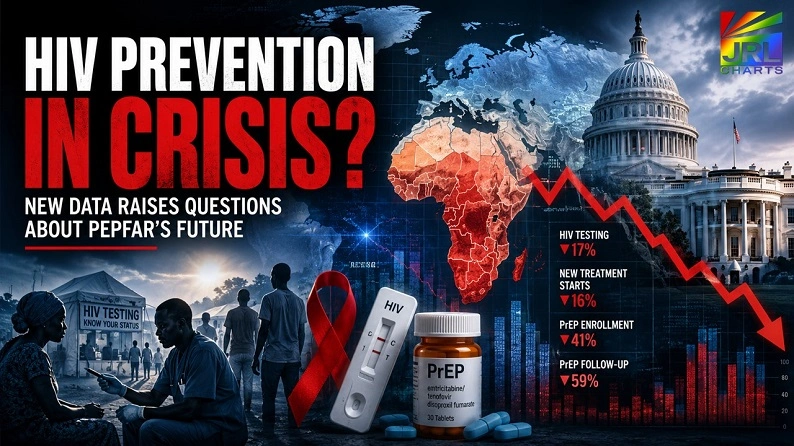
Federal data shows HIV testing declined by approximately 17 percent during the final quarter of 2025 compared with the same period in 2024. New HIV diagnoses also dropped significantly, not because fewer infections occurred, experts caution, but because fewer people were being tested and screened.
The number of individuals newly starting HIV treatment fell roughly 16 percent year-over-year, signaling that many infections may be going undetected.
Researchers warn that reduced testing today could translate into higher infection rates and more advanced HIV cases in the years ahead.
PrEP Enrollment Suffers Major Setback
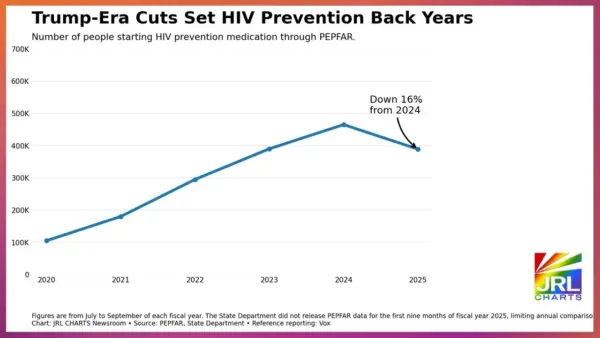
PEPFAR data indicates a significant drop in HIV prevention medication starts during fiscal year 2025, raising concerns among public health experts.
Perhaps the most dramatic decline involved Pre-Exposure Prophylaxis (PrEP), the medication regimen that helps prevent HIV infection among people at higher risk.
New PEPFAR-supported PrEP enrollments dropped by approximately 41 percent during the final quarter of 2025. Follow-up visits among existing PrEP users also declined sharply.
Independent analyses conducted by health policy organizations found that prevention programs serving vulnerable populations—including LGBTQ communities, sex workers, and transgender individuals—experienced some of the steepest reductions following the administration’s foreign aid freeze and restructuring efforts.
Prevention Programs for Vulnerable Communities Nearly Vanished
Health advocates point to the collapse of several prevention-focused initiatives as a warning sign.
Programs aimed at adolescent girls and young women experienced dramatic participation declines, while certain prevention services targeting populations at elevated HIV risk reportedly disappeared entirely from publicly reported data during portions of 2025.
Critics argue that reducing outreach efforts among high-risk populations undermines one of PEPFAR’s most successful strategies: identifying infections early and preventing transmission before it occurs.
For more than two decades, PEPFAR has combined treatment, testing, prevention, and community outreach to drive HIV infections downward globally. Experts say weakening any one of those pillars threatens the entire system.
International Health Experts Sound the Alarm
New findings released this month by UNAIDS suggest the effects extend beyond PEPFAR alone.
Across 62 countries, global PrEP access fell by 38 percent during 2025, while HIV testing declined by roughly 22 percent in several high-burden nations. UNAIDS officials described the situation as one of the most serious disruptions to HIV prevention services since the modern HIV response began.
At the same time, treatment programs demonstrated greater resilience, with antiretroviral therapy continuing for millions of people already receiving care.
That contrast has fueled growing concerns that today’s stable treatment numbers may conceal tomorrow’s surge in new infections.
Transparency Concerns Add to Uncertainty
Another issue drawing scrutiny is the reduced availability of HIV program data.
Several researchers and policy groups have expressed concern that reporting requirements have changed, limiting public visibility into key prevention metrics and making it harder to evaluate the effectiveness of HIV programs moving forward.
Public health advocates argue that PEPFAR’s success has historically depended not only on funding but also on detailed data collection that allowed officials to quickly identify problems and adjust strategies.
Without that transparency, some experts fear emerging outbreaks could go unnoticed until the consequences become far more severe.
A Growing Debate Over America’s HIV Legacy
Established in 2003 under President George W. Bush, PEPFAR has been widely regarded as one of the most successful global health initiatives in modern history, helping save more than 25 million lives and dramatically reducing HIV-related deaths worldwide.
The latest data suggests that while treatment systems remain largely intact, the broader infrastructure responsible for preventing new infections may be under increasing strain.
Whether the administration’s America First Global Health Strategy ultimately succeeds in maintaining HIV control remains an open question. But for many public health experts, the warning signs are becoming harder to ignore.
For the latest coverage on LGBTQ health policy, HIV prevention initiatives, and breaking developments in LGBT Politics USA, stay connected to JRL CHARTS LGBT Politics USA—where business, policy, and LGBTQ rights news intersect.
His reporting focuses on federal court rulings, legislative developments, international human rights issues, and government actions impacting LGBTQ communities worldwide.
With nearly two decades of experience, Goldberg is recognized for his balanced analysis, investigative insight, and commitment to accurate, fact-based journalism that informs readers on the political forces shaping equality and justice.
- Meta Paid 29 Anti-LGBTQ Accounts as 2026 Midterm Misinformation Spreads - October 14, 2026
- Orbán’s Anti-LGBTQ Legacy Crumbles as Hungary Votes 139–51 for Change - October 13, 2026
- Japan Faces a $101.5 Billion LGBTQ Equality Problem, Economic Study Warns - October 12, 2026