By: Paul Goldberg – Senior Correspondent | LGBT Politics USA
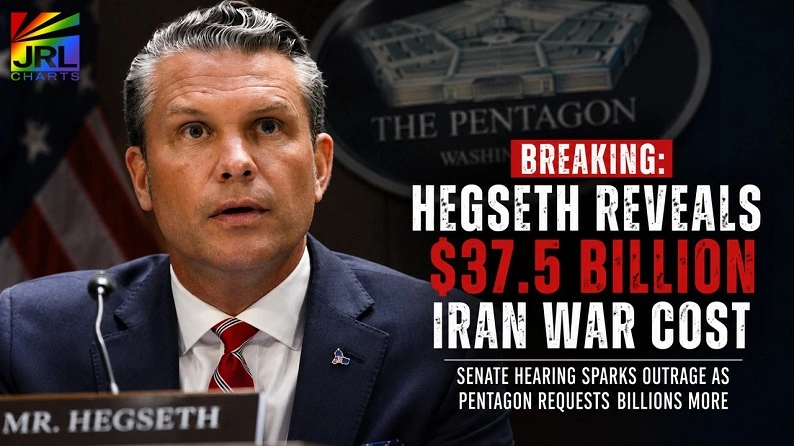
WASHINGTON, D.C. — (July 21, 2026) — Defense Secretary Pete Hegseth’s confirmation that the United States has spent $37.5 billion on the war with Iran ignited fierce political debate Tuesday as lawmakers questioned the administration’s request for tens of billions more in emergency military funding just months before Americans head to the polls.
Appearing before the Senate Appropriations Committee alongside Joint Chiefs Chairman Gen. Dan Caine, Hegseth told senators the war has now cost $37.5 billion, an increase of nearly $8 billion from the administration’s previous estimate. The figure came as Pentagon officials defended President Donald Trump’s request for a $1.5 trillion defense budget and approximately $87.6 billion in supplemental funding tied largely to military operations and replenishing weapons stockpiles depleted by the conflict.
Trending LGBT Breaking Military News Coverage on JRL CHARTS:
• Third Missing U.S. Service Member Confirmed Dead After Iran’s Jordan Base Attack
• Did the Pentagon Force Scouting America to Change Its Transgender Policy?
• VA Restructures LGBTQ+ Veteran Programs Under New Federal Policy Changes
• DOJ Refuses Judge’s Demand to Kill $1.8 Billion Trump-Era Compensation Fund
• Breaking Military News involving LGBTQ Service Members and Security
The hearing quickly became one of the most talked-about political events of the day as protesters repeatedly interrupted Hegseth’s testimony while Democratic senators challenged both the administration’s spending priorities and its long-term strategy in Iran.
Senate Democrats Question Pentagon Spending
Several Democratic lawmakers sharply criticized the administration’s funding request, arguing that Congress still lacks a clear explanation of how long U.S. military operations could continue or what an eventual endgame would look like.
Sen. Patty Murray warned that lawmakers risk financing what she described as “another forever war,” questioning why the administration was requesting tens of billions in additional funding while previous appropriations remain available and the conflict continues to expand.
The Pentagon, meanwhile, argued the supplemental funding is necessary to replace precision-guided munitions, strengthen missile defense capabilities, expand weapons production and maintain military readiness as fighting continues across the region.
Social Media Reaction Centers on Cost-of-Living Concerns
Outside Capitol Hill, Hegseth’s testimony generated immediate and widespread discussion across X, Reddit, Facebook and other social media platforms.
Many highly engaged posts questioned why Congress is considering billions of additional dollars for overseas military operations while many households continue to face higher grocery bills, elevated housing costs, expensive insurance premiums, rising consumer debt and higher fuel prices.
Other commenters argued that Washington should prioritize domestic affordability before approving additional war spending, while supporters of the administration defended the Pentagon’s request as necessary for national security and protecting U.S. interests abroad. The online debate reflected deep political divisions rather than a single consensus.
The hearing also fueled renewed debate over congressional oversight of military action, with many online users questioning whether lawmakers should authorize additional funding without a clearer public strategy for ending the conflict.
Election-Year Political Fallout
With the 2026 midterm elections approaching, Tuesday’s hearing is expected to become part of a broader national debate over government spending, inflation, foreign policy and the federal deficit.
Republicans have argued that replenishing military stockpiles and maintaining readiness are essential as threats from Iran and its regional allies continue to evolve.
Democrats, however, have increasingly questioned whether additional war funding should take priority while many Americans remain focused on kitchen-table economic issues including affordability, healthcare, housing and everyday living expenses.
Project 2025 and a Changing National Agenda
The latest Pentagon funding request also arrives as the Trump administration continues implementing policy priorities that critics have linked to Project 2025, the Heritage Foundation’s governing blueprint. JRL CHARTS has extensively reported on Project 2025 and its influence across multiple federal agencies, including changes affecting civil rights enforcement, diversity initiatives and executive authority.
As Congress debates another major military spending package, voters are increasingly weighing not only America’s role overseas, but also whether Washington’s fiscal priorities align with the economic challenges many families continue to face at home.
With the Senate expected to continue debating the supplemental funding request in the coming weeks, today’s hearing may prove to be one of the defining political flashpoints of the 2026 election season.
Stay with JRL CHARTS LGBT Politics USA for continuing coverage of the Trump administration, Project 2025, the 2026 Midterm Elections and the policies shaping America’s political and economic future.
His reporting focuses on federal court rulings, legislative developments, international human rights issues, and government actions impacting LGBTQ communities worldwide.
With nearly two decades of experience, Goldberg is recognized for his balanced analysis, investigative insight, and commitment to accurate, fact-based journalism that informs readers on the political forces shaping equality and justice.
- Japan Faces a $101.5 Billion LGBTQ Equality Problem, Economic Study Warns - October 12, 2026
- Alito Says Gay Marriage Is Safe — But Didn’t They Say That About Roe v. Wade? - October 12, 2026
- Feds Raid Ilhan Omar’s Home — She Fires Back at Trump: ‘I Will Not Be Silenced’ - October 12, 2026