By: Paul Goldberg – Senior Correspondent | LGBT Business Finance News
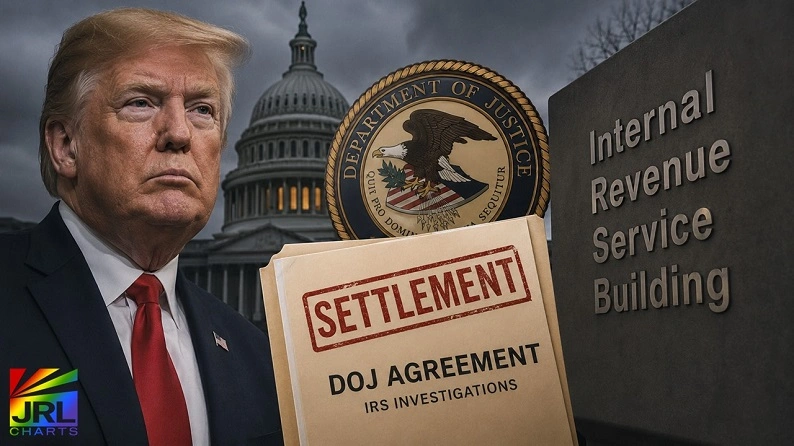
WASHINGTON D.C. — (May 19, 2026) — CNN ignited a political and constitutional firestorm Tuesday after reporting that the U.S. Department of Justice expanded its controversial settlement agreement with President Donald Trump to reportedly bar the Internal Revenue Service from reopening past tax investigations involving Trump, his family members, or affiliated business entities.
The breaking development stems from a wider DOJ settlement tied to Trump’s multi-billion-dollar legal battle against the IRS and federal agencies over the handling of his tax records. Multiple national outlets, including The Wall Street Journal and The Guardian, report that the agreement includes the creation of a controversial government-backed “Anti-Weaponization Fund” estimated between $1.7 billion and $1.8 billion while also permanently ending certain government tax claims tied to Trump-related entities.
Related Trump, DOJ & Constitutional Crisis Coverage on JRL CHARTS:
• Trump IRS Lawsuit Deal Could Funnel $1.7B to Allies, Jan. 6 Capitol Riot Defendants
• Project 2025 Already 50% Complete: Inside Trump’s Plan Reshaping America
• U.S. Banking Rule Ends ‘Reputational Risk’ Barrier, Expands Access for Legal Businesses
• LGBTQ Corporate Participation Plunges 65% in 2026 as DEI Retreat Reshapes Business Landscape
CNN Breaking Alert Triggers National Backlash
CNN’s on-screen ticker stunned political observers Tuesday after airing the message:
“NEW: DOJ expands settlement with Trump to bar the IRS from ever investigating him or his family for past tax issues.”
The wording immediately triggered outrage online and across Washington as critics questioned whether any president has the constitutional authority to negotiate protections limiting future IRS enforcement actions against themselves or their relatives.
How Can A President Get Away With This?
That question is now dominating legal and political debate nationwide.
Under Article II of the U.S. Constitution, the president is required to “take Care that the Laws be faithfully executed,” not create a personal firewall against federal tax enforcement. The Internal Revenue Code separately grants the IRS broad authority to examine books, records, papers and financial data relevant to determining tax liability. IRS procedures also require mandatory examinations of presidential and vice-presidential tax returns.
Legal scholars are expected to challenge whether a DOJ-negotiated settlement can lawfully restrict future IRS enforcement authority tied to a specific private citizen, family network, or business organization. Critics argue that if such protections are allowed to stand, the agreement could establish a dangerous precedent placing future presidents beyond the normal reach of federal tax law.
Trump allies, however, continue arguing that the IRS and federal investigators unfairly targeted Trump and his businesses for years through politically motivated enforcement actions.
Treasury Department Lawyer Resigns Amid Fallout
The controversy intensified Tuesday after Treasury Department General Counsel Brian Morrissey abruptly resigned within hours of the settlement details becoming public.
Morrissey — a conservative attorney appointed during the Trump administration and former clerk to Supreme Court Justice Clarence Thomas — reportedly stepped down as backlash erupted over the settlement language and the creation of the Anti-Weaponization Fund.
While no official reason for his resignation has yet been publicly confirmed, the timing is already fueling intense speculation that even senior administration legal officials were deeply uncomfortable with the scope of the agreement and its reported restrictions on future IRS investigations involving Trump, his family, and affiliated business entities.
Democrats Accuse Trump Administration Of Undermining IRS Independence
Congressional Democrats and government ethics watchdogs are now openly questioning whether the executive branch attempted to bargain away future federal tax enforcement authority through the settlement.
Critics warn the agreement could undermine the independence of the IRS and create the appearance that politically powerful figures can negotiate protections unavailable to ordinary American taxpayers.
“When the Treasury Department’s top conservative lawyer resigns the same day the agreement becomes public, the issue stops looking like routine politics and starts looking like a constitutional credibility crisis,” one former federal ethics attorney told reporters Tuesday.
Could The Settlement Face Legal Challenges?
Legal analysts expect immediate scrutiny over whether portions of the agreement could face future judicial or congressional challenges.
Constitutional experts note that federal tax enforcement authority originates through congressional statute — not personal executive agreements negotiated through the DOJ. If watchdog organizations or members of Congress determine the settlement unlawfully restricts IRS authority, the agreement could eventually face legal review.
JRL CHARTS LGBT Business Finance News will continue monitoring the constitutional backlash, IRS enforcement questions, Treasury Department fallout, and political firestorm now surrounding the reported DOJ settlement involving President Trump and his family.

His reporting focuses on federal court rulings, legislative developments, international human rights issues, and government actions impacting LGBTQ communities worldwide.
With nearly two decades of experience, Goldberg is recognized for his balanced analysis, investigative insight, and commitment to accurate, fact-based journalism that informs readers on the political forces shaping equality and justice.
- LGBTQ+ Support Vanishes from Alabama University Website as Scholarship Questions Mount - October 17, 2026
- GameStop Hit With Federal Lawsuit After Gay Employee Reports Threats — Then Gets Fired - October 16, 2026
- Meta Paid 29 Anti-LGBTQ Accounts as 2026 Midterm Misinformation Spreads - October 14, 2026