By: Paul Goldberg – Senior Correspondent | LGBT Politics USA
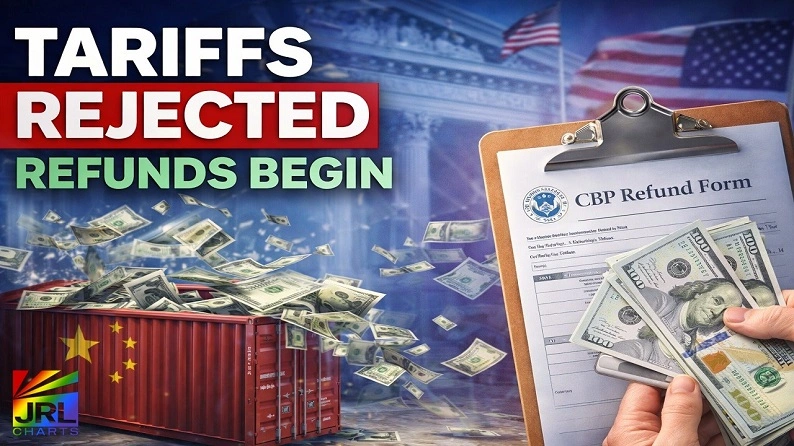
WASHINGTON, D.C. — (April 13, 2026) — The U.S. government is preparing to launch a formal refund process for duties collected under former President Donald Trump’s tariff program, following a landmark legal challenge that reshaped the administration’s authority to impose sweeping import taxes.
According to a bulletin from U.S. Customs and Border Protection (CBP), the agency will roll out the first phase of its new Consolidated Administration and Processing of Entries (CAPE) system on April 20. The tool is designed to streamline refund claims for businesses that paid tariffs under the International Emergency Economic Powers Act (IEEPA).
Related LGBT Business Finance News Coverage on JRL CHARTS:
• U.S. Banking Rule Ends ‘Reputational Risk’ Barrier, Expands Access for Legal Businesses
• LGBTQ Corporate Participation Plunges 65% in 2026 as DEI Retreat Reshapes Business Landscape
• US Trade Deficit Hits Five-Month High Amid Import Boom
• Supreme Court Strikes Down Bulk of Trump Tariffs in Landmark Emergency Powers Ruling
• California Expected to Approve $47.6M Grant for Mercy’s LGBTQ Senior Housing Tower
• Get the Latest in LGBT Politics USA Exclusively on JRL CHARTS
The move follows a February ruling by the U.S. Supreme Court, which rejected the administration’s interpretation that IEEPA granted broad authority to impose global tariffs. The decision has triggered a wave of refund claims across multiple industries affected by the tariff program.
Through the CAPE system, accessible via CBP’s Automated Commercial Environment (ACE) portal, companies will be able to submit consolidated refund requests rather than filing individual claims for each import entry. Officials say the system is designed to improve efficiency and ensure that applicable interest is included in reimbursements.
For industries reliant on imported goods, including sectors tied to consumer retail and specialty manufacturing, the financial implications could be significant.
As previously reported by JRL CHARTS, tariff increases—particularly those targeting imports from China—placed notable pressure on supply chains, margins, and pricing structures across multiple markets, including the men’s wellness and specialty retail sectors.
In response to the Supreme Court ruling, affected companies have filed legal actions with the U.S. Court of International Trade seeking restitution. Many businesses are now closely monitoring the rollout of the CAPE system to determine how quickly funds may be recovered and whether the process will deliver meaningful financial relief.
However, broader trade tensions remain unresolved. The Trump administration has continued to pursue tariff enforcement strategies under the Trade Act of 1974, which allows temporary import levies without congressional approval. This has prompted new legal challenges from multiple U.S. states seeking to limit executive authority over trade policy.
At the same time, federal trade investigations targeting countries such as China and Mexico are ongoing under Section 301(b), signaling that tariff-related pressures on global supply chains may persist despite the refund process now underway.
As the CAPE system launches, the key question for businesses remains: how quickly refunds will be processed—and whether they will offset the long-term economic impact of years of elevated import costs.
Stay with JRL CHARTS LGBT Business Finance News for breaking updates on tariffs, global markets, and economic policy shaping the future of U.S. and international business.
His reporting focuses on federal court rulings, legislative developments, international human rights issues, and government actions impacting LGBTQ communities worldwide.
With nearly two decades of experience, Goldberg is recognized for his balanced analysis, investigative insight, and commitment to accurate, fact-based journalism that informs readers on the political forces shaping equality and justice.
- CVS Hit with $315 Million Opioid Settlement — What LGBTQ+ and Cancer Patients Need to Know - October 17, 2026
- LGBTQ+ Support Vanishes from Alabama University Website as Scholarship Questions Mount - October 17, 2026
- GameStop Hit With Federal Lawsuit After Gay Employee Reports Threats — Then Gets Fired - October 16, 2026