By: Paul Goldberg — Senior Correspondent | Breaking Military News
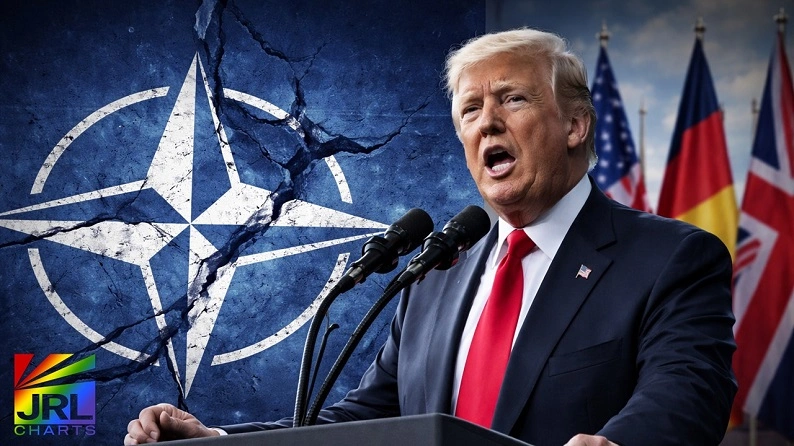
WASHINGTON, D.C. — (April 1, 2026) — President Donald Trump has ignited a geopolitical firestorm after signaling that the United States may reconsider its membership in North Atlantic Treaty Organization, the cornerstone of Western military cooperation for over seven decades.
Speaking in remarks published Wednesday morning, Trump indicated that a U.S. withdrawal from NATO is now “beyond reconsideration,” as frustration builds inside the administration over what officials describe as a lack of allied support during the escalating conflict with Iran.
Related LGBT Breaking Military News Coverage on JRL CHARTS:
• Iran Responds To President Trump’s Ultimatum – By Bombing Oil Tanker
• REVEALED: Trump Names Iran Contact as War Tensions Rise
• One Month Into Iran War, GOP Faces Rising Costs, Voter Frustration and Economic Fallout
• U.S. Army Raises Enlistment Age to 42 — But Does This Include LGBTQ Recruits?
• Why Gas Prices Are Spiking Again Across the U.S. — And What Comes Next
• Viral Iran War Cost Tracker Explained: What the Live Ticker Is Really Showing
• Get the Latest in LGBT Politics USA Exclusively on JRL CHARTS
NATO Allies Resist U.S. Pressure
According to senior officials, multiple NATO member states have refused U.S. requests to participate in military operations tied to the Iran conflict, including efforts to secure the strategically critical Strait of Hormuz — a vital artery for global oil shipments.
This resistance has exposed growing divisions within NATO, particularly among European nations wary of deeper military involvement in the Middle East.
Secretary of State Marco Rubio reinforced the administration’s stance, warning that Washington may need to “reassess” its commitments to the alliance if support remains limited.
NATO Friction Deepens as Airspace and Access Restrictions Hit U.S. Operations
The anger inside NATO is no longer theoretical. Spain publicly closed its airspace to U.S. aircraft involved in the Iran war, while Italy denied permission for U.S. military planes to land at Sigonella air base in Sicily before heading toward the Middle East.
France also added to the transatlantic strain by refusing Israel use of its airspace for a flight carrying American weapons tied to the Iran conflict. Together, those moves underscored a deeper rupture inside the alliance: several European governments may not be demanding an American exit from NATO outright, but they are clearly signaling that U.S. military operations tied to the Iran war will not receive automatic cooperation across Europe.
Quiet Frustrations Inside NATO
While no NATO country has publicly demanded a U.S. withdrawal, diplomatic signals suggest a more complex reality behind closed doors.
Some member states — particularly those advocating for greater European strategic autonomy — have long pushed for reduced dependence on U.S. military power. Nations such as France have historically supported building an independent European defense capability, while others have quietly expressed concern over being drawn into U.S.-led conflicts outside the alliance’s core mission.
At the same time, countries geographically closer to Russia — including Poland and the Baltic states — remain strongly committed to NATO and view U.S. military presence as essential to their national security.
Quiet Frustrations Inside NATO Go Public
What had long been discussed behind closed doors erupted into the open this morning after Donald Trump publicly labeled North Atlantic Treaty Organization a “paper tiger” during an interview, sharply escalating tensions with allied governments. Trump argued that without U.S. military power, the alliance lacks real strength — a critique tied directly to NATO members’ refusal to support American-led operations in the Iran conflict.
The blunt assessment confirms what many diplomats feared: internal frustrations within NATO are no longer private disagreements but are now spilling into public confrontation, raising serious questions about the alliance’s unity and long-term viability.
“Get Your Troops Out” Sentiment — Reality or Rhetoric?
Despite viral rumors circulating online, there is no confirmed evidence that any NATO member has formally told the United States to remove its troops, equipment, or military infrastructure.
However, political undercurrents in parts of Europe have occasionally reflected public frustration with U.S. foreign policy decisions, particularly in relation to Middle East conflicts. In countries like Germany, debates over hosting U.S. bases have surfaced periodically, though governments have consistently reaffirmed NATO commitments.
In contrast, Eastern European nations continue to advocate for an expanded U.S. presence as a deterrent against Russian aggression.
Legal Barriers to a U.S. Exit
Any attempt by Trump to withdraw the United States from NATO would face significant legal hurdles. Under legislation passed in 2023 during the administration of Joe Biden, a NATO exit requires approval from two-thirds of the U.S. Senate or an act of Congress — effectively limiting unilateral executive action.
Escalating Rhetoric Against Allies
Trump’s remarks also included sharp criticism of key allies, including the United Kingdom, where he targeted Prime Minister Keir Starmer over Britain’s refusal to support U.S. military actions tied to Iran.
The comments mark one of the most direct confrontations between a U.S. president and NATO allies in recent history, raising concerns about the long-term stability of the alliance.
What Comes Next
With a nationally televised address scheduled for 9 p.m., global attention is now focused on whether Trump will formally announce a policy shift regarding NATO membership.
Such a move would represent the most significant transformation of Western military strategy since the alliance’s founding in 1949 — with far-reaching implications for global security, energy markets, and the balance of power.
U.S. Law Limits Presidential Authority Over NATO Withdrawal
Despite the escalating rhetoric, it is important to clarify that the President of the United States does not have unilateral authority to withdraw the country from the North Atlantic Treaty Organization. Under legislation passed in 2023 during the administration of Joe Biden, any effort to exit NATO requires either a two-thirds majority approval in the United States Senate or an act of Congress.
This legal safeguard ensures that such a consequential decision — one that would fundamentally reshape global security and U.S. foreign policy — cannot be made by the president alone, reinforcing the system of checks and balances at the core of American governance.
Stay with JRL CHARTS – Breaking Military News for continuing coverage on the evolving NATO crisis, U.S. foreign policy shifts, and global security developments shaping the future of international alliances.

- Trump Signals Possible U.S. Exit from NATO as Alliance Tensions Explode - April 1, 2026
- Supreme Court Sides with Conversion Therapy Advocate — Critics Call It a “Dark Ages” Attack on LGBTQ Minors - March 31, 2026
- AI Giants Pull Back From Adult Content Despite Industry’s Role in Tech Innovation - March 30, 2026
// Affiliate Disclosure: JRL CHARTS is a digital news and media platform. We do not host, stream, or sell adult content. Some outbound links may contain affiliate tracking to licensed studio-owned platforms (e.g., LatinBoyz, AEBN, BiLatin Men). These links lead to legal, age-gated distributors and are provided strictly for editorial and informational purposes only.