By: Paul Goldberg — Senior Correspondent | LGBT Business Finance News
WASHINGTON — (March 29, 2026) — One month into the escalating U.S. conflict with Iran, the political and economic consequences are beginning to crystallize across key battleground states, placing Republicans in an increasingly complex position as costs rise and voter sentiment shifts.
While GOP leaders and voters have largely remained supportive of the administration’s military strategy, the real-world economic impact is becoming harder to ignore — from rising gas prices to supply chain disruptions and growing pressure on agriculture and manufacturing sectors.
Related LGBT Breaking Military News Coverage on JRL CHARTS:
• U.S. Army Raises Enlistment Age to 42 — But Does This Include LGBTQ Recruits?
• Why Gas Prices Are Spiking Again Across the U.S. — And What Comes Next
• “Baghdad Bob” Moment? Trump’s Iran Claims Collapse as Tehran Denies Talks Exist
• LGBTQ Troops Navigate Iran War Combat Missions While Facing New Pentagon Policy Battles
• Viral Iran War Cost Tracker Explained: What the Live Ticker Is Really Showing
• Get the Latest in LGBT Politics USA Exclusively on JRL CHARTS
Gas Prices Surge as Energy Markets React
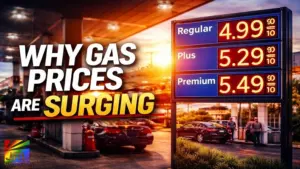
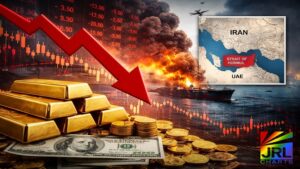
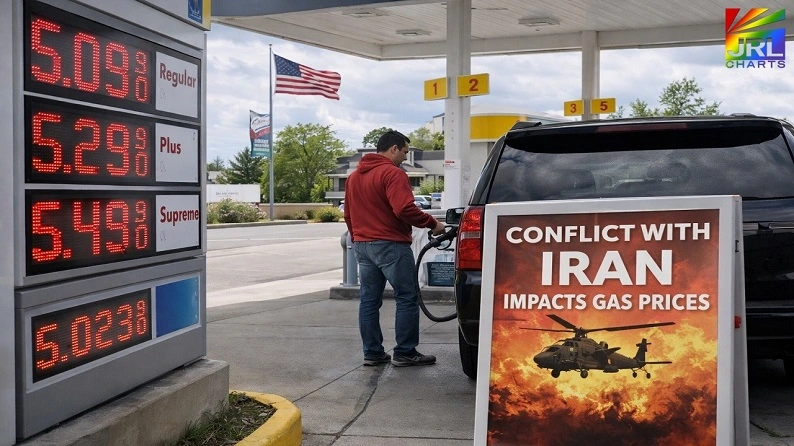
In states like Nevada, gas prices are nearing the $5 per gallon mark, reflecting broader volatility tied to instability in the Middle East and concerns over global oil supply routes, including the Strait of Hormuz.
Energy analysts warn that even in a best-case scenario, price relief may not be immediate, as markets typically lag behind geopolitical developments.
For voters, however, the distinction between short-term disruption and long-term stabilization may matter less than what they see at the pump.
Farmers and Supply Chains Under Pressure
The economic ripple effects are being felt sharply across agricultural regions, where fertilizer prices have surged due to supply disruptions tied to the conflict.
Farmers in states such as Pennsylvania and North Dakota are already adjusting planting strategies, with some shifting to crops requiring less fertilizer — a move that could ultimately reduce yields and drive higher food prices later this year.
At the same time, manufacturers in states like Michigan are reporting renewed supply chain strain, complicating production schedules and raising concerns about sustained economic drag.
GOP Faces Voter Turnout Questions
Politically, Republican strategists are beginning to acknowledge a potential risk heading into upcoming elections: not necessarily a shift in party loyalty, but a drop in voter enthusiasm.
Local GOP leaders in battleground regions say frustration tied to economic conditions — particularly fuel costs — is already influencing voter behavior.
Door-to-door canvassing efforts have reportedly become more difficult in some areas, with voters expressing concerns tied directly to the economy and the ongoing conflict.
Balancing Support for War With “America First” Messaging
The situation presents a unique challenge for Republicans, particularly among “America First” voters who have historically opposed prolonged foreign conflicts.
While many remain supportive of the administration, the longer the conflict continues, the greater the tension between foreign policy objectives and domestic economic priorities.
“If the conflict extends beyond initial expectations, that’s when political risk begins to increase,” one GOP strategist noted, pointing to historical parallels where extended military engagements reshaped voter sentiment.
Economic Messaging Takes a Back Seat
Prior to the Iran conflict, the White House had been focused heavily on affordability messaging — highlighting lower costs and economic gains.
However, the escalation has shifted national attention almost entirely toward foreign policy, limiting the administration’s ability to reinforce its economic narrative.
Political analysts note that major geopolitical events tend to consume both media coverage and political capital, making it difficult to maintain focus on domestic priorities.
A Defining Moment Heading Into Election Season
For now, Republican leadership appears willing to give the administration time, with many expressing confidence that the situation will stabilize.
But the underlying concern remains clear:
• If the conflict drags on
• If energy prices remain elevated
• If economic strain deepens
…the political landscape could shift in ways that are difficult to predict.
JRL CHARTS ANALYSIS
Unlike early-stage political reactions, the second month of a conflict is where economic reality begins to take hold.
This is no longer just a foreign policy story — it’s now a cost-of-living story, a supply chain story, and potentially an election story.
And that’s where the real impact will be measured.
Stay with JRL CHARTS LGBT Business Finance News for in-depth analysis on how global conflicts, economic shifts, and political strategy intersect to shape America’s financial future.

// Affiliate Disclosure: JRL CHARTS is a digital news and media platform. We do not host, stream, or sell adult content. Some outbound links may contain affiliate tracking to licensed studio-owned platforms (e.g., LatinBoyz, AEBN, BiLatin Men). These links lead to legal, age-gated distributors and are provided strictly for editorial and informational purposes only.