By: Paul Goldberg – Senior Correspondent | Breaking Military News
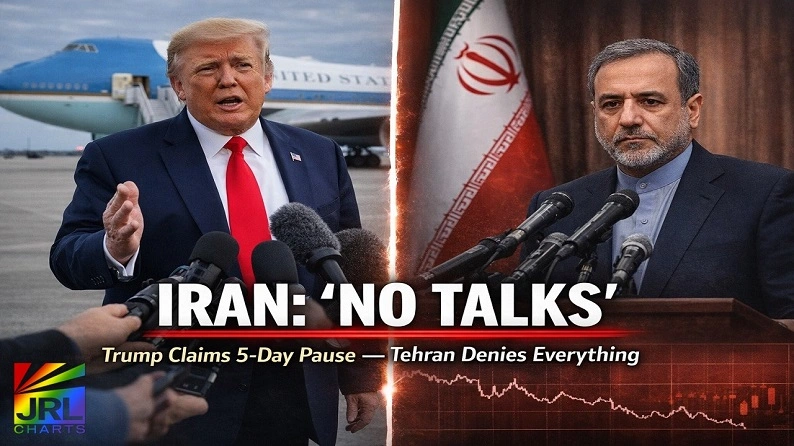
LAS VEGAS — (March 23, 2026) — President Donald Trump is facing intense scrutiny after claiming his administration is engaged in “productive” peace talks with Iran — a claim Tehran is openly denying while global markets and U.S. allies react with confusion.
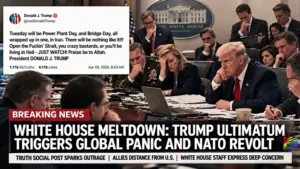
In a Monday morning post on Truth Social, Trump declared that the United States and Iran had held “very good and productive conversations” and announced a five-day pause on planned U.S. strikes targeting Iranian power plants and energy infrastructure.
Related LGBT Breaking Military News Coverage on JRL CHARTS:
• No Boots on the Ground? Pentagon Quietly Prepares U.S. Troop Deployment in Iran
• Pentagon Spending Spree Raises Questions as LGBTQ Troops Face War and Policy Battles
• LGBTQ Troops Navigate Iran War Combat Missions While Facing New Pentagon Policy Battles
• Spain Refuses Use of US Military Bases for Iran Operations as Aircraft Redeploy to Germany
• Viral Iran War Cost Tracker Explained: What the Live Ticker Is Really Showing
• Get the Latest in LGBT Politics USA Exclusively on JRL CHARTS
But within hours, that narrative began to collapse.
Iranian state-affiliated outlets, including Fars News Agency, flatly rejected the claim, stating that “there has been no direct or indirect contact” between Washington and Tehran. Officials went further, suggesting Trump’s announcement was a tactical move to cool energy markets and buy time for military planning, not evidence of real diplomacy.
The Iranian Foreign Ministry reinforced that position, emphasizing that Tehran is not seeking negotiations under current conditions and framing any de-escalation efforts as originating from regional intermediaries—not direct U.S. engagement.
Markets Surge — Then Stall as Doubts Emerge
Global markets initially reacted positively to Trump’s announcement, with energy-sensitive sectors ticking upward on hopes of de-escalation in the Middle East.
However, that momentum quickly faded as conflicting reports surfaced and traders questioned the legitimacy of the claimed talks. Analysts pointed to the lack of verifiable diplomatic channels and Trump’s refusal to identify who, if anyone, his administration is communicating with inside Iran.
The result: a brief rally followed by hesitation, underscoring how fragile market confidence remains amid geopolitical uncertainty.
Israel Blindsided, Allies Question U.S. Strategy
The fallout extended beyond financial markets.
Sources indicate that Israel was not consulted prior to Trump’s announcement—sparking frustration inside one of America’s closest regional alliances. The perceived unilateral move raised concerns about coordination and strategic coherence at a critical moment in the conflict.
Meanwhile, reports from outlets such as Fox News, Newsmax, and The Wall Street Journal describe increasingly tense exchanges between Trump and reporters, particularly when pressed for details about the alleged negotiations.
“We Have Become Baghdad Bob”: Media Backlash Explodes
Perhaps the most striking criticism came from Gerard Baker, a Fox News contributor and former editor-in-chief of The Wall Street Journal.
Baker compared Trump’s claims to the propaganda tactics of Mohammed Saeed al-Sahhaf—infamously nicknamed “Baghdad Bob” during the Iraq War.
“The unsettling reality is that with this president, Americans in wartime are in the unprecedented position of having to suspect that the enemy’s version of events is more likely to be true than our own… We have become Baghdad Bob.”
The comparison underscores a growing divide—not just between Washington and Tehran—but within U.S. media and political circles over credibility, messaging, and wartime transparency.
No Evidence of Talks — Only Escalating Narratives
As of now, no independent confirmation exists that any U.S.-Iran negotiations are taking place.
What does exist is a rapidly widening credibility gap:
- Trump claims active diplomacy and a temporary strike pause
- Iran denies any contact and accuses the U.S. of strategic deception
- Markets react, then pull back
- Allies express frustration
- Media figures question whether the U.S. narrative can be trusted
The result is a volatile information environment where statements themselves are shaping global markets and military expectations—regardless of their accuracy.
The Bigger Picture
At stake is more than just a disputed claim.
This moment highlights how geopolitical messaging, market stability, and military signaling are now tightly intertwined—and how quickly confidence can erode when narratives clash at the highest levels of power.
With tensions still high and no verified diplomatic channel confirmed, the question now facing Washington, Tehran, and global observers alike is simple:
Was this the beginning of de-escalation — or a calculated attempt to control perception in the middle of a growing conflict?
Stay with JRL CHARTS NETWORK’ Breaking Military News Division for real-time geopolitical coverage, market-moving headlines, and unfiltered analysis shaping global power and LGBTQ+ communities worldwide.

// Affiliate Disclosure: JRL CHARTS is a digital news and media platform. We do not host, stream, or sell adult content. Some outbound links may contain affiliate tracking to licensed studio-owned platforms (e.g., LatinBoyz, AEBN, BiLatin Men). These links lead to legal, age-gated distributors and are provided strictly for editorial and informational purposes only.