By: Paul Goldberg – Senior Correspondent | LGBT Politics News
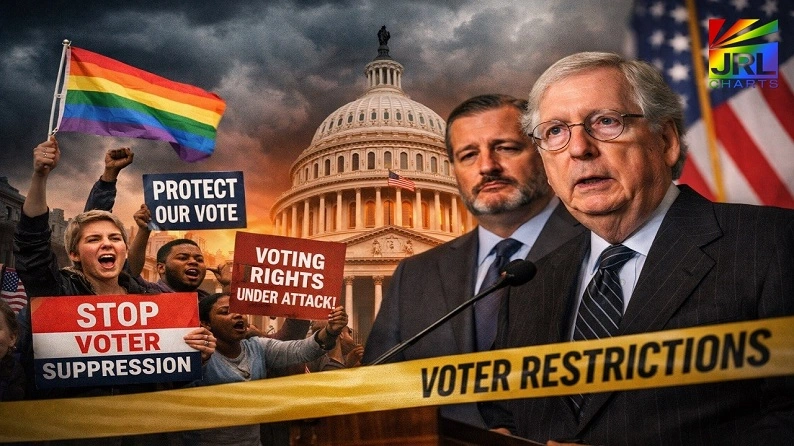
WASHINGTON, D.C. — (March 20, 2026) — A controversial Republican-backed election bill is igniting fierce national backlash as Democrats, civil rights organizations, and legal experts warn it could fundamentally reshape who gets to vote in the United States.
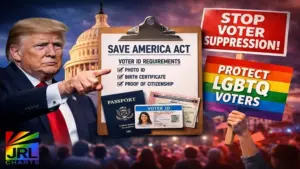
The Safeguard American Voter Eligibility (SAVE) Act — now being aggressively pushed forward by Senate Republicans — is being framed by supporters as an “election integrity” measure. But critics argue it represents something far more alarming: a sweeping overhaul of voter eligibility rules that could disproportionately impact LGBTQ Americans, minorities, young voters, and economically vulnerable populations.
“This is not just about election security,” multiple voting rights advocates warn. “This is about access — and who gets to participate in democracy.”
Related LGBT Politics News Coverage on JRL CHARTS:
• Trump’s SAVE Act Is Dead After GOP Senator Says Bill Won’t Pass
• Pennsylvania House Panel Advances Bills to Strengthen LGBTQ Protections
• Family of Gay Gamer Detained by ICE Warns Deportation to Cameroon Could Be Deadly
• Former DOGE Insider Says ChatGPT Helped Flag and Cancel LGBTQ+ Grants
• Critics Warn SAVE America Act Could Restrict Minority Voting as Debate Heats Up in Senate
• LGBTQ Corporate Participation Plunges 65% as DEI Retreat Reshapes Business Landscape
A Bill Critics Say Could Reshape the Electorate
Republican lawmakers, backed by allies of Donald Trump, have made passage of the SAVE Act a top legislative priority heading into the 2026 election cycle. GOP leaders argue the bill is necessary to prevent noncitizen voting — despite existing federal laws already making such actions illegal.
Data frequently cited by voting rights groups, including findings referenced by organizations like the Heritage Foundation, show that confirmed cases of noncitizen voting remain exceedingly rare.
That disconnect is fueling criticism that the legislation is not addressing a widespread problem — but instead creating new barriers for eligible voters.
“This is a solution in search of a problem,” one election law expert noted, pointing to decades of data showing minimal instances of voter fraud.
Democrats Sound the Alarm
Democratic lawmakers and advocacy groups are escalating warnings that the SAVE Act could trigger widespread disenfranchisement if enacted in its current form.
Opponents argue that stricter documentation requirements and expanded verification rules could disproportionately affect:
-
LGBTQ individuals whose identification documents may not match their current identity
-
Minority communities historically impacted by voter ID laws
-
Young and first-time voters lacking extensive documentation
-
Low-income Americans with limited access to required paperwork
Civil rights organizations, including groups like the ACLU, have long argued that similar measures risk creating systemic barriers under the guise of election security.
“These types of policies don’t just tighten rules — they change outcomes,” a voting rights attorney explained. “They determine who is able to successfully navigate the system.”
A High-Stakes Political Strategy
The timing of the SAVE Act push is also drawing scrutiny.
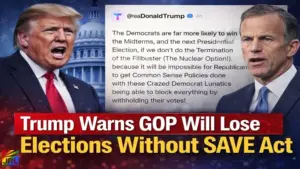
Republican leaders have openly tied the legislation to voter turnout concerns within their own base, warning that failure to act could dampen enthusiasm heading into the midterm elections.
Critics say that framing reveals the political stakes behind the bill.
“This is about shaping the electorate ahead of a major election,” one Democratic strategist said. “When access to voting becomes more complicated, it doesn’t affect all groups equally.”
LGBTQ Voters in the Crosshairs
Advocates warn that LGBTQ Americans could face unique challenges under stricter voter verification systems — particularly transgender voters whose identification documents may not align with their current gender identity.
Voting rights experts have repeatedly flagged documentation mismatches as a known barrier at polling locations, even under existing laws.
“If those requirements become more rigid, the risk of valid voters being turned away increases significantly,” one policy analyst noted.
For LGBTQ advocacy groups, the concern is clear: policies that appear neutral on paper can carry unequal real-world consequences.
Legal and Constitutional Questions Ahead
The SAVE Act is also expected to face immediate legal challenges if passed.
Election law scholars point to potential conflicts with existing federal protections and past court rulings that have struck down overly restrictive voting measures.
Legal analysts say courts will likely examine whether the law creates undue burdens on eligible voters — particularly marginalized groups — without sufficient justification.
“This is where the battle will ultimately play out,” one constitutional expert said. “In the courts.”
A Defining Moment for Voting Rights
As the Senate moves forward with debate, the SAVE America Act is rapidly becoming one of the most consequential voting rights battles in recent years.
Supporters insist it is about restoring confidence in elections.
Critics warn it could mark a turning point — one that reshapes access to the ballot box in ways that may not be immediately visible, but deeply felt.
“This isn’t just another bill,” a civil rights advocate said. “It’s about the future of who gets heard — and who gets left out.”
The Bottom Line
With national attention intensifying and both parties digging in, the fate of the SAVE Act could have lasting implications not only for the 2026 elections — but for the broader trajectory of voting rights in America.
For millions of voters, particularly within LGBTQ and minority communities, the stakes are becoming impossible to ignore.
Stay with JRL CHARTS for continuing coverage on the SAVE America Act and its impact on LGBTQ voters, minority communities, and the future of U.S. elections.

// Affiliate Disclosure: JRL CHARTS is a digital news and media platform. We do not host, stream, or sell adult content. Some outbound links may contain affiliate tracking to licensed studio-owned platforms (e.g., LatinBoyz, AEBN, BiLatin Men). These links lead to legal, age-gated distributors and are provided strictly for editorial and informational purposes only.