By: Paul Goldberg — Senior Correspondent | Breaking Military News
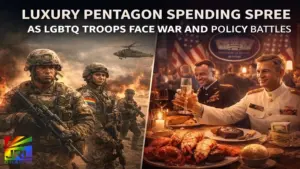
LAS VEGAS — (March 10, 2026) — As the United States intensifies its military campaign against Iran, thousands of American servicemembers are participating in combat operations across the Middle East. Among them are openly gay and lesbian personnel who now find themselves navigating both the dangers of war and a growing policy debate at home over LGBTQ inclusion in the U.S. military.
Related LGBT Breaking Military News Coverage on JRL CHARTS:
• Spain Refuses Use of US Military Bases for Iran Operations as Aircraft Redeploy to Germany
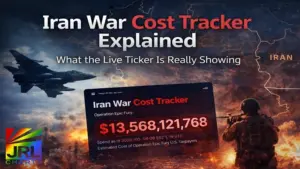
• Viral Iran War Cost Tracker Explained: What the Live Ticker Is Really Showing
• Did the Trump White House Block a Terror Warning? We’ve Got the Inside Scoop
• Pentagon Halts HIV-Positive Recruit Training as Florida Cuts Put HIV Medications at Risk
• Supreme Court Strikes Down Bulk of Trump Tariffs in Landmark Emergency Powers Ruling
• Get the Latest in LGBT Politics USA Exclusively on JRL CHARTS
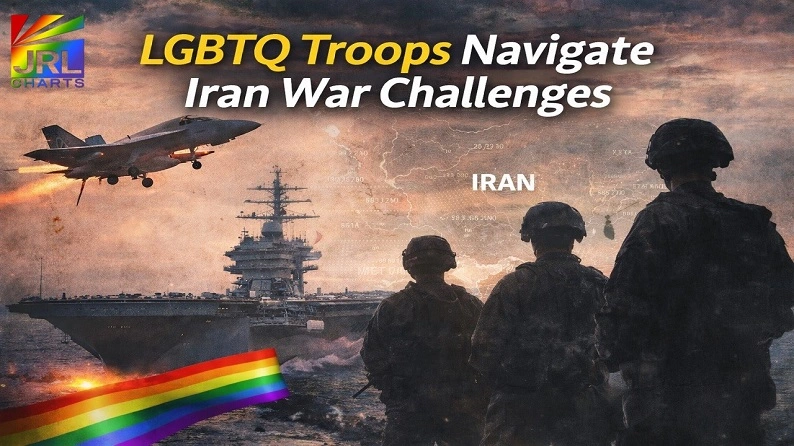
The conflict — now entering a critical phase following initial strikes targeting Iran’s leadership and strategic infrastructure — has drawn multiple U.S. naval strike groups into the region. Personnel assigned to USS Abraham Lincoln and USS Gerald R. Ford carrier strike groups are among the forces conducting air operations designed to suppress Iranian air defenses, degrade retaliatory missile capabilities, and protect commercial shipping lanes through the Strait of Hormuz.
While the operational mission remains focused on military objectives, advocacy organizations say the political environment surrounding LGBTQ service members has grown increasingly complicated.
The Modern Military Association of America, one of the nation’s largest advocacy groups for LGBTQ personnel in uniform, has been actively lobbying lawmakers to remove provisions from the proposed FY2026 National Defense Authorization Act (NDAA) that critics say could limit LGBTQ expression, benefits, and healthcare protections for military families.
According to the organization, several provisions currently under debate in Congress could roll back policies implemented during previous administrations that expanded equal access to services for LGBTQ personnel.
At the same time, some advocacy groups say the internal climate within parts of the military has shifted amid broader changes in Pentagon leadership.
Defense Secretary Pete Hegseth has publicly argued that diversity, equity, and inclusion initiatives can distract from the military’s primary mission of combat readiness. Under the administration’s current defense priorities, some DEI-related programs have been scaled back or eliminated in favor of policies emphasizing warfighting capabilities and operational effectiveness.
Critics argue that these changes could create uncertainty for LGBTQ service members already deployed in combat zones.
Another sensitive issue raised in recent weeks involves concerns about the tone of some command-level communications surrounding the conflict. Several anonymous complaints reportedly submitted through internal military channels allege that certain briefings or remarks by commanders have used religiously framed language to describe the war effort — including references to apocalyptic or theological narratives.
While such claims remain unverified, watchdog organizations have called for a potential review by the Department of Defense Inspector General to determine whether official communications have blurred the line between military strategy and religious ideology.
The operational risks of the conflict also carry unique implications for LGBTQ personnel should they fall into enemy hands.
Under Iranian law, same-sex relationships are criminalized and can carry severe penalties. Human rights organizations have long documented harsh punishments for LGBTQ individuals in Iran, raising fears among advocates that captured LGBTQ troops could face additional dangers beyond standard prisoner-of-war risks.
Despite those concerns, LGBTQ servicemembers continue to serve across all branches of the U.S. armed forces, performing missions ranging from combat aviation and intelligence operations to naval patrols protecting maritime trade routes.
Advocacy networks such as Out in National Security say their primary focus is ensuring that LGBTQ public servants and military personnel receive institutional support during what they describe as an increasingly polarized political environment.
“Many LGBTQ professionals serving in national security roles are feeling renewed pressure to make themselves smaller or less visible,” the organization said in a recent policy statement addressing the wartime climate.
Meanwhile, public opinion in the United States remains divided over the conflict itself.
A Marist Poll released in early March found that roughly 55 percent of Americans consider Iran to be a minor threat or no threat at all, making the conflict one of the least popular major military engagements in recent decades.
For LGBTQ servicemembers deployed overseas, however, the political debate unfolding in Washington may feel distant compared to the immediate realities of military operations.
As U.S. forces continue to conduct air and naval missions across the region, those personnel remain focused on the responsibilities shared by every member of the armed forces — regardless of identity.
Serving their country during wartime.
Related Coverage
Explore more global conflict reporting in Breaking Military News on JRL CHARTS.
For continuing coverage of global conflicts, defense policy shifts, and national security developments impacting LGBTQ servicemembers and allied forces, follow Breaking Military News on JRL CHARTS, where readers track the stories shaping the modern battlefield and the policies that affect those who serve.

- Iran Responds To President Trump’s Ultimatum – By Bombing Oil Tanker - March 30, 2026
- GOP Confirms Healthcare Cuts Are on the Table to Fund Trump’s Iran War - March 30, 2026
- REVEALED: Trump Names Iran Contact as War Tensions Rise - March 30, 2026
// Affiliate Disclosure: JRL CHARTS is a digital news and media platform. We do not host, stream, or sell adult content. Some outbound links may contain affiliate tracking to licensed studio-owned platforms (e.g., LatinBoyz, AEBN, BiLatin Men). These links lead to legal, age-gated distributors and are provided strictly for editorial and informational purposes only.