By: Paul Goldberg, Senior Correspondent | LGBT Politics Asia
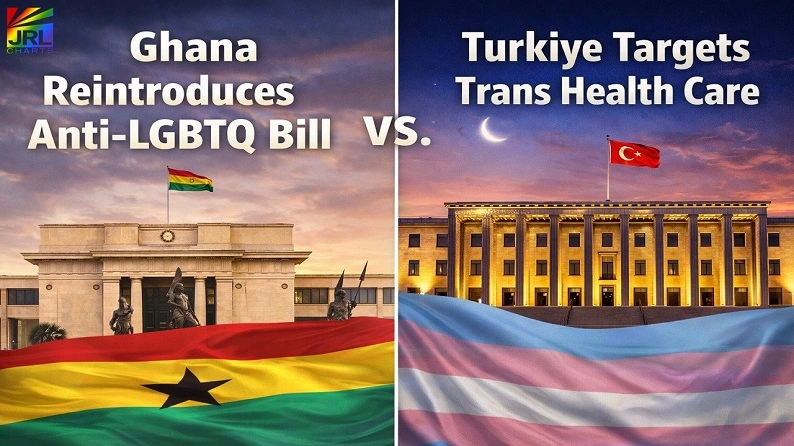
ACCRA / ANKARA — (February 27, 2026) — Lawmakers in Ghana have formally reintroduced the controversial Human Sexual Rights and Family Values Bill, while officials in Turkiye are advancing plans to tighten restrictions on transgender health care and same-sex ceremonies — signaling renewed pressure on LGBTQ communities in both Africa and Asia.
Related LGBTQ Politics Coverage Links on JRL CHARTS:
• See What the Supreme Court Just Ruled on Same-Sex Couples and Property Rights
• Get the Latest in LGBT Politics USA Exclusively on JRL CHARTS
• Breaking Military News involving LGBTQ Service Members and Security
• Asia’s LGBTQ Rights in 2025: Major Wins, Dangerous Backslides, and What Comes Next
• Stay Up to Date on the Happenings in K-Pop News & Culture
The developments mark a significant escalation in global policy debates over LGBTQ rights, with critics warning that both proposals could violate international human rights commitments.
Ghana Reintroduces Expansive Criminalization Bill
Ghana’s proposed legislation was formally introduced in Parliament on Feb. 17 as a private member’s bill, according to regional reporting. The bill had previously passed Parliament in 2024 but expired without presidential assent under former President Nana Akufo-Addo.
Current President John Mahama has previously stated he would sign the legislation if it passes again.
If enacted, the bill would expand Ghana’s existing law — which already carries a three-year prison sentence for same-sex intimacy — by criminalizing:
Under the proposal, individuals accused of “promoting” LGBTQ activity could face prison sentences of up to 10 years.
The bill has drawn criticism from Ghana’s Human Rights Commission, which warned Parliament that it may violate constitutional protections of association and expression.
Cardinal Peter Turkson of the Catholic Church in Ghana has also publicly distanced himself from the legislation, noting concerns that it criminalizes identity rather than specific conduct.
Supreme Court Background and Escalation
In December 2024, Ghana’s Supreme Court dismissed a legal challenge seeking to declare the bill unconstitutional, ruling that it could not intervene before presidential assent.
Separately, the court upheld Section 104 of Ghana’s Penal Code — a colonial-era provision criminalizing same-sex intimacy with penalties of up to three years in prison.
Human rights organizations have reported that debate surrounding the legislation has coincided with increased reports of harassment, evictions, arbitrary arrests, and violence against individuals perceived to be LGBTQ.
The renewed introduction of the bill in February follows earlier procedural confusion in 2025, when lawmakers claimed it had been refiled but later discovered it was not formally on Parliament’s agenda.
Watch Anti-LGBTQ Bill Formally Introduced to Ghana’s Parliament Following First Reading
Turkiye Signals New Restrictions on Transgender Health Care
Meanwhile, Turkiye’s Ministry of Justice has reiterated plans to introduce legislation increasing penalties for what officials describe as “glorifying deviance,” including same-sex engagement or marriage ceremonies.
Proposed measures reportedly include:
-
Raising the minimum age for gender-affirming care to 25
-
Expanding criminal penalties for providers and patients who violate restrictions
-
Increasing penalties for conduct deemed “contrary to biological sex”
No formal legislation has yet been introduced, but advocacy groups warn that the proposals could conflict with Turkiye’s international human rights commitments.
Turkiye has previously faced scrutiny from European human rights bodies over freedom of expression and LGBTQ assembly rights.
A Broader Global Pattern
The renewed push in Ghana and policy signals from Turkiye reflect broader global tensions over LGBTQ legal recognition and gender identity protections.
International human rights advocates argue that criminalizing identity, restricting medical access, and penalizing public advocacy may place both nations at odds with international agreements protecting freedom of association, dignity, and medical autonomy.
Supporters of the bills, however, frame the measures as protections of cultural values and traditional family structures.
As both governments navigate legislative processes in the coming months, LGBTQ communities and international observers are closely monitoring whether the proposals advance into enforceable law.
JRL CHARTS will continue tracking legislative developments in Ghana, Turkiye, and across the globe as international debates over LGBTQ rights and transgender health policy evolve in 2026.

- Bombshell Report: Trump Jokes About Mass Pardons for Staff Near Oval Office - April 10, 2026
- UK Military Veterans Launch Legal Fight Over LGBT Compensation Scheme - April 10, 2026
- Republicans Escalate Anti-Trans Push as 2026 Midterms Take Shape - April 8, 2026
// Affiliate Disclosure: JRL CHARTS is a digital news and media platform. We do not host, stream, or sell adult content. Some outbound links may contain affiliate tracking to licensed studio-owned platforms (e.g., LatinBoyz, AEBN, BiLatin Men). These links lead to legal, age-gated distributors and are provided strictly for editorial and informational purposes only.