By: Michael Jacobs – Senior Editor | JRL CHARTS – Gay Entertainment News
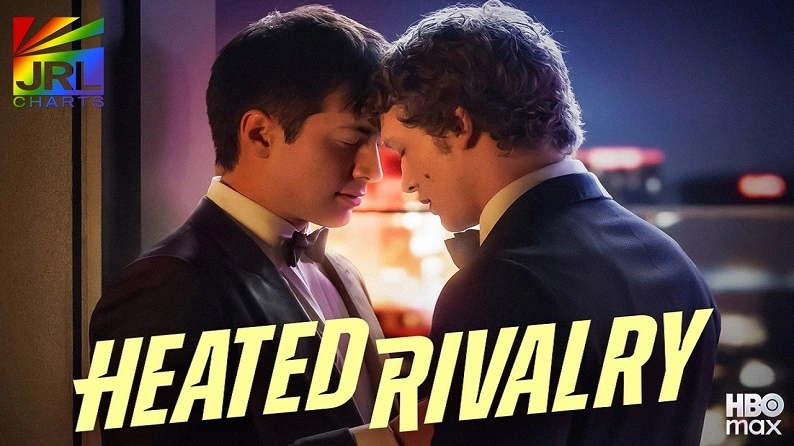
LAS VEGAS, NV — (February 1, 2026) — Despite Russia’s sweeping anti-LGBTQ legislation and aggressive censorship policies, the hit television series Heated Rivalry has emerged as an unlikely underground sensation among Russian viewers.
Related LGBTQ World News Coverage on JRL CHARTS:
• Get the Latest in LGBT Politics USA Exclusively on JRL CHARTS
• Breaking Military News involving LGBTQ Service Members and Security
• LGBT Politics Europe – Updates on Hate Crimes, Judicial Rulings
• Russia’s Occupation Fuels Anti-LGBTQ+ Violence in Ukraine — Advocacy Groups Warn
The series, based on the bestselling novel by Rachel Reid, follows the secret relationship between two rival professional hockey players navigating love, identity, and public scrutiny. Since its release in late 2025, the show has gained widespread acclaim in North America for its emotionally layered storytelling, character development, and unapologetic LGBTQ representation.
Now, against all odds, Heated Rivalry is finding a devoted audience in Russia — a country where LGBTQ expression is increasingly criminalized.
Underground Streaming Fuels Popularity
Following Western sanctions imposed after Russia’s 2022 invasion of Ukraine, access to major platforms such as HBO and Netflix has become severely limited. In response, Russian viewers seeking Western entertainment have turned to underground streaming platforms, mirror sites, and social networks.
Full episodes and edited clips of Heated Rivalry circulate widely across VKontakte and private messaging channels, allowing fans to bypass government restrictions and consume censored content discreetly.
On Kinopoisk, Russia’s equivalent of IMDb, the series holds an average rating above 8.4 out of 10 from tens of thousands of users — ranking it above many globally acclaimed Western dramas.
A Story That Resonates With Russian Viewers
Much of the show’s appeal stems from the character of Ilya Rozanov, a Russian-born athlete raised in a rigid, hypermasculine environment shaped by military and law enforcement traditions.
Russian audiences have connected deeply with Ilya’s internal struggle — balancing personal identity with cultural expectations, family pressure, and institutional hostility.
Viewers relate to his belief that living openly as a bisexual man in Russia remains nearly impossible.
One Moscow resident, speaking anonymously, explained:
“If you live openly in Russia, you are constantly afraid. For many of us, leaving is the only way to survive.”
Conservative Backlash and Government Pressure
Predictably, the show’s growing popularity has drawn condemnation from conservative and religious organizations.
The Orthodox activist group Sorok Sorokov has announced plans to petition Roskomnadzor — Russia’s state media regulator — to block access to the series and prosecute websites hosting it.
Group chairman Georgy Soldatov labeled the series “propaganda” and called for stricter enforcement of Russia’s morality laws.
Beginning March 2026, new legislation will further expand the government’s authority to ban films and series that allegedly “discredit traditional values,” granting regulators sweeping control over digital platforms.
According to official data, Roskomnadzor blocked more than 1.3 million pieces of online content in 2025 — a dramatic increase over the previous year — with LGBTQ-related material ranking among the most targeted categories.
Voices From Exile: Cultural Resistance Through Media
Prominent journalist Mikhail Zygar, now living abroad, has written extensively about why Heated Rivalry resonates so strongly with LGBTQ Russians.
In a recent essay, Zygar compared Ilya’s fictional journey to his own upbringing under Soviet-era repression.
“Coming out was never an option. Being gay meant losing everything — family, career, safety.”
Zygar argues that the show’s underground popularity represents a subtle form of resistance against state-controlled narratives promoted by Vladimir Putin’s administration.
Rather than accepting official messaging, many Russians quietly consume content that affirms personal freedom and diversity.
Cultural Impact Beyond Entertainment
While some viewers remain skeptical of the series’ optimistic ending, many see its success as a step toward normalizing LGBTQ visibility in an otherwise hostile media landscape.
Analysts suggest that international queer content like Heated Rivalry plays a growing role in shaping private attitudes — even when public discourse remains restricted.
By circulating through informal networks, the series continues to challenge censorship, offering Russian viewers an alternative vision of identity, intimacy, and acceptance.
Quiet Defiance in a Digital Age
Zygar describes the show’s success as symbolic:
“People are choosing what they want to watch. They are not fully controlled. They are not fully convinced.”
In a nation where LGBTQ voices are routinely silenced, Heated Rivalry has become more than a television series — it is a quiet act of cultural resistance.
For continuing coverage on global LGBTQ rights, international media trends, and cultural resistance stories, follow JRL CHARTS LGBT World News — your trusted source for worldwide LGBTQ reporting.

- Mass Layoffs Rock The Advocate and Out as Equalpride Acquires ‘Them’ - March 2, 2026
- LGBTQ Corporate Participation Plunges 65% in 2026 as DEI Retreat Reshapes Business Landscape - February 22, 2026
- Trump Targets Netflix Board Member Susan Rice After ‘Take a Knee’ Remarks Spark Political Firestorm - February 21, 2026
// Affiliate Disclosure: JRL CHARTS is a digital news and media platform. We do not host, stream, or sell adult content. Some outbound links may contain affiliate tracking to licensed studio-owned platforms (e.g., LatinBoyz, AEBN, BiLatin Men). These links lead to legal, age-gated distributors and are provided strictly for editorial and informational purposes only.