By: Paul Goldberg — Senior Correspondent | LGBT Politics News
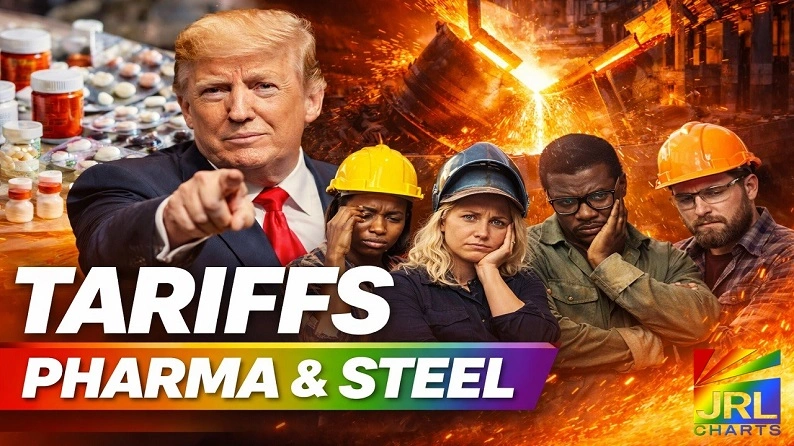
WASHINGTON, D.C. — (April 2, 2026) — President Donald Trump has announced a sweeping expansion of tariffs targeting pharmaceuticals and industrial metals, marking a strategic pivot in U.S. trade policy following a major legal setback earlier this year.
The administration confirmed tariffs of up to 100% on select name-brand pharmaceuticals, while simultaneously restructuring how duties are applied to steel, aluminum, and copper imports. The move reflects a shift toward sector-specific enforcement after the U.S. Supreme Court curtailed broader tariff authority tied to emergency economic powers.
Related LGBT Business Finance News Coverage on JRL CHARTS:
• Federal Trade Court Orders Refunds for Companies Hit by Trump Tariffs
• US $15,000 Visa Bond Rule Sparks Fears for LGBTQ Travelers Seeking Safety in America
• Supreme Court Strikes Down Bulk of Trump Tariffs in Landmark Emergency Powers Ruling
• Pennsylvania House Panel Advances Bills to Strengthen LGBTQ Protections
• LGBTQ Corporate Participation Plunges 65% in 2026 as DEI Retreat Reshapes Business Landscape
• Get the Latest in LGBT Business Finance News Exclusively on JRL CHARTS
Under the new framework, exemptions will apply to generic drugs and pharmaceutical companies that commit to U.S.-based manufacturing. Nations with negotiated trade agreements — including key allies in Europe and Asia — will face reduced tariff rates, significantly narrowing the scope of impacted imports.
At the same time, the administration has overhauled how tariffs are calculated on metals. Instead of basing duties on foreign production costs, tariffs will now be applied to the full value paid by U.S. importers — a change designed to close pricing loopholes and increase federal revenue.
Officials argue the new methodology eliminates what they describe as “artificial pricing advantages” used by foreign exporters, while strengthening domestic manufacturing and supply chain security.
Pharmaceutical and Metal Tariffs Signal Strategic Shift
The pharmaceutical tariffs stem from a national security review conducted by the U.S. Commerce Department, which raised concerns about reliance on overseas drug production.
Countries such as Japan, South Korea, and members of the European Union will face reduced tariffs, while the United Kingdom will see lower duty rates under negotiated agreements. Major pharmaceutical firms that agreed to pricing reforms and domestic expansion commitments will be exempt.
Meanwhile, metals remain a cornerstone of the administration’s trade agenda. Steel, aluminum, and copper imports — long cited as vulnerable to global price manipulation — are now subject to stricter enforcement measures.
Products containing more than 15% foreign metal content will face a flat 25% tariff on total value, while those below that threshold will be exempt — a move aimed at simplifying compliance and increasing predictability for importers.
LGBTQ-Owned Businesses Rise in Industrial Sectors
While the steel and construction industries have traditionally been viewed as conservative and male-dominated, LGBTQ-owned businesses are steadily gaining ground — reshaping perceptions and expanding economic participation.
Organizations such as the National LGBT Chamber of Commerce continue to certify and support LGBTQ Business Enterprises (LGBTBE®), helping entrepreneurs access contracts, capital, and national visibility.
Notable LGBTQ-led companies in the industrial and fabrication space include:
- Pride Metals LLC — a woman-owned steel service center supplying manufacturers across North America
- Heels and Hardhats Contracting — a major LGBTQ-owned utility contractor specializing in infrastructure and heavy construction
- B Metal Fabrication — a South San Francisco-based firm delivering high-end architectural metalwork
- Hardy & Fuller: A Metal Space — a Denver-based queer BIPOC-owned maker-space focused on inclusive fabrication training
- Foster Works — a Chicago fabrication company revitalized by female entrepreneurs with a modern startup approach
These businesses represent a growing intersection between industrial manufacturing and LGBTQ entrepreneurship — an emerging segment of the U.S. economy that is increasingly visible in supply chains tied to steel and construction.
Industry Inclusivity Expands Beyond Ownership
Beyond business ownership, inclusivity efforts are expanding across labor and trade organizations.
Groups like the United Steelworkers have launched initiatives such as Steel Pride, aimed at creating safer and more equitable workplaces for LGBTQ workers in heavy industry.
Advocacy networks like Construction Pride are also pushing for broader cultural change within construction and fabrication sectors — industries that are now seeing gradual but meaningful shifts in workforce diversity.
Economic Impact and Outlook
The administration maintains that the updated tariff structure will generate billions in additional revenue while reinforcing domestic production.
However, economic analysts warn that higher import costs could ripple through supply chains, potentially impacting consumer prices and industrial project costs.
For LGBTQ-owned businesses operating within these sectors, the evolving trade landscape presents both challenges and opportunities — particularly as domestic sourcing and certified supplier networks gain importance.
Stay with JRL CHARTS for continued coverage of global trade policy, LGBTQ business growth, and the economic forces shaping the future of inclusive commerce.

// Affiliate Disclosure: JRL CHARTS is a digital news and media platform. We do not host, stream, or sell adult content. Some outbound links may contain affiliate tracking to licensed studio-owned platforms (e.g., LatinBoyz, AEBN, BiLatin Men). These links lead to legal, age-gated distributors and are provided strictly for editorial and informational purposes only.