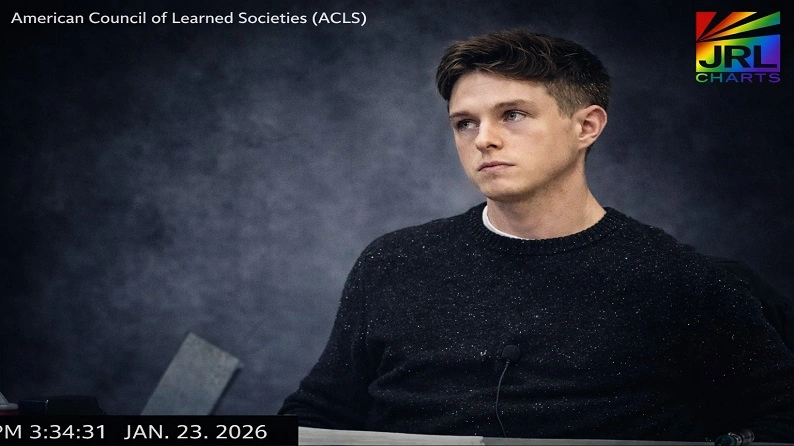
By: Paul Goldberg — Senior Correspondent | LGBT Politics News
WASHINGTON, D.C. — (March 15, 2026) — Newly released deposition testimony in a lawsuit over federal grant cancellations reveals that artificial intelligence, including ChatGPT, was used by staff in the Trump-era Department of Government Efficiency (DOGE) to help identify and eliminate grants referencing LGBTQ+ topics and other diversity-related language.
The testimony by former DOGE team member Nate Cavanaugh, who worked under the General Services Administration, suggests that grant programs were flagged for termination simply because their descriptions included terms like “LGBTQ,” “BIPOC,” “race,” “gender,” or “tribal.”
Cavanaugh, 29, testified in a deposition filed as part of a federal lawsuit brought by the American Council of Learned Societies, the American Historical Association, and the Modern Language Association, which alleges the administration unlawfully canceled more than 1,400 National Endowment for the Humanities (NEH) grants representing over $100 million in funding.
Related LGBT Business Finance News Coverage on JRL CHARTS:
• Oil Surges Past $100 as Strait of Hormuz Crisis Rattles Global Markets
• Iran War Sparks Global Market Freefall — Hormuz Closed, Stocks Plunge, Jobs & Bonds in Crisis
• LGBTQ Corporate Participation Plunges 65% in 2026 as DEI Retreat Reshapes Business Landscape
• US Trade Deficit Hits Five-Month High Amid Import Boom
• Supreme Court Strikes Down Bulk of Trump Tariffs in Landmark Emergency Powers Ruling
According to court filings and testimony, Cavanaugh and another DOGE staffer, Justin Fox, were responsible for reviewing spreadsheets of previously awarded grants and identifying which to recommend for elimination based on a controversial executive order targeting diversity, equity and inclusion (DEI) programs.
During the deposition, Fox acknowledged using ChatGPT to process hundreds of grant descriptions, asking the AI whether they related to DEI without supplying a clear definition of the term or any scholarly criteria. The model then flagged projects as potential DEI grants — including many with LGBTQ+ subject matter — purely because of key words in their descriptions.
Watch Ex-DOGE staffer defend DEI grants purge via The Independent
Critics say the approach was arbitrary and had wide-ranging consequences. Among the canceled projects were grants meant to support public history initiatives, community museum programming, and research into marginalized communities. In earlier reporting, NIH funding cancellations tied to LGBTQ+ health research alone accounted for hundreds of millions in cut support for studies into HIV/AIDS prevention, mental health, and age-specific LGBTQ health disparities
Even beyond the NEH, other federal agencies saw grant disruptions connected to policies limiting DEI considerations: at least 68 NIH grants tied to LGBTQ health questions were terminated in one documented wave of cancellations, totaling millions of dollars stripped from eligible research institutions.
Plaintiffs in the NEH lawsuit argue the use of automated screening tools like ChatGPT to determine funding eligibility violated federal law and bypassed the NEH’s traditional peer-review process. Testimony also showed that neither Cavanaugh nor Fox had backgrounds in academic research, humanities scholarship, nor grant peer-review, raising questions about the objectivity and legality of the review process.
One example highlighted in the lawsuit involved a planned public forum on LGBTQ military service experiences that was terminated because the description included the acronym “LGBTQ.” Another project exploring AIDS activism and prison abolition was similarly flagged due to references to queer scholarship.
The controversy has led to broader concern among LGBTQ+ advocates and researchers about the long-term impact of such policies. Federally funded grants provide crucial support for LGBTQ+ health research, humanities projects preserving queer history, and scholarly work examining systemic inequality — work advocates argue is now at risk of being marginalized or erased entirely.
The lawsuit seeks to restore the canceled funding and restore rigorous peer review to federal grant decisions. A federal judge has already expressed concern over the legality of the mass terminations, noting how broadly and indiscriminately grants were labeled as DEI without clear standards.
Official White House representatives did not immediately respond to requests for comment on the record.
For continuous coverage of federal policy, LGBTQ civil rights litigation, and breaking developments in grant funding impacting LGBTQ communities across the United States, stay with JRL CHARTS — LGBT Politics — your authoritative source for policy analysis and impact reporting.

- Former DOGE Insider Says ChatGPT Helped Flag and Cancel LGBTQ+ Grants, Sparking Legal Battle - March 15, 2026
- NYC Mayor Zohran Mamdani Names Taylor Brown to Lead First Office of LGBTQIA+ Affairs - March 15, 2026
- Former Bibb County Jail Worker Charged in Inmate Misconduct Probe; Two Others Arrested - March 14, 2026
// Affiliate Disclosure: JRL CHARTS is a digital news and media platform. We do not host, stream, or sell adult content. Some outbound links may contain affiliate tracking to licensed studio-owned platforms (e.g., LatinBoyz, AEBN, BiLatin Men). These links lead to legal, age-gated distributors and are provided strictly for editorial and informational purposes only.