By: Paul Goldberg — Senior Correspondent | LGBT Business Finance News
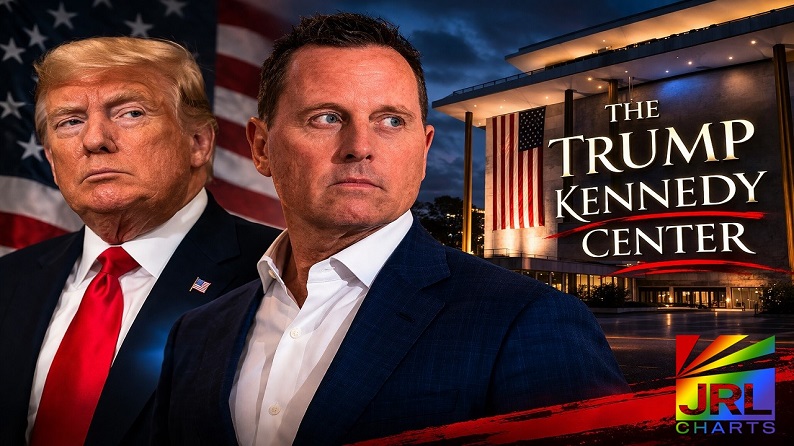
WASHINGTON, D.C. — (March 13, 2026) — Political drama surrounding the John F. Kennedy Center for the Performing Arts intensified Friday after President Donald Trump confirmed that openly gay conservative diplomat Ric Grenell will step down from his leadership role at the historic cultural institution following a year marked by controversy, protests, and declining ticket sales.
Grenell, one of Trump’s most loyal political allies and the highest-profile openly gay conservative figure to serve in senior roles within the administration, had been tapped in February 2025 to help carry out sweeping structural and branding changes at the Kennedy Center.
Related LGBT Business Finance News Coverage on JRL CHARTS:
• Oil Surges Past $100 as Strait of Hormuz Crisis Rattles Global Markets
• Iran War Sparks Global Market Freefall — Hormuz Closed, Stocks Plunge, Jobs & Bonds in Crisis
• LGBTQ Corporate Participation Plunges 65% in 2026 as DEI Retreat Reshapes Business Landscape
• US Trade Deficit Hits Five-Month High Amid Import Boom
• Supreme Court Strikes Down Bulk of Trump Tariffs in Landmark Emergency Powers Ruling
The appointment came shortly after Trump controversially named himself chairman of the board and installed several close allies into leadership positions at the federally supported performing arts institution.
The moves immediately triggered backlash across the arts community. Performers canceled appearances, critics accused the White House of politicizing a national cultural landmark, and ticket sales reportedly dropped as the dispute played out in public.
Tensions escalated further when Trump’s supporters began referring to the venue as the “Trump Kennedy Center,” a branding shift that outraged members of the Kennedy family and several Democratic lawmakers. Critics argued that renaming or rebranding the institution would violate federal law because only Congress holds the authority to alter the official name of the national performing arts center.
Among those challenging the change was Democratic Representative Joyce Beatty of Ohio, who filed a lawsuit asserting that the administration overstepped its authority in attempting to reshape the institution’s identity and governance.
The controversy deepened late last year when Trump announced plans to close the Kennedy Center for roughly two years to undergo a major reconstruction project following the July 4th celebrations. The proposed overhaul sparked further debate among arts leaders about the future direction of one of the nation’s most prominent cultural venues.
According to reporting from CNN, internal frustration inside the White House reportedly grew as negative headlines surrounding the Kennedy Center continued to mount. Sources familiar with the administration’s thinking said Trump became increasingly dissatisfied with how the situation was being managed publicly.
One person familiar with the internal discussions said the president believed Grenell had struggled to control the narrative surrounding the institution’s transformation, even though he remained personally loyal to Trump.
Another source reportedly described Grenell’s management approach as combative and politically driven, arguing that his lack of experience in the arts world created additional friction with performers and cultural stakeholders.
Despite the criticism, White House officials pushed back against the notion that Grenell was being fired, suggesting instead that his role was always intended to be temporary during the transition period.
Trump confirmed Grenell’s departure Friday in a Truth Social post announcing that Kennedy Center operations executive Matt Floca will step in as chief operating officer and executive director, pending board approval.
In the statement, Trump praised Grenell’s work coordinating the transition period while emphasizing plans for a major reconstruction project that he says will transform the facility into what he described as “the finest facility of its kind anywhere in the world.”
Grenell’s exit marks the latest chapter in a turbulent period for the Kennedy Center, highlighting the growing intersection of politics, culture, and public institutions in Washington.
For the LGBTQ community, Grenell’s role carried additional symbolism. As one of the most prominent openly gay conservatives in American politics, he has often stood at the center of debates over LGBTQ representation within Republican leadership circles.
His departure from the Kennedy Center leadership now raises fresh questions about the future direction of the institution — and how political influence may continue to shape one of America’s most visible cultural landmarks.
Stay with JRL CHARTS LGBT Politics News for continuing coverage of LGBTQ leadership, U.S. political power shifts, and the issues shaping equality, culture, and governance across America

// Affiliate Disclosure: JRL CHARTS is a digital news and media platform. We do not host, stream, or sell adult content. Some outbound links may contain affiliate tracking to licensed studio-owned platforms (e.g., LatinBoyz, AEBN, BiLatin Men). These links lead to legal, age-gated distributors and are provided strictly for editorial and informational purposes only.