By: Paul Goldberg, Senior Correspondent | California LGBT Politics
WASHINGTON — (March 2, 2026) — The U.S. Supreme Court on Monday ruled that California is likely infringing upon the constitutional rights of parents who challenge school policies restricting teachers from disclosing when a student changes their name or pronouns at school.
The unsigned opinion restores a lower court order requiring schools to notify objecting parents if their child socially transitions in school settings. The justices emphasized that their ruling is preliminary and does not represent a final resolution of the case.
At least five members of the Court’s conservative majority sided with the parents’ emergency request, while the three liberal justices dissented. Justice Neil Gorsuch did not publicly indicate his position in the order.
Related LGBTQ News Coverage Links on JRL CHARTS:
• Get the Latest in LGBT Politics USA Exclusively on JRL CHARTS
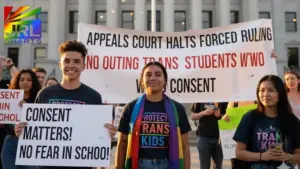
• Appeals Court Blocks Ruling That Would Have Allowed Teachers to Out Trans Students Without Consent
• Democrats Enter 2026 Midterms With Momentum — But LGBTQ Civil Rights Are Now on the Ballot
• NIH Defies Court-Restored LGBTQ Grants, Confirms Funding Will End in 2026
• Federal Judge Forces California Schools to Out Trans Students as State Prepares Emergency Appeal
In its opinion, the Court wrote that parents raising free exercise claims have asserted sincere religious beliefs regarding sex and gender, and that California’s policies may substantially burden those beliefs. The ruling temporarily blocks the state from enforcing policies that limit disclosure to parents during the ongoing litigation.
California officials argued that the policies were designed to protect student safety and privacy, particularly for LGBTQ youth who may face risks if sensitive information is disclosed without consent.
In dissent, Justice Elena Kagan, joined by Justice Ketanji Brown Jackson, criticized the Court’s use of its emergency docket, describing the intervention as premature given the limited briefing at this stage. She wrote that the case presents complex and novel legal questions that merit fuller review through the appellate process.
Justice Amy Coney Barrett, joined by Chief Justice John Roberts and Justice Brett Kavanaugh, issued a concurring opinion underscoring that the Court’s use of the word “likely” signals a preliminary assessment, not a definitive ruling on the merits.
California Attorney General Rob Bonta urged the Court to deny the emergency request, arguing that compelled disclosure could cause irreversible harm to students whose gender identity may not be safe to reveal in certain family environments.
The case now proceeds through further legal review and could return to the Supreme Court for a full merits hearing.
Legal analysts note that the decision highlights the ongoing constitutional tension between parental rights, religious freedom claims, and student privacy protections in public schools.
Stay with JRL CHARTS LGBT Politics and Transgender News for verified legal developments, constitutional analysis, and policy updates impacting LGBTQ communities nationwide.

// Affiliate Disclosure: JRL CHARTS is a digital news and media platform. We do not host, stream, or sell adult content. Some outbound links may contain affiliate tracking to licensed studio-owned platforms (e.g., LatinBoyz, AEBN, BiLatin Men). These links lead to legal, age-gated distributors and are provided strictly for editorial and informational purposes only.