By: Paul Goldberg, Senior Correspondent | U.S. Government & Labor Policy
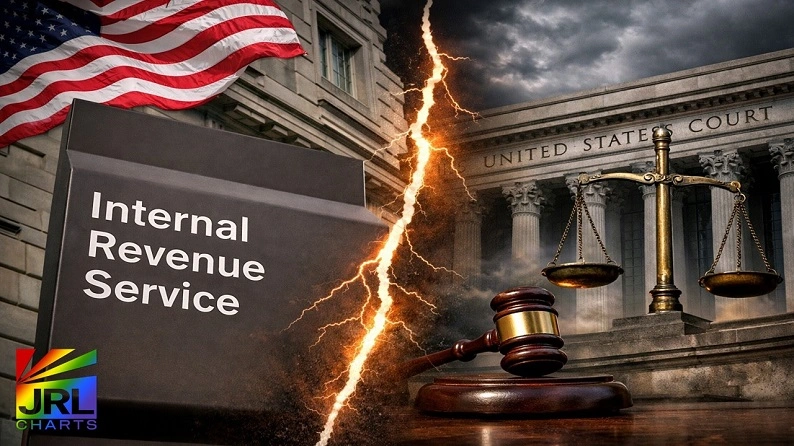
WASHINGTON — (March 1, 2026) — The Internal Revenue Service and the Treasury Department’s Bureau of Fiscal Service have formally terminated their collective bargaining agreements with the National Treasury Employees Union (NTEU), escalating a federal labor dispute that has been unfolding for months inside the courts.
The move comes despite prior judicial guidance from the U.S. Court of Appeals for the D.C. Circuit cautioning agencies against formally canceling union contracts while litigation over executive authority remains ongoing.
The IRS confirmed that its agreement with NTEU was terminated effective Friday, citing compliance with Executive Order 14251 — Exclusions from Federal Labor-Management Relations Programs — and subsequent guidance issued by the Office of Personnel Management (OPM).
The Bureau of Fiscal Service took similar action earlier this week.
Related LGBT Business Finance News Coverage on JRL CHARTS:
• Openly Gay Treasury Secretary Scott Bessent Slams FedEx Tariff Refund Lawsuit
• Get the Latest in LGBT Politics USA Exclusively on JRL CHARTS
• LGBTQ Corporate Participation Plunges 65% in 2026 as DEI Retreat Reshapes Business Landscape
• US Trade Deficit Hits Five-Month High Amid Import Boom
• Supreme Court Strikes Down Bulk of Trump Tariffs in Landmark Emergency Powers Ruling
Legal Context: Court Warnings and Executive Authority
The dispute traces back to executive orders signed last year invoking a little-used provision of the 1978 Civil Service Reform Act. The orders sought to exclude large portions of the federal workforce from collective bargaining protections.
While many agencies began suspending or canceling union agreements months ago, NTEU-represented agencies were specifically advised to refrain from terminating contracts pending legal review.
A three-judge panel of the D.C. Circuit previously noted that agencies should avoid “formal contract terminations” while the matter remains under judicial scrutiny. The court indicated that affected bargaining units could seek injunctive relief if agencies deviated from that restraint.
Despite that warning, the IRS has now moved forward.
Internal Guidance and OPM’s Role
Two weeks prior to the termination, OPM issued updated guidance encouraging agencies to proceed with contract cancellations. The document initially sparked controversy after critics argued it appeared to encourage agencies to sidestep court limitations.
OPM later amended the memo to clarify that agencies should not disregard judicial orders. However, agencies covered by the D.C. Circuit stay in NTEU v. Trump have nonetheless proceeded with terminations.
The IRS stated it acted in accordance with presidential directives and OPM guidance.
What Changes for Federal Employees?
According to internal communications obtained by reporters:
-
Employees may no longer select union representatives for disciplinary or Equal Employment Opportunity proceedings.
-
Weingarten rights — which allow union representation during investigative interviews — will no longer apply under the terminated agreements.
-
Employees were also reminded not to engage with the press unless explicitly authorized.
IRS leadership framed the decision as part of a broader effort to operate under a unified management model.
“Our employees are the strength of our agency,” IRS Chief Human Capital Officer Alex Kweskin wrote in a message to staff, adding that the agency would continue operating in alignment with civil service laws and equal employment protections.
Broader Implications for Federal Workforce and LGBTQ Employees
While the legal battle centers on executive authority and labor statutes, the ripple effects extend across the federal workforce — including LGBTQ employees who often rely on collective bargaining agreements to address workplace protections, anti-discrimination concerns, and representation in grievance proceedings.
Collective bargaining frameworks historically provided additional procedural safeguards beyond statutory baseline protections. The termination of those agreements shifts representation structures and may alter how internal disputes are handled across affected agencies.
Labor advocates are expected to pursue further legal remedies in response to the contract cancellations.
What Comes Next?
With litigation still active, the question now becomes whether federal courts will intervene again to block or reverse the terminations — or whether executive authority under the Civil Service Reform Act will ultimately prevail.
The unfolding legal battle could redefine the scope of federal labor protections for years to come.
JRL CHARTS will continue monitoring developments in federal workforce policy and its implications for civil service employees nationwide.
For continued coverage on federal workforce policy, labor rights developments, and U.S. government accountability, stay with JRL CHARTS — Where Policy, Politics and Impact Intersect.

- Federal Appeals Court Expands ICE Detention Power in High-Stakes Immigration Ruling - March 25, 2026
- Ohio Lawmaker Facing Misconduct Allegations Pushes Bill to Jail Drag Queens — Hypocrisy Sparks Outrage - March 24, 2026
- California Sheriff Seizes 650,000 Ballots in Explosive Election Power Grab - March 23, 2026
// Affiliate Disclosure: JRL CHARTS is a digital news and media platform. We do not host, stream, or sell adult content. Some outbound links may contain affiliate tracking to licensed studio-owned platforms (e.g., LatinBoyz, AEBN, BiLatin Men). These links lead to legal, age-gated distributors and are provided strictly for editorial and informational purposes only.