By: Paul Goldberg, Senior Editor | JRL CHARTS – LGBTQ Politics
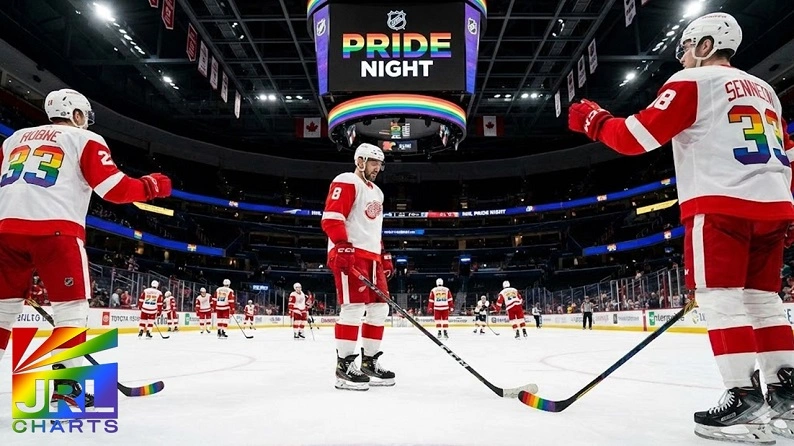
LAS VEGAS — (January 18, 2026) — The Washington Capitals hosted their annual Pride Night on Saturday during a matchup against the Florida Panthers, an event designed to affirm support for the LGBT community within professional hockey. Several Capitals players wrapped their sticks with rainbow-colored tape as a visible sign of solidarity.
Related LGBTQ News Coverage Links on JRL CHARTS:
• Get the Latest in LGBT Politics USA Exclusively on JRL CHARTS
• Appeals Court Blocks Ruling That Would Have Allowed Teachers to Out Trans Students Without Consent
• Democrats Enter 2026 Midterms With Momentum — But LGBTQ Civil Rights Are Now on the Ballot
• NIH Defies Court-Restored LGBTQ Grants, Confirms Funding Will End in 2026
Ovechkin, however, took the ice using traditional white tape—continuing a pattern of opting out of league-sanctioned inclusion efforts. While Pride Night has become a routine part of the National Hockey League calendar, the Capitals captain again chose not to participate in even the most minimal, non-intrusive gesture.
Wearing the Weagle with #Pride#ALLCAPS | @GiantFood pic.twitter.com/VmRwORzeMC
— Washington Capitals (@Capitals) January 18, 2026
The Capitals fell to the Panthers 5–2. Following the game, head coach Spencer Carbery emphasized the broader significance of the evening, calling it “a great night to celebrate Pride,” underscoring the disconnect between the team’s public messaging and the actions of its most prominent player.
Pride Night events have been part of the NHL for more than two decades, serving as symbolic acknowledgments of diversity in a sport long criticized for lagging behind others on inclusion. In 2023, the league briefly restricted specialty pride gear after several Russian players refused to participate, citing religious or cultural objections. That decision was later reversed, allowing players to choose individually—effectively shifting responsibility away from the league and onto players themselves.
Ovechkin previously praised the NHL for declining to discipline players who opted out, applauding leadership for what he framed as neutrality. Critics, however, have noted that such “choice-based” policies often leave marginalized communities without meaningful institutional support.
During tonight’s #ALLCAPS Pride Night, @GiantFood presented $5,000 in gift cards to the @WandaAHouse, providing housing, support services, and pathways to economic mobility for at-risk & homeless LGBTQ+
youth in the Nation’s Capital. 🏳️🌈🏳️⚧️ pic.twitter.com/TnD6YPb862— MSE Foundation (@MSEFndn) January 18, 2026
The contrast between Ovechkin’s off-ice legacy and on-ice decisions remains stark. Last season, he surpassed Wayne Gretzky’s long-standing scoring record, cementing his place in hockey history. Yet his public image continues to be shaped not only by goals scored, but by the values he repeatedly declines to endorse.
Following the record-breaking milestone, Ovechkin was added to Ukraine’s controversial Mirotvorets database, which lists individuals accused of aiding Russian state narratives abroad. While unrelated to Pride Night directly, the listing has intensified scrutiny of Ovechkin’s public stances and the broader implications of his symbolic refusals.
As the NHL continues to position itself as a more inclusive league, moments like these highlight the persistent gap between institutional messaging and individual action—particularly when silence or non-participation comes from the sport’s most visible figures.
JRL CHARTS LGBT Politics News continues to report on the intersection of sports, politics, and LGBTQ visibility—where actions on the ice often speak louder than league slogans.

- Mass Layoffs Rock The Advocate and Out as Equalpride Acquires ‘Them’ - March 2, 2026
- LGBTQ Corporate Participation Plunges 65% in 2026 as DEI Retreat Reshapes Business Landscape - February 22, 2026
- Trump Targets Netflix Board Member Susan Rice After ‘Take a Knee’ Remarks Spark Political Firestorm - February 21, 2026
// Affiliate Disclosure: JRL CHARTS is a digital news and media platform. We do not host, stream, or sell adult content. Some outbound links may contain affiliate tracking to licensed studio-owned platforms (e.g., LatinBoyz, AEBN, BiLatin Men). These links lead to legal, age-gated distributors and are provided strictly for editorial and informational purposes only.