By: Paul Goldberg – Senior Editor | JRL CHARTS – LGBT Politics
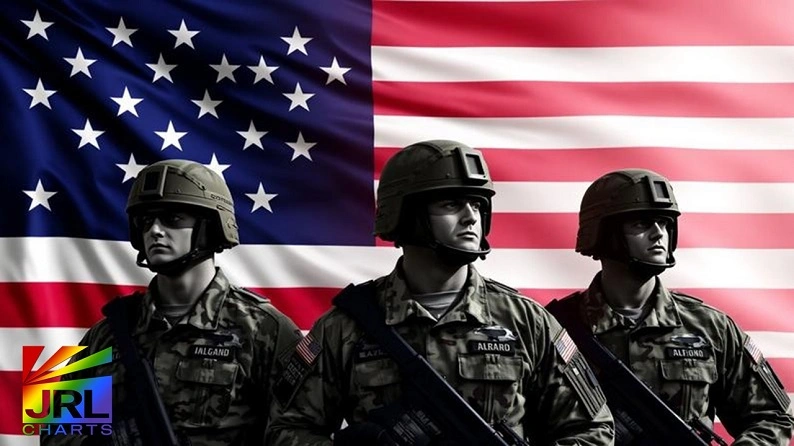
WASHINGTON, D.C. — (December 23, 2025) — The U.S. Supreme Court on Tuesday delivered a sharp rebuke to the Trump administration’s attempt to federalize and deploy National Guard troops in Illinois, blocking an emergency request that would have placed military forces on the streets of Chicago in support of immigration enforcement.
Related LGBT Politics News Coverage Links on JRL CHARTS:
• Get the Latest in LGBT Politics USA Exclusively on JRL CHARTS
• Breaking Military News involving LGBTQ Service Members and Security
• LGBT Politics Europe – Updates on Hate Crimes, Judicial Rulings
• Stay Up to Date on the Happenings in LGBT Politics Asia
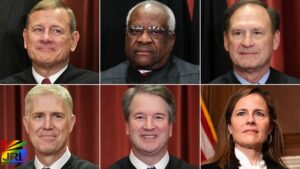
In a brief, unsigned order, the Court refused to grant the administration’s request to override lower-court rulings that had already halted the deployment. While procedural in form, the ruling carries sweeping constitutional and political implications, marking one of the strongest judicial pushbacks yet against Trump’s aggressive use of executive power inside U.S. borders.
At stake was whether a president can deploy military-controlled National Guard units against the objections of a state and its cities — not in response to a rebellion or natural disaster, but to assist federal immigration operations.
The Supreme Court said, for now, no.
A Rare Attempt to Use Troops for Domestic Immigration Enforcement
The Trump administration argued that National Guard troops were needed to protect federal immigration agents operating in and around Chicago, citing what it described as escalating protests and disorder tied to immigration raids.
Illinois officials flatly rejected that claim.
State and city leaders told the courts that Chicago was not in rebellion, law enforcement had not collapsed, and no emergency existed that would justify federalizing state troops. They argued that Trump’s move was designed not for public safety — but to intimidate political opponents and override a Democratic-led state that opposed his immigration strategy.
Federal judges agreed, blocking the deployment before it could begin. Trump’s Justice Department then rushed to the Supreme Court seeking emergency authority to move the troops anyway.
The Court declined.
Why This Ruling Is So Powerful
The legal fight centered on an obscure but critical federal statute that allows a president to federalize the National Guard in extreme situations — such as invasion, insurrection, or when “the regular forces” cannot execute the laws of the United States.
Trump’s team claimed Chicago met that standard.
The courts didn’t buy it.
One of the Supreme Court’s central questions — flagged in an earlier order asking for more briefing — was what “regular forces” actually means. Does it mean local police and federal agents? Or does it mean the U.S. military itself?
If it means law enforcement, Trump’s theory would allow the president to deploy troops anytime police face resistance.
If it means the armed forces, the bar becomes far higher — requiring near-civil-war conditions.
The Supreme Court’s refusal to intervene strongly suggests the justices are not prepared to accept Trump’s expansive interpretation.
Illinois Says Trump Was Punishing His Political Enemies
Illinois and Chicago didn’t just argue law — they argued motive.
In court filings, they said Trump targeted Chicago because it is:
-
A major immigrant hub
-
A sanctuary-style city
-
A Democratic stronghold
They accused Trump of using the military as a political weapon — to override local government, intimidate opposition, and force compliance with federal immigration policies that voters and leaders in Illinois rejected.
They also argued the deployment violated:
-
The 10th Amendment, which protects state authority
-
The Posse Comitatus Act, which bars the military from performing civilian law enforcement
Those constitutional limits are designed to prevent exactly what Illinois said Trump was attempting: using armed troops to police American cities.
A National Precedent in the Making
Although the ruling directly affects only Illinois for now, its impact is far broader.
Similar legal challenges are pending or expected in other states where the Trump administration has considered or attempted to deploy federalized Guard units for immigration enforcement or protest control.
The Supreme Court’s decision gives those states powerful ammunition.
It also sends a signal to future presidents — Republican or Democrat — that domestic military deployments against states are not simply political decisions. They are constitutional flashpoints.
What Happens Next
The underlying case now returns to the lower courts, where judges will decide whether Trump’s actions were illegal and unconstitutional.
But in the meantime, one thing is clear:
Trump will not be sending National Guard troops into Chicago.
And the Supreme Court just drew one of the clearest lines yet around how far a president can go in using military power inside the United States.
For the latest on Supreme Court battles, federal power, and the political fights reshaping America, stay with JRL CHARTS — the authority in LGBT Politics and U.S. political news.
Media Partners: For licensing inquiries, media usage rights, or republication requests, please visit our Contact Us page. All content © JRL CHARTS Media Network. Unauthorized use is strictly prohibited.

- Mass Layoffs Rock The Advocate and Out as Equalpride Acquires ‘Them’ - March 2, 2026
- LGBTQ Corporate Participation Plunges 65% in 2026 as DEI Retreat Reshapes Business Landscape - February 22, 2026
- Trump Targets Netflix Board Member Susan Rice After ‘Take a Knee’ Remarks Spark Political Firestorm - February 21, 2026
// Affiliate Disclosure: JRL CHARTS is a digital news and media platform. We do not host, stream, or sell adult content. Some outbound links may contain affiliate tracking to licensed studio-owned platforms (e.g., LatinBoyz, AEBN, BiLatin Men). These links lead to legal, age-gated distributors and are provided strictly for editorial and informational purposes only.