By: Paul Goldberg, Senior Editor | JRL CHARTS – LGBT Politics
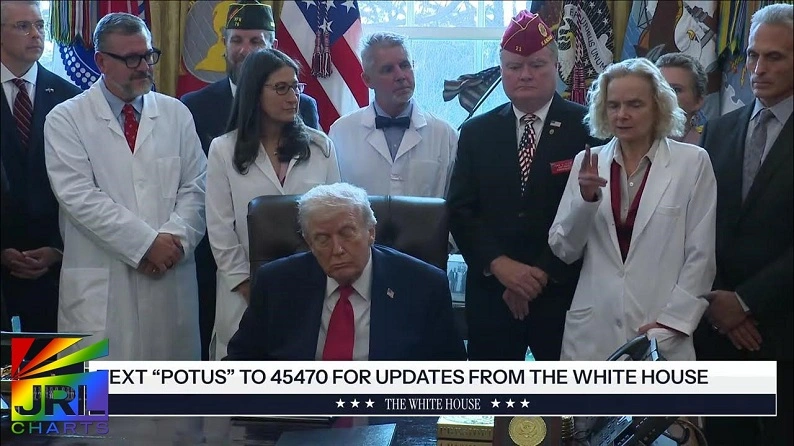
WASHINGTON, D.C. — (December 18, 2025) — President Donald Trump signed an executive order Thursday reclassifying marijuana under federal law as a Schedule III controlled substance¹, formally recognizing its legitimate medical uses while stopping short of full federal legalization.
Related Coverage Links on JRL CHARTS:
• Get the Latest in LGBT Politics USA Exclusively on JRL CHARTS
• Where LGBTQ Texans Can Find Safety, Support, and Advocacy Resources
• Texas Passes THC Hemp Ban Amid Medical Marijuana Expansion
• Sexy Pot Marijuana-Shaped Massager is a Must Stock
The move removes cannabis from Schedule I², the most restrictive category under the U.S. Controlled Substances Act (CSA), which is reserved for substances deemed to have a high potential for abuse and no accepted medical value. Drugs currently listed under Schedule I include heroin, LSD, and MDMA.
Under Schedule III, marijuana will now be grouped alongside substances that have recognized medical applications and are subject to regulated prescribing, research standards, and manufacturing oversight.
Trump announced the decision from the Oval Office, describing the change as a long-overdue response to patients, veterans, and medical professionals.
“We have people begging for me to do this,” Trump said. “People that are in great pain. For decades, American patients suffering from extreme pain, incurable diseases, aggressive cancers, seizure disorders, neurological problems, and serious service-related injuries have asked for this action.”
The president emphasized that the decision was driven by medical need rather than political pressure.
“I don’t think I’ve ever received more calls on an issue than this,” Trump added. “And I don’t think I’ve received any calls on the other side.”
Watch President Trump Sign Executive Order 45470 on Marijuana
What Schedule III Means for Medical Marijuana
Reclassification to Schedule III allows for expanded federal research, standardized dosing studies, and clearer distinctions between botanical cannabis products and synthetic cannabinoid medications. Researchers have long argued that Schedule I status severely limited clinical trials, safety evaluations, and long-term outcome studies.
Health and Human Services Secretary Robert F. Kennedy Jr., who attended the signing, said the change will finally allow comprehensive medical research that has been blocked for decades.
“There are valid concerns about addiction, psychosis, and public health impacts — especially for young people,” Kennedy said. “But we haven’t been able to study those issues properly because cannabis was locked behind Schedule I barriers.”
Kennedy noted that the lack of standardized dosing and controlled trials has made it impossible to accurately assess risks and benefits.
“We’ve been comparing apples to pears,” he said. “Now we can answer these questions with real science.”
Also present was Dr. Mehmet Oz, head of Medicare and Medicaid services, signaling the administration’s intent to examine how cannabis-based therapies may intersect with federal healthcare programs.
Political Pushback From Republican Lawmakers
Despite growing bipartisan support for medical marijuana, the executive order drew swift criticism from some Republican lawmakers.
Sen. Ted Budd (R-NC) posted on X that reclassifying marijuana could pose national security and public health risks.
“Growing the marijuana industry endangers the health and safety of Americans,” Budd wrote. “The only winners from rescheduling will be bad actors like Communist China and drug traffickers.”
Budd said he led a letter signed by 22 Republican senators opposing the move. Other signatories reportedly included Sens. Tom Cotton (R-AR), John Barrasso (R-WY), and Shelley Moore Capito (R-WV).
No Full Legalization — For Now
The executive order does not legalize recreational marijuana at the federal level, nor does it override state laws governing cannabis sales or possession. However, policy experts say the shift could have far-reaching implications for medical access, pharmaceutical development, veterans’ treatment options, and future congressional action.
For millions of patients who rely on medical marijuana, the decision represents the most significant federal policy change in decades — one that redefines cannabis not as a prohibited drug, but as a regulated medical substance.
- ¹ Schedule III (DEA Definition):
Schedule III drugs, substances, or chemicals are defined as drugs with a moderate to low potential for physical and psychological dependence. Schedule III drugs have less abuse potential than Schedule I and Schedule II drugs but more than Schedule IV. Examples include products containing less than 90 milligrams of codeine per dosage unit (such as Tylenol with codeine), ketamine, anabolic steroids, and testosterone. - ² Schedule I (DEA Definition):
Schedule I drugs, substances, or chemicals are defined as drugs with no currently accepted medical use and a high potential for abuse. Examples include heroin, lysergic acid diethylamide (LSD), marijuana (cannabis), 3,4-methylenedioxymethamphetamine (ecstasy), methaqualone, and peyote.
JRL CHARTS continues to deliver authoritative coverage at the intersection of politics, healthcare, and LGBTQ+ policy — tracking the decisions that reshape lives, medicine, and federal law. Follow JRL CHARTS LGBT Politics Daily for Updates.
Media Partners: For licensing inquiries, media usage rights, or republication requests, please visit our Contact Us page. All content © JRL CHARTS Media Network. Unauthorized use is strictly prohibited.

- Mass Layoffs Rock The Advocate and Out as Equalpride Acquires ‘Them’ - March 2, 2026
- LGBTQ Corporate Participation Plunges 65% in 2026 as DEI Retreat Reshapes Business Landscape - February 22, 2026
- Trump Targets Netflix Board Member Susan Rice After ‘Take a Knee’ Remarks Spark Political Firestorm - February 21, 2026
// Affiliate Disclosure: JRL CHARTS is a digital news and media platform. We do not host, stream, or sell adult content. Some outbound links may contain affiliate tracking to licensed studio-owned platforms (e.g., LatinBoyz, AEBN, BiLatin Men). These links lead to legal, age-gated distributors and are provided strictly for editorial and informational purposes only.